



الصفحة 1
الصفحة 1

Modern Genome Annotation : The Biosapiens Network
An accurate description of current scientific developments in the field of bioinformatics and computational implementation is presented by research of the BioSapiens Network of Excellence. Bioinformatics is essential for annotating the structure and function of genes, proteins and the analysis of complete genomes and to molecular biology and biochemistry. Included is an overview of bioinformatics, the full spectrum of genome annotation approaches including; genome analysis and gene prediction, gene regulation analysis and expression, genome variation and QTL analysis, large scale protein annotation of function and structure, annotation and prediction of protein interactions, and the organization and annotation of molecular networks and biochemical pathways. Also covered is a technical framework to organize and represent genome data using the DAS technology and work in the annotation of two large genomic sets: HIV/HCV viral genomes and splicing alternatives potentially encoded in 1% of the human genome.

Misbehaving Proteins : Protein (Mis)Folding, Aggregation, and Stability
Misfoldedaggregatedproteinoncewasconsideredasinterestingasyesterday’strash—a bothersome by-product of important and productive activities, to be disposed of and forgotten as quickly as possible. Yesterday’s trash has become today’s focus of cons- erable scienti?c interest for at least two reasons: (1) protein aggregates are at the core of a number of chronic degenerative diseases such as Alzheimer’s disease, and (2) - gregation poses signi?cant obstacles to the manufacture of safe, ef?cacious, and stable protein products. As interest in protein misfolding, aggregation, and stability has soared beyond the core group of traditional protein-folding scientists, and as substantial scienti?c progress in understanding and controlling protein misfolding has been achieved, the need to summarize the state of the art became manifest. Although there are many excellent texts and edited collections on protein structure and folding, these volumes tend to relegate protein misfolding and aggregation to a minor role. Review articles and books focused on the biological role of protein aggregates in diseases have been published recently.

Homology modeling : Methods and protocols
It Provides state-of-the-art methodologies and reviews of important topics in the field of homology modeling. From homology modeling in the twilight zone and improving accuracy through sequence space analysis to approaches to construct multi-protein complex models, the book explores a wide variety of uses and applications of this valuable technique.

Fundamentals of Protein Structure and Function
This book serves as an introduction to the fundamentals of protein structure and function. Starting with their make up from simple building blocks called amino acids, the 3-dimensional structure of proteins is explained. This is followed by an introduction into enzymology and modern concepts of enzyme kinetics, taking into account the physiological and medical significance of this often neglected topic.

Fundamentals of Protein NMR Spectroscopy
NMR spectroscopy has proven to be a powerful technique to study the structure and dynamics of biological macromolecules. Fundamentals of Protein NMR Spectroscopy is a comprehensive textbook that guides the reader from a basic understanding of the phenomenological properties of magnetic resonance to the application and interpretation of modern multi-dimensional NMR experiments on 15N/13C-labeled proteins. Beginning with elementary quantum mechanics, a set of practical rules is presented and used to describe many commonly employed multi-dimensional, multi-nuclear NMR pulse sequences. A modular analysis of NMR pulse sequence building blocks also provides a basis for understanding and developing novel pulse programs.

ESR Spectroscopy in Membrane Biophysics
Membrane proteins offer the greatest challenge in structural biology, and there is an urgent need to develop and apply new biophysical methodologies that are able to generate detailed structural information. Among modern biophysical techniques, site-directed spin-labeling electron spin resonance (SDSL-ESR) appears to show the highest potential to further develop the field. The objective of this book is to provide in-depth information about new advances of SDSL-ESR in membrane biophysics, emphasizing recent developments in the application to membrane proteins.

Database systems for advanced applications ; Vol. 3453 ; 10th international conference, DASFAA 2005, Beijing, China, April 17-20, 2005, Proceedings
Data Stream Mining and Resource Adaptive Computation.- Purpose Based Access Control for Privacy Protection in Database Systems.- Complex Networks and Network Data Mining.- Bioinformatics.- Indexing DNA Sequences Using q-Grams.- PADS: Protein Structure Alignment Using Directional Shape Signatures.- LinkageTracker: A Discriminative Pattern Tracking Approach to Linkage Disequilibrium Mapping.- Watermarking and Encryption.- Query Optimization in Encrypted Database Systems.- Watermarking Spatial Trajectory Database.- Effective Approaches for Watermarking XML Data.- XML Query Processing.- A Unifying Framework for Merging and Evaluating XML Information.- Efficient Evaluation of Partial Match Queries for XML Documents Using Information Retrieval Techniques.- PathStack: A Holistic Path Join Algorithm for Path Query with Not-Predicates on XML Data.- XML Coding and Metadata Management.- An Improved Prefix Labeling Scheme: A Binary String Approach for Dynamic Ordered XML.- Efficiently Coding and Indexing XML Document.- XQuery-Based TV-Anytime Metadata Management.- Data Mining.- Effective Database Transformation and Efficient Support Computation for Mining Sequential Patterns.

Current Topics in Innate Immunity
This volume represents a collection of topics on natural killer cells, mast cells, phagocytes, toll like receptors, complement, host defense in plants and invertebrates, evasion strategies of microorganisms, pathophysiology, protein structures, design of therapeutics, and experimental approaches discussed during the conference.

Computational methods for protein structure prediction and modeling ; Vol.1 : Basic Characterization
Volume one of this two volume sequence focuses on the basic characterization of known protein structures as well as structure prediction from protein sequence information. The 11 chapters provide an overview of the field, covering key topics in modeling, force fields, classification, computational methods, and struture prediction.

Computational drug discovery : methods and application
Covers a wide range of cutting-edge computational technologies and computational chemistry methods that are transforming drug discovery. The book delves into recent advances, particularly focusing on artificial intelligence (AI) and its application for protein structure prediction, AI-enabled virtual screening, and generative modeling for compound design. Additionally, it covers key technological advancements in computing such as quantum and cloud computing that are driving innovations in drug discovery.
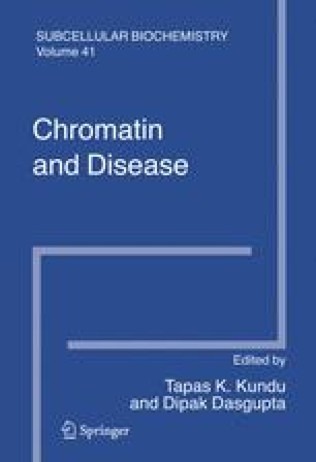
Chromatin and Disease
It is more evident now than ever before that dynamic organization of human genome into nucleoprotein structure, chromatin confers the unique regulatory mechanisms for most of the cellular phenomena, which include replication, transcription, DNA repair, recombination and also apoptosis. The dynamic nature of the chromatin is regulated by chromatin modifications (epigenetic alterations), remodeling, histone chaperones and functional interactions of different chromatin interacting n- histone proteins. Dysfunction of this highly inter connected machineries disturb the cellular homoeostasis, and thereby causes several diseases. As we advance in our knowledge of chromatin function and also disease mechanisms in more details, their causal relationship is becoming more evident. This has lead to the identification of chromatin function as target for new generation therapeutics.

Bioinformatics research and applications ; 3rd International Symposium,ISBRA 2007, Atlanta, GA, USA, May 7-10, 2007, Proceedings
This book including clustering and classification, gene expression analysis, gene networks, genome analysis, motif finding, pathways, protein structure prediction, protein domain interactions, phylogenetics, and software tools.
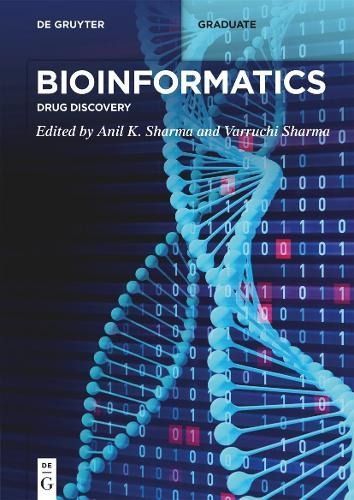
Bioinformatics drug discovery
Quantitative tools are becoming increasingly important in order to understand complex cascade of signal transduction events, pathways or biochemical reactions. The book showcases how computational techniques and algorithms are applied to biological data analysis, interpretation, and modelling. It covers applications in drug design and discovery, immune systems, phylogenetic analysis and protein structures.
Algorithms in Bioinformatics ; Vol.4175 : 6th International Workshop, WABI 2006, Zurich, Switzerland, September 11-13, 2006, Proceedings
This book constitutes the refereed proceedings of the 6th International Workshop on Algorithms in Bioinformatics, WABI 2006, held in Zurich, Switzerland in September 2006 in the course of the ALGO 2006 conference meetings. The 36 revised full papers presented were carefully reviewed and selected from 100 submissions. All current issues of algorithms in bioinformatics are addressed, ranging from mathematical tools to experimental studies of approximation algorithms and reports on significant computational analyses. Numerous biological problems are dealt with, including genetic mapping, sequence alignment and sequence analysis, phylogeny, comparative genomics, and protein structure. For the first time also machine-learning approaches along with combinatorial optimization are covered.

Algorithms in Bioinformatics ; 7th International Workshop, WABI 2007, Philadelphia, PA, USA, September 8-9, 2007, Proceedings
All current issues of algorithms in bioinformatics are addressed, ranging from mathematical tools to experimental studies of approximation algorithms and reports on significant computational analyses. Numerous biological problems are dealt with, including genetic mapping, sequence alignment and sequence analysis, phylogeny, comparative genomics, and protein structure. Furthermore the papers feature high-performance computing approaches to computationally hard learning and optimization problems in bioinformatics and cover methods, software and dataset repositories for development and testing of such algorithms and their underlying models.
