



الصفحة 1
الصفحة 1

Nanotechnology-Enabled Sensors
Nanotechnology provides us with tools to create functional materials, devices, and systems by controlling materials at the atomic and molecular scales, and at the same time make use of novel properties and phenomena. Considering that most chemical and biological sensors, as well as many physical sensors, depend on interactions occurring within the nano scale range, the impact that nanotechnology will have on the sensor world is significant. Nanotechnology enabled sensors find applications in several novel fields such as sensing single molecules, bio-hazards, toxic chemicals, gas sensors, process control and diagnostics.
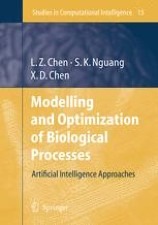
Modelling and Optimization of Biotechnological Processes : Artificial Intelligence Approaches
The book begins with a historical introduction to the field of bioprocess control based on artificial intelligence approaches, followed by two chapters covering the optimization of fed-batch culture using genetic algorithms. Online biomass soft-sensors are constructed in Chapter 4 using recurrent neural networks. The bioprocess is then modelled in Chapter 5 by cascading two soft-sensor neural networks. Optimization and validation of the final product are detailed in Chapters 6 and 7. The general conclusions are drawn in Chapter 8.

Model-based Process Supervision : A Bond Graph Approach
Model-based fault detection and isolation requires a mathematical model of the system behaviour. Modelling is important and can be difficult because of the complexity of the monitored system and its control architecture. The authors use bond-graph modelling, a unified multi-energy domain modelling method, to build dynamic models of process engineering systems by composing hierarchically arranged sub-models of various commonly encountered process engineering devices. The structural and causal properties of bond-graph models are exploited for supervisory systems design.

Mid-Infrared Coherent Sources and Applications
Coherent sources of mid-infrared (mid-IR) radiation are of great interest for a wide range of scienti?c and technological applications from spectroscopy and frequency metrology to information technology, industrial process control, pho- chemistry, photobiology and photomedicine. The mid-IR spectrum, which may be de?ned as wavelengths beyond ?2µm, covers important atmospheric windows, and numerous molecular gases, toxic agents, air, water, and soil pollutants, c- ponents of human breath, and several explosive agents have strong absorption ?ngerprints in this region. The development of practical coherent solid-state sources in the mid-IR can thus provide indispensable tools for a variety of - plications in environmental monitoring and pollution control, detection of water and soil contaminants, food quality control, agriculture and life sciences, and n- invasive disease diagnosis and therapy through breath analysis.

Introduction to Engineering Statistics and Six Sigma : Statistical Quality Control and Design of Experiments and Systems
Introduction to Engineering Statistics and Six Sigma contains precise descriptions of all of the many related methods and details case studies showing how they have been applied in engineering and business to achieve millions of dollars of savings. Specifically, the methods introduced include many kinds of design of experiments (DOE) and statistical process control (SPC) charting approaches, failure mode and effects analysis (FMEA), formal optimization, genetic algorithms, gauge reproducibility and repeatability (R&R), linear regression, neural nets, simulation, quality function deployment (QFD) and Taguchi methods. A major goal of the book is to help the reader to determine exactly which methods to apply in which situation and to predict how and when the methods might not be effective.

Intelligent system algorithms and applications in science and technology
Explores the application of intelligent techniques in various fields of engineering and technology. It addresses diverse topics in such areas as machine learning-based intelligent systems for healthcare, applications of artificial intelligence and the Internet of Things, intelligent data analytics techniques, intelligent network systems and applications, and inequalities and process control systems. The authors explore the full breadth of the field, which encompasses data analysis, image processing, speech processing and recognition, medical science and healthcare monitoring, smart irrigation systems, insurance and banking, robotics and process control, and more.

Integrated Reaction and Separation Operations : Modelling and experimental validation
The book presents the latest developments in simulation of integrated processes as well as new methods of process synthesis and process control. It shows details of experimental approaches for model validation, determining of model parameters and measurement techniques. The combination of sophisticated modelling, optimisation methods and experimental results has not ben published up to now. The book gives deep insights into the overall evaluation of integrated processes as well as development of methods for a systematic design and optimisation of integrated reaction and separation processes. Potentials for process integration and the technical as well as economic limitations have been identified. The book covers several case studies of reactive distillation, reactive extraction, reactive gas-adsorption and chromatographic reactors which have been investigated from the modelling and experimental point of view. Based on validated models process simulation was used to optimize these processes. Following the concept of integrated process design approaches have been developed for model predictive control and process optimisation during production. Another new and very important focus of the book is systematic synthesis of integrated processes.

Information Processing with Evolutionary Algorithms : From Industrial Applications to Academic Speculations
The last decade of the 20th century has witnessed a surge of interest in num- ical, computation-intensive approaches to information processing. The lines that draw the boundaries among statistics, optimization, arti cial intelligence and information processing are disappearing, and it is not uncommon to nd well-founded and sophisticated mathematical approaches in application - mains traditionally associated with ad-hoc programming. Heuristics has - come a branch of optimization and statistics. Clustering is applied to analyze soft data and to provide fast indexing in the World Wide Web. Non-trivial matrix algebra is at the heart of the last advances in computer vision. The breakthrough impulse was, apparently, due to the rise of the interest in arti cial neural networks, after its rediscovery in the late 1980s. Disguised as ANN, numerical and statistical methods made an appearance in the - formation processing scene, and others followed. A key component in many intelligent computational processing is the search for an optimal value of some function. Sometimes, this function is not evident and it must be made explicit in order to formulate the problem as an optimization problem. The search - ten takes place in high-dimensional spaces that can be either discrete, or c- tinuous or mixed. The shape of the high-dimensional surface that corresponds to the optimized function is usually very complex. Evolutionary algorithms are increasingly being applied to information processing applications that require any kind of optimization.
Information and communication technologies in education, research, and industrial applications ; 16th International Conference, ICTERI 2020, Kharkiv, Ukraine, October 6–10, 2020, Revised Selected Papers
This book contains revised and extended versions of the best papers presented at the 16th International Conference on Information and Communication Technologies in Education, Research, and Industrial Applications, ICTERI 2020, held in Kherson, Ukraine, in October 2020. Due to the COVID-19 pandemic the conference was held online. The 8 revised full papers included in this volume were carefully reviewed and selected from 347 initial submissions. The papers are organized in the following topical sections: ICT in education; ICT in research and industry.

Industrial competitiveness : Cost reduction
The objectives of industrial management are: - Implementation of the policy adopted by the owners or the board of directors - Optimum return on investment - Efficient utilization of Men, Machine and Money. In other words, industry must make profit. Manufacturing represents only one aspect of the activities of industrial management. Present-day manufacturing methodology does not consider making profit as their primary objective. The manufacturing process requires the knowledge of many disciplines, such as design, process planning, costing, marketing, sales, customer relations, costing, purchasing, bookkeeping, inventory control, material handling, shipping, and so on.

Handbook of Practical X-Ray Fluorescence Analysis
X-Ray Fluorescence analysis (XRF) is a reliable multi-elemental and nondestructive analytical method widely used in research and industrial applications. This practical handbook provides self-contained modules featuring XRF instrumentation, quantification methods, and most of the current applications. The book gives a survey of the theoretical fundamentals, analytical instrumentation, software for data processing, various excitation regimes including gracing incidents and microfocus measurements, quantitative analysis, applications in routine and micro analysis, mineralogy, biology, medicine, criminal investigations, archeology, metallurgy, abrasion, microelectronics, environmental air and water analysis. It gives the basic knowledge on this technique, information on analytical equipment and guides the reader to the various applications.

Frontiers in Statistical Quality Control 8
The proportion of nonconforming meters in a lot has traditionally defined lot quality for utility meter sampling inspection purposes. However, lot quality is usually measured on the basis of two criteria for such products: the proportion of nonc- forming packages in the lot and the lot mean quantity.
Embedded systems design : The ARTIST roadmap for research and development
Embedded systems now include a very large proportion of the advanced products designed in the world, spanning transport (avionics, space, automotive, trains), electrical and electronic appliances (cameras, toys, televisions, home appliances, audio systems, and cellular phones), process control (energy production and distribution, factory automation and optimization), telecommunications (satellites, mobile phones and telecom networks), and security (e-commerce, smart cards), etc. The extensive and increasing use of embedded systems and their integration in everyday products marks a significant evolution in information science and technology. We expect that within a short timeframe embedded systems will be a part of nearly all equipment designed or manufactured in Europe, the USA, and Asia. There is now a strategic shift in emphasis for embedded systems designers: from simply achieving feasibility, to achieving optimality. Optimal design of embedded systems means targeting a given market segment at the lowest cost and delivery time possible. Optimality implies seamless integration with the physical and electronic environment while respecting real-world constraints such as hard deadlines, reliability, availability, robustness, power consumption, and cost. In our view, optimality can only be achieved through the emergence of embedded systems as a discipline in its own right.

Electronic Irradiation of Foods : An Introduction to the Technology
Electronic Irradiation of Foods describes all the key aspects of electron accelerator technology in detail. It emphasizes the physical science and technology aspects of food irradiation using machine sources of ionizing radiation. The book provides significant technical depth for interested workers and present descriptive, introductory material that should help demystify technology for businessmen to make informed choices regarding important investments decisions.Introductory chapters summarize the effects of ionizing radiation on biological organisms and the organic compounds comprising foods, and give an overview of the food irradiation process. Subsequent chapters cover the details of the electron beam and x-ray energy deposition, electron accelerator technologies, beam scanning systems, material handling systems, shielding design, and process control considerations. Important appendices cover radiation dosimetry, induced radioactivity, and ozone generation.

Dynamic Modeling, Predictive Control and Performance Monitoring : A Data-driven Subspace Approach
A typical design procedure for model predictive control or control performance monitoring consists of: identification of a parametric or nonparametric model, derivation of the output predictor from the model and design of the control law or calculation of performance indices according to the predictor.

Condition Monitoring and Control for Intelligent Manufacturing
Manufacturing systems and processes are becoming increasingly complex, making more rational decision-making in process control a necessity. The book presents a wide and comprehensive review of the key areas of research in machine condition monitoring and control, before focusing on an in-depth treatment of each important technique, from multi-domain signal processing for defect diagnosis to web-based information delivery for real-time control.

Computer algebra in scientific computing ; 23rd International Workshop, CASC 2021, Sochi, Russia, September 13–17, 2021, Proceedings
This book constitutes the proceedings of the 23rd International Workshop on Computer Algebra in Scientific Computing, CASC 2021, held in Sochi, Russia, in September 2021. The 24 full papers presented together with 1 invited talk were carefully reviewed and selected from 40 submissions. The papers cover theoretical computer algebra and its applications in scientific computing.
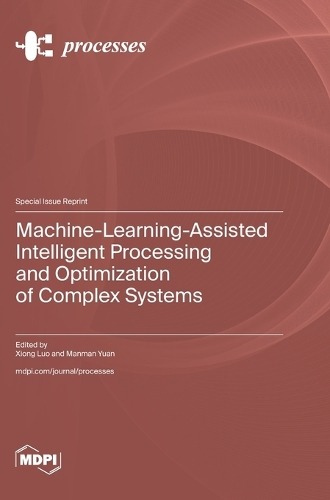
Machine-learning-assisted intelligent processing and optimization of complex systems
Focuses on the most recent developments in intelligent optimization methods and their applications in various test cases. The reprint covers various topics, including distributed multiagent modeling, metaheuristic algorithms, multisource data fusion, mobile computing and mobile sensing, machine learning-based intelligent processing for modeling complex manufacturing systems, and data-driven intelligent modeling

Lasers in the Conservation of Artworks ; LACONA V Proceedings, Osnabrück, Germany, Sept. 15-18, 2003
Since 1995, when Costas Fotakis first brought together restorers and scientists to discuss the potential of lasers in art conservation, the field has grown enormously in importance, and today restorers and laser scientists work together to develop new applications. This book presents the more than six dozen research papers prepared for LACONA V (Lasers in Art Conservation), held in Osnabrueck/Germany in September 2003. The fifth congress once again gathers restorers, art historians, museum staff, laser scientists and laser manufacturers. The topics include, among others: laser cleaning of artworks (case studies and side effects), removal of former conservation layers, fundamentals of laser-artwork interaction, online monitoring and process control, laser diagnostics, spectroscopy for monitoring and identification, networks and co-operation projects.
Biopharmaceutical manufacturing progress, trends and challenges
Source of the latest innovative research and technical development in biomanufacturing systems. It is organised into 2 parts: 1) Manufacturing of recombinant therapeutic proteins (e.g. therapeutic antibodies, biosimilars/biogenerics) and 2) Manufacturing aspects of cell and gene therapy. Each with selected chapters on the following topics for both up- and downstream, such as: Advanced process strategies, especially continuous manufacturing, Advanced culture techniques, especially single-use systems, Process transfer, scale-up/scale-down models, Processing advances/Manufacturing productivity/efficiency, Model-assisted process understanding and development/Digital Twins, Process controls and analytics, Quality control, Quality by design, Facility design and full-scale commercial systems, manufacturing technology innovation.
