



الصفحة 1
الصفحة 1

The Autofictional : Approaches, Affordances, Forms
This book offers innovative and wide-ranging responses to the continuously flourishing literary phenomenon of autofiction. The book shows the insights that are gained in the shift from the genre descriptor to the adjective, and from a broad application of “the autofictional” as a theoretical lens and aesthetic strategy. In three sections on “Approaches,” “Affordances,” and “Forms,” the volume proposes new theoretical approaches for the study of autofiction and the autofictional, offers fresh perspectives on many of the prominent authors in the discussion, draws them into a dialogue with autofictional practice from across the globe, and brings into view texts, forms, and media that have not traditionally been considered for their autofictional dimensions.

Cultural representations of gender vulnerability and resistance : A Mediterranean approach to the Anglosphere
This book considers the cultural representation of gender violence, vulnerability and resistance with a focus on the transnational dimension of our contemporary visual and literary cultures in English. Contributors address concepts such as vulnerability, resilience, precarity and resistance in the Anglophone world through an analysis of memoirs, films, TV series, and crime and literary fiction across India, Ireland, Canada, Australia, the US, and the UK. Chapters explore literary and media displays of precarious conditions to examine whether these are exacerbated when intersecting with gender and ethnic identities, thus resulting in structural forms of vulnerability that generate and justify oppression, as well as forms of individual or collective resistance and/or resilience. Substantial insights are drawn from Animal Studies, Critical Race Studies, Human Rights Studies, Post-Humanism and Postcolonialism.
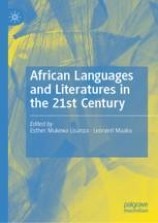
African Languages and Literatures in the 21st Century
Examines the crucial role still played by African languages in pedagogy and literatures in the 21st century, generating insights into how they effectively serve cultural needs across the African continent and beyond. Boldly positioning African languages as key resources in the 21st century, chapters focus on themes such as language revolt by marginalized groups at grassroots level, the experience of American students learning African languages, female empowerment through the use of African languages in music, film and literary works, and immigration issues. The contributions are written by scholars of language, literature, education and linguistics, and will be of interest to students and scholars in these and related areas.
