



الصفحة 1
الصفحة 1

Imaging planetario : Guida all’uso della webcam = Planetary Imaging : Guide to using the webcam
In this book, Martin Mobberley introduces the amateur to the use of webcams and digital image processing, while providing detailed tips for shooting the Sun, Moon and planets. Each object, with its specific shooting and processing techniques, is treated in a separate chapter. Through the images in this book, the amateur will be able to realize what can be done by applying a webcam to your telescope!

Il cielo sopra Roma : I luoghi dell’astronomia = The sky above Rome : The places of astronomy
Astronomy in Rome has always been there, but a little hidden: it was in the palaces, in the churches or, better, above the churches, speculas scattered along a path that few know by now. Intrigued and frightened, the Romans witnessed the burning of Giordano Bruno in a familiar corner of Campo de 'Fiori, but they probably didn't quite understand what guilt he was accused of. They certainly did not think that he was a philosopher and a scientist who had tried to imagine what the world was like.

Ice, Rock, and Beauty : A Visual Tour of the New Solar System
Ice, Rock, and Beauty is a book for anybody who lives in the solar neighborhood, and takes an interest in its significance to us as residents.The book gathers images from a rich pool, many from national and international organizations such as NASA and ESA, some directly from academic astronomers, and a few from private individuals. Together they tell a story of the Solar System, and of its beauty, that has not been told before.

Guide to Observing Deep-Sky Objects : A Complete Global Resource for Astronomers
Guide to Observing Deep-Sky Objects is an invaluable reference for all amateur astronomers. The book contains, for each constellation, (1) a star chart showing the Bayer labels, (2) a table for many of the stars in the constellation, along with their positions and magnitudes, and (3) a table of the major deep-sky objects in the constellation, with relevant observational data. Facing pages provide unique year-long graphs that show when the constellation is visible in the sky, which allows the user to quickly determine whether a given constellation can be seen, and when the best time to see it will be.

Field Guide to Meteors and Meteorites
Imagine the unique experience of being the very first person to hold a newly-found meteorite in your hand – a rock from space, older than Earth! "Weekend meteorite hunting" with magnets and metal detectors is becoming ever more popular as a pastime, but of course you can’t just walk around and pick up meteorites in the same way that you can pick up seashells on the beach. Those fragments that survived the intense heat of re-entry tend to disguise themselves as natural rocks over time, and it takes a trained eye – along with the information in this book – to recognize them.

Fare astronomia con piccoli telescopi = Are astronomy with small telescopes
Giant tools are not necessarily required to produce scientifically valid results in the field of astronomy. Even the amateur with a small telescope, with a diameter of only 8-9 cm, can contribute to the science of the sky by making useful observations of the Sun, the Moon, planets, comets, asteroids, double or variable stars, nebulae and star clusters. The manual of M.K. Gainer explains what the minimum equipment is (a small telescope, a computer, a simple digital camera), how to use it, and what are the appropriate techniques to be adopted in the observations. It also offers schemes for interpreting and reducing the collected data, as well as forms to be filled in and sent to international collection centers.

Exploring the Moon : The Apollo Exped.s
the book develops the scientific theme of lunar geology, and therefore will be of use as background reading for undergraduate students of planetary sciences. In addition, with the prospect of a resumption of human missions, it will help journalists understand what Apollo achieved after the 'flags and footprints' of the Apollo 11 landing in July1969 and will commemorate the fortieth anniversary of that momentous event.

Electronic Imaging in Astronomy : Detectors and Instrumentation
The second edition of Electronic Imaging in Astronomy: Detectors and Instrumentation describes the remarkable developments that have taken place in astronomical detectors and instrumentation in recent years – from the invention of the charge-coupled device (CCD) in 1970 to the current era of very large telescopes, such as the Keck 10-meter telescopes in Hawaii with their laser guide-star adaptive optics which rival the image quality of the Hubble Space Telescope. Authored by one of the world’s foremost experts on the design and development of electronic imaging systems for astronomy, this book has been written on several levels to appeal to a broad readership. Mathematical expositions are designed to encourage a wider audience, especially among the growing community of amateur astronomers with small telescopes with CCD cameras.

Clocks in the Sky : The Story of Pulsars
In this book, Geoff McNamara explores the history, subsequent discovery and contemporary research into pulsar astronomy. The story of pulsars is brought right up to date with the announcement in 2006 of a new breed of pulsar, Rotating Radio Transients (RRATs), which emit short bursts of radio signals separated by long pauses. These may outnumber conventional radio pulsars by a ratio of four to one. Geoff McNamara ends by pointing out that, despite the enormous success of pulsar research in the second half of the twentieth century, the real discoveries are yet to be made including, perhaps, the detection of the hypothetical pulsar black hole binary system by the proposed Square Kilometre Array - the largest single radio telescope in the world.
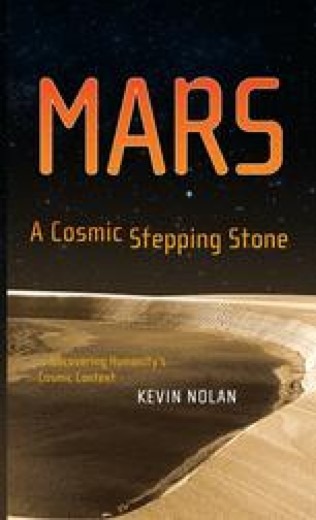
Mars, A Cosmic Stepping Stone : Uncovering Humanity’s Cosmic Context
The questions of our origin and cosmic abundance of life are among the compelling facing humanity. For all of the difficulties facing us however, the planet Mars may act as a cosmic stepping stone in uncovering the answers. This book examines these issues in one of the comprehensive treatments about Mars and our legacy of engagement with it.
Mapping the Galaxy and Nearby Galaxies
This is a proceedings book of the symposium "Mapping the Galaxy and Nearby Galaxies" held on Ishigaki Island, Okinawa, Japan, on June 25 – 30, 2006. The symposium focused on mapping the interstellar media and other components in galaxies.
Lights in the Sky : Identifying and Understanding Astronomical and Meteorological Phenomena
Lights in the Sky is a truly comprehensive guide to observing, identifying, and imaging sky glows and other unusual atmospheric/astronomical phenomena, in both the night and daytime skies.

L'astrofilo moderno = The modern amateur astronomer
In less than two decades, amateur astronomy has changed its face. The reason, of course, is technological progress. Cheap but high-quality telescopes, computer-controlled "go-to" mounts, autoguiders, CCD cameras, video cameras and (as always) computers and the Internet are just some of the elements that revolutionized 21st century astronomy. Not only have they made amateur astronomy more "friendly" and fun, but they have also greatly expanded the potential of the amateur astronomer. Martin Mobberley first tackles the basic issues and then analyzes in depth what tools are available on the market. From here he starts to review the revolutionary possibilities that open up for amateur astronomers, from imaging, to spectroscopy, to photometry, to the surveillance of Near-Earth objects - comets and asteroids that can come dangerously close to the Earth.
Landscapes of Mars : A Visual Tour
Landscapes of Mars is essentially a picture book that provides a visual tour of Mars. All the major regions and topographical features will be shown and supplemented with chapter introductions and extended captions. In a way, think of it as a visual tourist guide. Other topics covered are Martian uplands on the order of the elevation of Mt. Everest, Giant volcanoes and a rift system, the Grand Canyon of Mars, craters and the absence of craters over large regions (erosion), and wind shadows around craters, sand dunes, and dust devils.
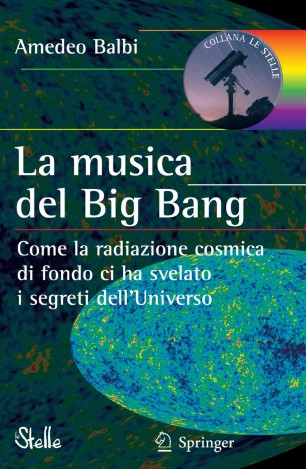
La musica del Big Bang : Come la radiazione cosmica di fondo ci ha svelato i segreti dell’Universo = The music of the Big Bang : How the cosmic background radiation revealed the secrets of the Universe to us
Cosmic microwave background radiation is the residue of the great heat following the Big Bang. A tenuous sign, over 13 billion years old, in which the answers to many of the questions about the nature of our Universe are hidden. Discovered by chance in 1964, in the last forty years this fossil trace of the origins of the Cosmos has been explored with every available means. Two Nobel Prizes in physics have already been awarded for research involving it, the last in 2006 for the results of the COBE satellite. Much of the information encoded in the cosmic background radiation was impressed by the superimposition of acoustic waves present in the early Universe: a "music" of the Big Bang, which cosmologists have tried for years to reconstruct, using techniques similar to those that allow to distinguish the sound of different musical instruments. Only recently have the first notes of this extraordinary cosmic symphony finally been revealed, but the investigation is not over yet. This book illustrates, with a language suitable even for non-specialists, the theories, observations and discoveries that have brought cosmology into a new era.
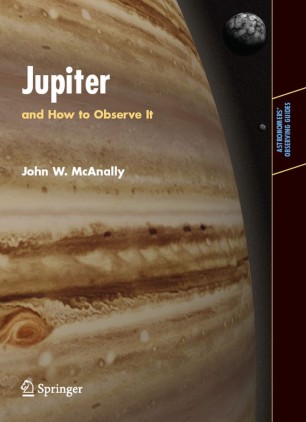
Jupiter : and How to Observe It
Jupiter is one of the most spectacular observing targets for amateur astronomers. There are various books about observing the planets, and several about Jupiter itself, but this is the only book to deal with the giant planet - its formation, structure, and incredible physics - as well as with the practical aspects of observation of the planet and its moons.

Buchi neri nel mio bagno di schiuma : L’enigma di Einstein = Black holes in my bubble bath : Einstein's riddle
Einstein's Enigma, or black holes in my foam bath, tells the story of the theory of gravitation, from its beginnings to the latest developments in astrophysics, focusing on Albert Einstein's theory of general relativity and the physics of black holes. Through engaging conversations and diagrams scribbled on paper napkins, the rudiments of relativity, space-time and many aspects of modern physics follow one another. In skits narrated with pedagogical skill and remarkable literary talent, the reader will come across the informal lessons that a cosmopolitan astrophysicist gives to his friend Alfie, a free lance organizer of research projects. Join in the intellectual fun and get excited with sparkling ideas, while with your imagination you enjoy a relaxing soak in this magical tub!
