



الصفحة 1
الصفحة 1
Natural Polysaccharides in Drug Delivery and Biomedical Applications
Provides a fundamental overview of natural polysaccharides, their sources, extraction methodologies, and characterizations. It covers specific natural polysaccharides and their effective application in drug delivery and biomedical use. Additionally, chapters in the book discuss key topics including the sources and extraction methodologies of natural polysaccharides, their role in tissue engineering applications, polysaccharide-based nanoparticles in biomedical applications, and their role in the delivery of anticancer drugs. Written by industry leaders and edited by experts, this book emphasizes recent advances made in the field.Natural Polysaccharides in Drug Delivery and Biomedical Applications provides academics, researchers, and pharmaceutical health care professionals with a comprehensive book on polysaccharides in pharmaceutical delivery process.

NanoBiotechnology : BioInspired Devices and Materials of the Future
NanoBioTechnology: BioInspired Devices and Materials of the Future is a groundbreaking text that will assist scientists and students in learning the fundamentals and cutting-edge nature of this new and emerging science. Focusing on materials and building blocks for nanotechnology, leading scientists from around the world share their knowledge and expertise in this authoritative volume. The volume is broken into five sections. The first section presents an overview of nanotechnology and describes the many aspects of the field. Section 2 details biological materials serving as nanotemplates for bottom-up fabrication. Section 3 covers the use of biological macromolecules for electron transfer and computation. Section 4 presents a brief overview of the extensive and rapidly growing field of nanomedicine. Finally, Section 5 details de-novo designed structures and the various approaches different scientific groups take with molecular level training and language

Inflammation and natural products ; 1st ed.
Brings together research in the area of the natural products and their anti-inflammatory action in medical, nutraceutical and food products, addressing specific chronic inflammatory diseases like cancer and the mechanistic aspects of the mode of action of some key natural products. Inflammation is a complicated process, driven by infection or injury or genetic changes, which results in triggering signalling cascades, activation of transcription factors, gene expression, increased levels of inflammatory enzymes, and release of various oxidants and pro-inflammatory molecules in inflammatory cells. Excessive oxidants and inflammatory mediators have a harmful effect on normal tissue, including toxicity, loss of barrier function, abnormal cell proliferation, inhibiting normal function of tissues and organs and finally leading to systemic disorders. The emerging development of natural product formulations utilizing the unique anti-inflammatory compounds such as polyphenols, polysaccharides, terpenes, fatty acids, proteins and several other bioactive components has shown notable successes.

Hyaluronic Acid
Hyaluronic acid, also known as hyaluronan, is a clear, gooey substance that is naturally produced by your body, Hyaluronic acid is generally very safe to use, with few reported side effects. The largest amounts of it are found in your skin, connective tissue and eyes, and Hyaluronic acid has a variety of uses. Many people take it as a supplement, but it’s also used in topical serums, eye drops and injections, and the almost indications are Promotes Healthier, More Supple Skin, accelerate wound healing, Relieve Joint Pain by Keeping Bones Well Lubricated, reduce symptoms of acid reflux, Relieve Dry Eye and Discomfort, Preserve Bone Strength and Prevent Bladder Pain.

Glycoscience : Chemistry and Chemical Biology I-III
Glycostructures play a pivotal and crucial role in a myriad of organisms and important systems in biology, physiology, medicine, bioengineering and technology. Within recent years tools have been developed to promote the understanding of their highly complex functions and the associated chemistry and chemical biology, however, many facts still remain undiscovered.

Glucoszmine and Chondroitin between reality and tllusion
Despite the development of cancer treatments and the introduction of new treatments other than traditional treatments, the death rate is still high around the world for each type of cancer. Although conventional treatments are still common, as a first method in treatment, advanced new treatments have opened new horizon and have shown good efficacy in inhibiting cancer, either by treating them alone or in combination with conventional treatments, such as chemotherapy and radiation therapy. We mention in this research the latest methods of cancer treatment, such as targeted therapies in the treatment of solid cancers and leukemia. and will also mention the annual incidence rates of lines around the world. In cooperation with the head of the hematology division at the Mouwasat Hospital, Dr. Amin Suleiman, we studied cases of CML and MM patients being treated with modern therapies.

Focus on bacterial biofilms
Bacterial biofilms are colonies of bacterial cells embedded in their self-produced matrix composed of polysaccharides, DNA, and proteins. They protect bacterial cells against antibiotics, antibacterial agents, soaps and detergents, and shear stress. Some of the most common biofilm-associated infections in humans include urinary tract infections, infection of wounds and surgical sites, diabetic foot ulcers, dental caries (tooth decay) and gingivitis (gum inflammation), ventilator-associated infections, sinusitis, microbial keratitis, secondary infection related to Covid-19 and other viral infections, and so on. Bacterial resistance to common antibiotics (e.g., penicillin, gentamycin, erythromycin, ciprofloxacin, etc.) is driving us to a catastrophic failure of our health systems. Strategies to develop novel antibacterial agents and technology must be prioritized to combat and eradicate biofilms and their associated challenges. This book provides a comprehensive overview of biofilms with chapters on bacterial virulence factors, quorum sensing in bacteria, antimicrobial resistance in bacteria, strategies to develop new antibacterial agents, and much more.

Esterification of Polysaccharides
Polysaccharide esters (cellulose and starch) are among the first polymeric materials applied commercially. The way of producing these technically relevant derivatives, mainly the carboxylic acid esters of C2 to C4 acids, have not been changed significantly during their history of manufacture. The investigation of new acylation methods and strategies of analysis was revived during the last decade by the search for tailored, biocompatible, material for specific fields of application, e.g., biotechnology, sensor technique and medicine. Unconventional solvents were developed for completely homo-geneous acylation reaction applying state of the art techniques of modern organic chemistry for polysaccharide modification. This book will provide a first comprehensive summary of acylation methods in a very practical manner. Detailed structure analysis is indispensable for the evaluation of structure-property-relationships. Spectroscopic methods in particular FTIR- and NMR spectroscopy including two dimensional methods are of increasing importance.

Class 2 Transferases I : EC 2.1.1
This new, second edition reflects considerable progress in enzymology: many enzymes are newly classified or reclassified. Each entry is correlated with references and one or more source organisms. New datafields are created: application and engineering (for the properties of enzymes where the sequence has been changed). The total amount of material contained in the Handbook has more than doubled so that the complete second edition consists of 39 volumes as well as a Synonym Index. In addition, starting in 2009, all newly classified enzymes are treated in Supplement Volumes. Springer Handbook of Enzymes is an ideal source of information for researchers in biochemistry, biotechnology, organic and analytical chemistry, and food sciences, as well as for medicinal applications

Class 2 · Transferases IV EC 2.4.1.1. -2.4.1.89 ; Vol.31
Springer Handbook of Enzymes provides data on enzymes sufficiently well characterized. It offers concise and complete descriptions of some 5,000 enzymes and their application areas. Data sheets are arranged in their EC-Number sequence and the volumes themselves are arranged according to enzyme classes. This new, second edition reflects considerable progress in enzymology: many enzymes are newly classified or reclassified. Each entry is correlated with references and one or more source organisms. New datafields are created: application and engineering (for the properties of enzymes where the sequence has been changed). The total amount of material contained in the Handbook has more than doubled so that the complete second edition consists of 39 volumes as well as a Synonym Index. In addition, starting in 2009, all newly classified enzymes are treated in Supplement Volumes.
Biomacromolecules : Carbohydrates, lipids, proteins and nucleic acids
The first chapter looks at the structural formulas and cyclic forms of monosaccharides, as well as their synthesis and breakdown. Cyclization, enolization, isomerization, tautomerization, mutarotation, and epimerization are all briefly described. Examples of disaccharides and polysaccharides are also presented. The second chapter covers triglycerides, steroids, vitamins, and their constituents. The third chapter examines the primary structure of proteins, including amino acid properties, peptide bond formation, and peptide synthesis. It also addresses secondary, tertiary, and quaternary structures. The book concludes with a chapter on nucleic acids, which covers the chemistry of nucleosides and oligonucleotides as well as topics such as genetic code, DNA secret code, Polymerase Chain Reaction and DNA fingerprinting.
Biology of Inositols and Phosphoinositides
This volume describes the current status of the biology of inositols and phosphoinositides with an emphasis on the development in the area since the publication of volume 26 in 1996 in this series. The progress made in dissecting the genetics, structure and evolution of the seminal enzyme for synthesis of inositol in the biological system has driven the understanding of the enzyme forward. With the current genomic and proteomic tools in place the new role of inositols, inositol phosphates and phosphoinositides in cell signaling or stress response has been explored. These advances are described.
Bioactive Marine Natural Products
Bioactive Marine Natural Products is the first book available that covers all aspects of bioactive marine natural products. It fills the void in the literature for bioactive marine natural products. The book covers various aspects of marine natural products and it is hoped that all the major classes of bioactive compounds are included. Different classes of marine organisms and the separation and isolation techniques are discussed. The chemistry and biology of marine toxins, peptides, alkaloids, nucleosides and prostanoids are discussed in detail. Biological, toxicological and clinical evaluations are also dealt with to ensure that the book may be adopted at any stage by any practicing organic chemist or biologist, working in academia or in R&D divisions of pharmaceutical companies. Each chapter in the book includes an abstract to highlight the major points discussed in the text and concluding remarks are given. References to books, monographs, review articles and original papers are provided at the end of each chapter.
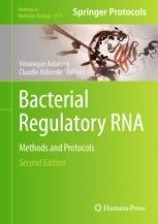
Bacterial regulatory RNA : Methods and protocols
Details new and updated methods used for studying prokaryotic non-coding RNAs and their protein accomplices. Chapters detail discovery of ncRNAs, characterization of their structure, functions, and their interactomes. Written in the highly successful Methods in Molecular Biology series format, chapters include introductions to their respective topics, lists of the necessary materials and reagents, step-by-step, readily reproducible laboratory protocols, and tips on troubleshooting and avoiding known pitfalls.

Animal cell technology : Basic & applied aspects ; Proceedings of the 7th Annual Meeting of the Japanese Association for animal cell technology (JAACT), Nagoya, Japan, November 15-18, 2004
This book contains the proceedings of the 17th Annual and International Meeting of the Japanese Association for Animal Cell Technology (JAACT) that was held in Nagoya, Japan from November 15 to 18, 2004. This volume gives the readers a complete review of present state-of-the-art in Japan and other countries where this field is well advanced. The Proceedings will be useful for the cell biologists, biochemists, molecular biologists, immunologists, biochemical engineers and other disciplines related to animal cell culture, working in either academic environments or in industries of biotechnology and pharmacy.
