



الصفحة 1
الصفحة 1

International Competitiveness in Africa : Policy Implications in the Sub-Saharan Region
The effects of international trade and foreign direct investment on developing economies have always been controversial. With the unstoppable spread of globalization and the supremacy of "open" policies over "closed" ones, the debate between "participating" and "not participating" in the world economy has been superseded by discussions on the best policy measures for expanding participation and enhancing the accrued welfare gains. Policies to strengthen international competitiveness are almost unanimously considered important means towards those ends. This book examines two policies frequently used to enhance international competitiveness in Sub-Saharan African economies: exchange rate policy and productivity-related policy.

Formalizing the Shadow Economy in Serbia : Policy Measures and Growth Effects
The main objective of this book is to develop a strategy and policy measures to enhance the formalization of the shadow economy in order to improve the competitiveness of the economy and contribute to economic growth; it explores these issues with special reference to Serbia. The size and development of the shadow economy in Serbia and other Central and Eastern European countries are estimated using two different methods (the MIMIC method and household-tax-compliance method). Micro-estimates are based on a special survey of business entities in Serbia, which for the first time allows us to explore the shadow economy from the perspective of enterprises and entrepreneurs.

Decarbonizing Freight Transport: Acceptance and Policy Implications
This Book analyzes the acceptance of sustainable freight transport and suggests a new framework for policy measures to decarbonize freight transport. Despite intense political endeavors, the environmental performance of the transport system has not improved in the previous years. It seems that the existing measures are not sufficient to motivate transport users to implement sustainable freight transport strategies. The case of three different strategies for sustainable freight transport is studied: horizontal collaboration in a Physical Internet network, multimodal freight transport and liquefied natural gas (LNG) as alternative truck fuel.

Data-Driven Policy Impact Evaluation : How Access to Microdata is Transforming Policy Design
Provides statistical tools for evaluating the effects of public policies advocated by governments and public institutions. Experts from academia, national statistics offices and various research centers present modern econometric methods for an efficient data-driven policy evaluation and monitoring, assess the causal effects of policy measures and report on best practices of successful data management and usage. Topics include data confidentiality, data linkage, and national practices in policy areas such as public health, education and employment. It offers scholars as well as practitioners from public administrations, consultancy firms and nongovernmental organizations insights into counterfactual impact evaluation methods and the potential of data-based policy and program evaluation.
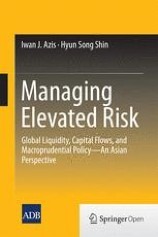
Managing Elevated Risk : Global Liquidity, Capital Flows, and Macroprudential Policy—An Asian Perspective
Discusses the risks and opportunities that arise in Emerging Asia given the context of a new environment in global liquidity and capital flows. It elaborates on the need to ensure financial and overall economic stability in the region through improved financial regulation and other policy measures to minimize the emergent risks. "Managing Elevated Risk: Global Liquidity, Capital Flows, and Macroprudential Policy—An Asian Perspective" also explores the range of policy options that may be deployed to address the impact of global liquidity on domestic financial and socio-economic conditions including income inequality. The book is primarily aimed at policy makers, financial market regulators and supervisory agencies to help them improve national regulatory systems and to promote harmonization of national regulations and practices in line with global standards.
Land Use and Soil Resources
Land-use change is one of the main drivers of many environmental change processes. It influences the basic resources of land use, including the soil. Its impact on soil often occurs so creepingly that land managers hardly contemplate initiating ameliorative or counterbalance measures. Poor land management has degraded vast amounts of land, reduced our ability to produce enough food, and is a major threat to rural livelihoods in many developing countries. To date, there has been no single unifying volume that addresses the multifaceted impacts of land use on soils. This book has responded to this challenge by bringing together renowned academics and policy experts to analyze the patterns, driving factors and proximate causes, and the socioeconomic impacts of soil degradation. Policy measures to prevent irreversible degradation and rehabilitate degraded soils are also identified.
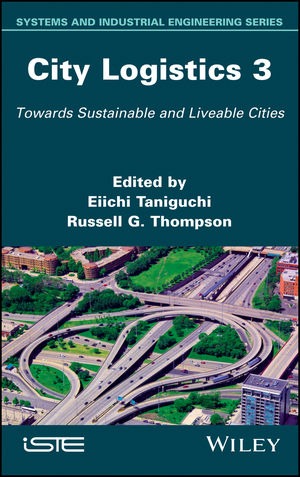
City Logistics 3 : Towards sustainable and liveable cities
Presents recent advances in modelling, planning and evaluating city logistics for sustainable and liveable cities based on the application of ICT (Information and Communication Technology) and ITS (Intelligent Transport Systems). It highlights modelling the behaviour of stakeholders who are involved in city logistics as well as planning and managing policy measures of city logistics including cooperative freight transport systems in public-private partnerships. Case studies of implementing and evaluating city logistics measures in terms of economic, social and environmental benefits from major cities around the world are also given.
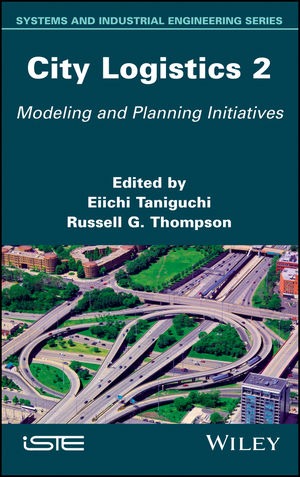
City Logistics 2 : Modeling and Planning Initiatives
Presents recent advances in modelling, planning and evaluating city logistics for sustainable and liveable cities based on the application of ICT (Information and Communication Technology) and ITS (Intelligent Transport Systems). It highlights modelling the behaviour of stakeholders who are involved in city logistics as well as planning and managing policy measures of city logistics including cooperative freight transport systems in public-private partnerships. Case studies of implementing and evaluating city logistics measures in terms of economic, social and environmental benefits from major cities around the world are also given.
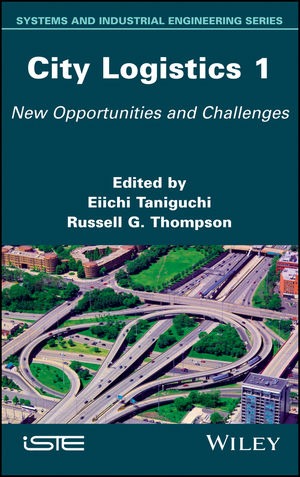
City Logistics 1 : New opportunities and challenges
Presents recent advances in modelling, planning and evaluating city logistics for sustainable and liveable cities based on the application of ICT (Information and Communication Technology) and ITS (Intelligent Transport Systems). It highlights modelling the behaviour of stakeholders who are involved in city logistics as well as planning and managing policy measures of city logistics including cooperative freight transport systems in public-private partnerships. Case studies of implementing and evaluating city logistics measures in terms of economic, social and environmental benefits from major cities around the world are also given.
