



الصفحة 1
الصفحة 1

Nonlinear Partial Differential Equations for Scientists and Engineers
This expanded and revised second edition is a comprehensive and systematic treatment of linear and nonlinear partial differential equations and their varied applications. Building upon the successful material of the first book, this edition contains updated modern examples and applications from areas of fluid dynamics, gas dynamics, plasma physics, nonlinear dynamics, quantum mechanics, nonlinear optics, acoustics, and wave propagation. Methods and properties of solutions are presented, along with their physical significance, making the book more useful for a diverse readership.
Nb3Sn Accelerator Magnets : Designs, Technologies and Performance
This book is written by world-recognized experts in the fields of applied superconductivity and superconducting accelerator magnet technologies. It provides a contemporary review and assessment of the experience in research and development of high-field accelerator dipole magnets based on Nb3Sn superconductor over the past five decades. The reader attains clear insight into the development and the main properties of Nb3Sn composite superconducting wires and Rutherford cables, and details of accelerator dipole designs, technologies and performance. Special attention is given to innovative features of the developed Nb3Sn magnets. The book concludes with a discussion of accelerator magnet needs for future circular colliders.
Multiscale processes in the earth’s magnetosphere : From interball to cluster ; Proceedings of the NATO ARW on Multiscale Processes in the Earth's Magnetosphere: From Interball to Cluster, Prague, Czech Republic from 9 to 12 September 2003
The past forty years of space research have seen a substantial improvement in our understanding of the Earth’s magnetosphere and its coupling with the solar wind and interplanetary magnetic ?eld (IMF). The magnetospheric str- ture has been mapped and major processes determining this structure have been de?ned. However, the picture obtained is too often static. We know how the magnetosphere forms via the interaction of the solar wind and IMF with the Earth’s magnetic ?eld. We can describe the steady state for various upstream conditions but do not really understand the dynamic processes leading from one state to another. The main dif?culty is that the magnetosphere is a comp- cated system with many time constants ranging from fractions of a second to days and the system rarely attains a steady state. Two decades ago, it became clear that further progress would require multi-point measurements. Since then, two multi-spacecraft missions have been launched — INTERBALL in 1995/96 and CLUSTER II in 2000. The objectives of these missions d- fered but were complementary: While CLUSTER is adapted to meso-scale processes, INTERBALL observed larger spatial and temporal scales. However, the number of papers taking advantage of both missions simul- neously is rather small.

Ionospheric Precursors of Earthquakes
Changes included changing my career from the field of space plasma physics to Earth sciences and geophysics, and changes in my personal life giving me h- piness and compliance in my present family.
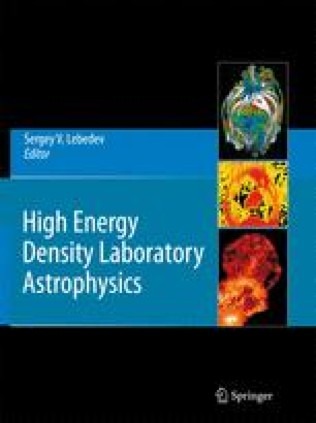
High energy density laboratory astrophysics
This work will be of interest to a wide range of academics. It provides a comprehensive round-up of the proceedings and papers delivered at the 2006 Conference on High Energy Density Laboratory Astrophysics, held at Rice University in Houston, Texas, USA.

Foundations of plasma physics for physicists and mathematicians
Foundations of Plasma Physics for Physicists and Mathematicians covers the basic physics underlying plasmas and describes the methodology and techniques used in both plasma research and other disciplines such as optics and fluid mechanics.

Fisica solare = Solar physics
An introduction to Solar Physics, intended to illustrate to those who intend to approach this discipline (students, PhDs, researchers) the physical mechanisms underlying the complex phenomena observed on our closest star. It does not claim to be exhaustive (suffice it to say that solar physics spans a wide range of disciplines, such as nuclear physics, thermodynamics, electrodynamics, atomic and molecular physics, spectroscopy across all bands of the electromagnetic spectrum, magnetohydrodynamics, plasma physics, the development of new instrumentation, optics, etc.). Rather, a number of topics of fundamental relevance to the current study of the Sun have been selected (especially with regard to ground-based observations with large telescopes), and an attempt has been made to provide a general overview of these topics, including their historical evolution, without going into excessive detail. Since Solar Physics can rightfully be considered the "Rosetta Stone" of all Astrophysics, the volume can also be considered a valid introduction to this subject.

Elementary physics of complex plasmas
Complex plasmas are dusty plasmas in which the density and electric charges of the dust grains are sufficiently high to induce long-range grain-grain interactions, as well as strong absorption of charged-plasma components. Together with the sources replenishing the plasma such systems form a highly dissipative thermodynamically open system that exhibits many features of collective behaviour generally found in complex systems. Most notably among them are self-organized patterns such as plasma crystals, plasma clusters, dust stars and further spectacular new structures. Beyond their intrinsic scientific interest, the study of complex plasmas grows in importance in a great variety of fields, ranging from space-plasma sciences to applied fields such as plasma processing, thin-film deposition and even the production of computer chips by plasma etching, in which strongly interacting clouds of complex plasmas can cause major contamination of the final product.

Electron Scattering : From Atoms, Molecules, Nuclei and Bulk Matter
There is a unity to physics; it is a discipline which provides the most fundamental understanding of the dynamics of matter and energy. To understand anything about a physical system you have to interact with it and one of the best ways to learn something is to use electrons as probes. This book is the result of a meeting, which took place in Magdalene College Cambridge in December 2001. Atomic, nuclear, cluster, soHd state, chemical and even bio- physicists got together to consider scattering electrons to explore matter in all its forms. Theory and experiment were represented in about equal measure. It was meeting marked by the most lively of discussions and the free exchange of ideas. We all learnt a lot. The Editors are grateful to EPSRC through its Collaborative Computational Project program (CCP2), lOPP, the Division of Atomic, Molecular, Optical and Plasma Physics (DAMOPP) and the Atomic Molecular Interactions group (AMIG) of the Institute of Physics for financial support. The smooth running of the meeting was enormously facilitated by the efficiency and helpfulness of the staff of Magdalene College, for which we are extremely grateful.

Coronal Mass Ejections
This volume offers a comprehensive and integrated overview of our present knowledge and understanding of Coronal Mass Ejections (CMEs) and their descendants, Interplanetary CMEs (ICMEs). It results from a series of workshops held between 2000 and 2004. An international team of about sixty experimenters involved e.g. in the SOHO, ULYSSES, VOYAGER, PIONEER, HELIOS, WIND, IMP, and ACE missions, ground observers, and theoreticians worked jointly on interpreting the observations and developing new models for CME initiations, development, and interplanetary propagation. The book provides researchers active in space physics with an overview of the current understanding of CMEs and ICMEs, and their effects in the heliosphere. It also provides the advanced graduate student with introductory material on this active field of research.

Construction of Mappings for Hamiltonian Systems and Their Applications
Based on the method of canonical transformation of variables and the classical perturbation theory, this innovative book treats the systematic theory of symplectic mappings for Hamiltonian systems and its application to the study of the dynamics and chaos of various physical problems described by Hamiltonian systems. It develops a new, mathematically-rigorous method to construct symplectic mappings which replaces the dynamics of continuous Hamiltonian systems by the discrete ones. Applications of the mapping methods encompass the chaos theory in non-twist and non-smooth dynamical systems, the structure and chaotic transport in the stochastic layer, the magnetic field lines in magnetically confinement devices of plasmas, ray dynamics in waveguides, etc. The book is intended for postgraduate students and researches, physicists and astronomers working in the areas of plasma physics, hydrodynamics, celestial mechanics, dynamical astronomy, and accelerator physics. It should also be useful for applied mathematicians involved in analytical and numerical studies of dynamical systems.

Computational Many-Particle Physics
Complicated many-particle problems abound in nature and in research alike. Plasma physics, statistical physics and condensed matter physics, as primary examples, are all heavily dependent on efficient methods for solving such problems. Addressing graduate students and young researchers, this book presents an overview and introduction to state-of-the-art numerical methods for studying interacting classical and quantum many-particle systems. A broad range of techniques and algorithms are covered, and emphasis is placed on their implementation on modern high-performance computers.

Cold atmospheric plasma (CAP)
Plasma medicine is an innovative research field combining plasma physics, life science, and clinical medicine. It is mainly focused on the application cold atmospheric plasma (CAP) in therapeutic settings. Based on its ability to inactivate microorganisms but also to stimulate tissue regeneration, current medical applications are focused on the treatment of wounds and skin diseases. Since CAP is also able to inactivate cancer cells, its use in cancer therapy is expected to be the next field of clinical plasma application. Other promising applications are expected in oral medicine and ophthalmology

Magneto-Fluid Dynamics : Fundamentals and Case Studies of Natural Phenomena
Concerns the generation of electric currents and of electric space charges inside conducting media that move in magnetic fields. The authors postulate nothing but the Maxwell equations. They discuss at length the disk dynamo, which serves as a model for the natural self-excited dynamos that generate magnetic fields such as that of sunspots. There are 36 Examples and 13 Case Studies. The Case Studies concern solar phenomena -- magnetic elements, sunspots, spicules, coronal loops -- and the Earth's magnetic field.
Magnetism and Accelerator-Based Light Sources : Proceedings of the 7th International School ‘‘Synchrotron Radiation and Magnetism’’, Mittelwihr (France), 2018
Collects the contributions of the seventh school on Magnetism and Synchrotron Radiation held in Mittelwihr, France, from 7 to 12 October 2018. It starts with an introduction to the physics of modern X-ray sources followed by a general overview of magnetism.
Magnetic Control of Tokamak Plasmas
The main topic of Magnetic Control of Tokamak Plasmas is the design of feedback control systems guaranteeing the stability of plasma equilibrium inside a tokamak and the regulation of the plasma position and shape during plasma pulses. Modelling and control details are presented, allowing the non-expert to understand the control problem. Starting from equations of magneto-hydro-dynamics, all the steps needed for the derivation of plasma state-space models are enumerated. The basics of electromagnetics are frequently recalled. The control problem is then described beginning with control of current and position – vertical and radial – and progressing to the more challenging shape control. The solutions proposed vary from simple PIDs to more sophisticated MIMO controllers.
Lasers and Nuclei : Applications of Ultrahigh Intensity Lasers in Nuclear Science
Lasers and Nuclei describes the generation of high-energy-particle radiation with high-intensity lasers and its application to nuclear science. A basic introduction to laser--matter interaction at high fields is complemented by detailed presentations of state of the art laser particle acceleration and elementary laser nuclear experiments. The text also discusses future applications of lasers in nuclear science, for example in nuclear astrophysics, isotope generation, nuclear fuel physics and proton and neutron imaging.

Classical Methods of Statistics : With Applications in Fusion-Oriented Plasma Physics
Classical Methods of Statistics is a blend of theory and practical statistical methods written for graduate students and researchers interested in applications to plasma physics and its experimental aspects. It can also fruitfully be used by students majoring in probability theory and statistics. In the first part, the mathematical framework and some of the history of the subject are described. Many exercises help readers to understand the underlying concepts. In the second part, two case studies are presented exemplifying discriminant analysis and multivariate profile analysis. The introductions of these case studies outline contextual magnetic plasma fusion research. In the third part, an overview of statistical software is given and, in particular, SAS and S-PLUS are discussed. In the last chapter, several datasets with guided exercises, predominantly from the ASDEX Upgrade tokamak, are included and their physical background is concisely described. The book concludes with a list of essential keyword translations.

Cathodic Arcs : From Fractal Spots to Energetic Condensation
Cathodic Arcs: From Fractal Spots to Energetic Condensation is the first book in over a decade dedicated to the physics and technology of cathodic arcs. It includes a detailed account of arc history, a textbook-like introduction to cathode phenomena, and some basic physics of expanding plasmas; it deals with the infamous macroparticle issue and describes a host of practical plasma filter solutions. In contrast to previous books on cathodic arcs, the focus is on the relation of arc plasmas and their properties to surface modification and thin film deposition. The book contains sections on basic plasma physics and thin film materials science. It also deals with practical issues of coatings such as stress control and the often-underrated issue of the coating’s color. By stressing the fractal nature of cathode spots, the theme of fluctuations can be found throughout the book: fluctuations affect all plasma properties and thereby have consequences for plasma-based surface modifications and film growth.
