



الصفحة 1
الصفحة 1

Ecologies design : Transforming architecture, landscape, and urbanism
Ecologies Design challenges professionals and academics to expand the concept of applying and understanding ecologies, both biological and social, in multi-disciplinary spatial design contexts. This book will be of great interest to academics and professionals within ecology and design.

Creating great places : Evidence-based urban design for health and wellbeing
Reminds us that theory is a powerful starting point. Drawing on international research, illustrated case studies, personal experiences, as well as fascinating examples from history and pop culture, this practical book provides the reader with inspiration, guidance and tools. The first section outlines six critical theories for contemporary urban design - affordance, prospect-refuge, personal space, sense of place/genius loci, place attachment, and biophilic design. The second section, using their innovative 'theory-storming' process, demonstrates how designers can create great places that are inclusive, sustainable, and salutogenic.

Coastal architectures and politics of tourism : Leisurescapes in the global sunbelt
Offers a critical and complicated picture of how leisure tourism connected the world after the World War II, transforming coastal lands, traditional societies, and national economies in new ways. Analyzes selected case studies of architectures and landscapes around the world, contextualizing them within economic geographies of national development, the geopolitics of the Cold War, the legacies of colonialism, and the international dynamics of decolonization. Postwar leisure tourism evokes a rich array of architectural spaces and altered coastal landscapes, which is explored in this collection through discussions of tourism developments in the Mediterranean littoral, such as Greece, Turkey, and southern France, as well as compelling analyses of Soviet bloc seaside resorts along the Black Sea and Baltic coasts, and in beachscapes and tourism architectures of western and eastern hemispheres, from Southern California to Sri Lanka, South Korea, and Egypt.
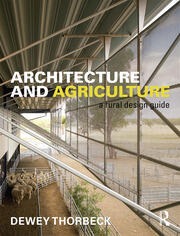
Architecture and agriculture : A rural design guide
Presents architectural guidelines for buildings designed and constructed in rural landscapes by emphasizing their connections with function, culture, climate, and place. Following on from the author’s first book Rural Design, the book discusses in detail the buildings that humans construct in support of agriculture. By examining case studies from around the world including Australia, China, Japan, Norway, Poland, Japan, Portugal, North America, Africa and the Southeast Asia it informs readers about the potentials, opportunities, and values of rural architecture, and how they have been developed to create sustainable landscapes and sustainable buildings for rapidly changing rural futures.
