



الصفحة 1
الصفحة 1

Menopause
As people live longer, women are spending most of their lives in menopause, affected by a variety of estrogen-related conditions such as osteoporosis, cognitive and cardiovascular decline, increased risk of breast cancer and other symptoms that decrease the overall quality of life. Unfortunately, hormonal therapy was found to be less effective in decreasing the severity of some of these conditions than previously thought and may actually increase the risk of cancer. The aim of this research was to put a spotlight on natural treatments for menopause like changing life style and herbal medicines.

Medicinal plants for cosmetics : Health and diseases
Describes diseases and ailments occurring in individuals worldwide including acne, ageing, various cancers, eczema and other conditions. This book explains each disease and ailment, allowing the reader to gain a better perspective on misunderstood and underestimated assumptions accompanying the ailment or condition. Not only does this book present information on different diseases and ailments, it presents a variety of plants and plant-based compounds demonstrating potential health benefits.

Herbals as nutraceuticals : Their role in healthcare
Herbal nutraceuticals demonstrate a variety of therapeutic benefits and have been found to prevent, treat, and even cure a range of diseases. This new book provides insight into nutraceuticals and their function in human health, highlighting their antimicrobial and immune-inflammatory properties. It describes the nutraceutical properties of various medicinal herbs and details the role of nutraceuticals in treating diseases such as Alzheimer's, Parkinson's, obesity, diabetes, cancer, cardiovascular diseases, skincare issues, and more.

Garlic Extract : Interaction with mechanisms of bacterial resistance
Garlic (Allium sativum) is a medicinal plant which has a diverse biological activities including antioxidant activity, antimicrobial activity, anticancer activity and others… In this article we are focusing on its antimicrobial effect which had been tested individually and in combination with two resisted antibiotics (Ampicillin, Ciprofloxacin) on 3 gram negative bacteria (Proteus mirabilis, klebsiella pneumoniae and Enterobacter aerogenes) to estimate the effect of garlic extract on the activity of the resisted drugs and bacterial resistance mechanism.

Fundamentals of Pharmacognosy and Phytotherapy
Pharmacognosy (the science of biogenic or nature-derived pharmaceuticals and poisons) has been an established basic pharmaceutical science taught in institutions of pharmacy education for over two centuries. Over the past 20 years though it has become increasingly important given the explosion of new drugs, phytomedicines (plant medicines), nutraceuticals and dietary supplements – all of which need to be fully understood, tested and regulated.
Fundamentals of drug and non-drug interactions : physiopathological perspectives and clinical approaches
Covers nutrients, active principles from phytotherapy/herbal products, and drug classes while identifying potential interactions. Didactic approaches to drug and non-drug interactions and cutting-edge reports are included in each chapter that promotes safer drug prescription and use. The physiopathological overview in this book provides background for chemistry, pharmacology, and mechanistic bases of drug and non-drug interaction as well as clinical cases and predictive screenings.

From herbs to healing : Pharmacognosy - phytochemistry - phytotherapy - biotechnology
Demonstrates the place of phytotherapy in healing, the role of herbs in complementary and traditional therapy, and research strategies for the development of drugs of natural plant origin. This book is primarily designed for scientific researchers, but is also very useful for undergraduate and postgraduate students in their professional training. As this book discusses herbs from all over the world, it is specifically drafted to be useful not only in Hungary and Europe, but also for people in other continents as an English language encyclopaedia of medicinal plants and their biologically active compounds.

Encyclopedia of medicinal plants
This compilation reports different therapeutic plant species, most ordinarily utilized by native persons throughout the planet. The botanical term, family name, dialect name, partly utilized, and the use of the plants have been mentioned in this work. This encyclopedia presents a rundown of restorative plants generally used for relieving disorders, their bioactive elements, and their means of operation.

Effect of antioxidants in plant extracts and free radicals on blood sample
Antioxidants are substances that inhibit and regulate the formation of free radicals, and prevent or slow down the damage to cells caused by free radicals. There is a balance between antioxidants and free radicals throughout the body, and free radicals become dangerous when the balance is disturbed Free radicals play a key role in many physiological decisions in cells. Since free radicals are toxic to cellular components, it is known that they cause DNA damage, contribute to DNA instability and mutation and thus favor carcinogenesis.Low levels of free radicals and steady state levels of antioxidant enzymes are responsible for the fine tuning of redox status inside cells. A change in redox state is a way to modify the physiological status of the cell.Many healthful foods contain antioxidants. If a person consumes some or all of these foods regularly, they may increase their antioxidant levels, potentially helping them prevent the damage that doctors associate with oxidative stress.
La phytocosmétologie thérapeutique = Herapeutic phytocosmetology
Deals with restorative cosmetology. This is understood through the eyes of the doctor specializing in phytotherapy. Three main aspects are discussed: the diagnosis of disturbance of the skin and integuments, external treatment with natural substances, as well as oral treatment (internal treatment). Oral cosmetology has no official recognition, yet the effects of plant extracts on the condition of the skin and integuments are well known. After an introduction to the physiology of the skin, the dosage and the phenomena of skin deterioration, the author discusses different types of treatment depending on the extracts used while explaining their mode of action. This work was written by a doctor, Doctor Paul Goetz, teacher in clinical phytotherapy, and a pharmacist, Doctor Christian Busser, pharmaceutical and scientific advisor, doctor in ethnology and ethnopharmacologist.
La fitoterapia in uno sguardo = Phytotherapy at a glance
This volume summarizes notions of phytotherapy; the intent is to offer the doctor essential knowledge so that he can easily prescribe plant products and to stimulate the pharmacist and herbalist to use them in a more rational way.
Chemistry of natural products : phytochemistry and pharmacognosy of medicinal plants
Plants produce secondary metabolites that humans harness for their own benefit. About half of drugs currently in clinical use are based on these chemicals found in nature. Chemistry of Natural Products covers secondary metabolites present in medicinal plants and their biosynthesis, biological activities, and isolation and separation techniques.
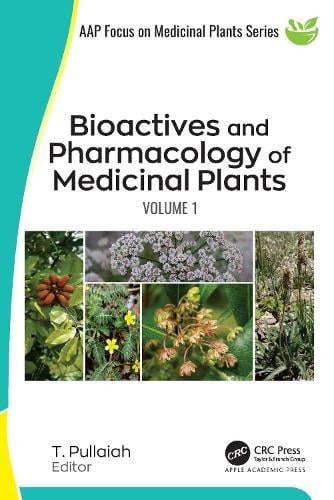
Bioactives and pharmacology of medicinal plants : Vol.1
Bioctives and Pharmacology of Medicinal Plants, concisely presents an abundance of important information on the bioactive and pharmacological properties of medicinal plants. It provides valuable comprehensive research and studies on bioactive phytocompounds of over 68 important medicinal plants with beneficial properties. For each species included in the volume, a brief introduction is given along with their bioactive compounds and chemical structures, followed by their chief pharmacological activities that include antiviral, antimicrobial, antioxidant, anti-cancer, anti-inflammatory, antidiabetic, hepatoprotective, nephroprotective, and cardioprotective activities. A review of the published literature on pharmacological activities on each species is included also, providing a thorough resource on each of the plants covered in the volume.

Alternative medicine and it's uses in the treatment of kidney disease
The aim of this article was to review some of the new and commonly and alternative medicine in the treatment of kidney used medicinal plants , pharmacological activity, and research study of disease, kidney stones medicinal plants. Renal stones are a common problem worldwide with rden substantial morbidities and economic costs. The high economic bu associated with kidney stones is linked mainly with healthcare costs. In vitro and in vivo studies on alternative treatment of kidney stones have been searched by using words such as phytotherapy of kidney stones,. lithotriptic activity of plantss, and medicinal plants used in kidney stone Medicinal plants may be useful in treatment of kidney stones.
