



الصفحة 1
الصفحة 1
Object-Based Image Analysis and Treaty Verification : New Approaches in Remote Sensing – Applied to Nuclear Facilities in Iran
This book describes recent progress in object-based image interpretation, and also presents many new results in its application to verification of nuclear non-proliferation. A comprehensive workflow and newly developed algorithms for object-based high resolution image (pre-) processing, feature extraction, change detection, classification and interpretation are developed, applied and evaluated. The entire analysis chain is demonstrated with high resolution imagery acquired over Iranian nuclear facilities.
Object-Based Image Analysis : Spatial Concepts for Knowledge-Driven Remote Sensing Applications
This book discusses means, technologies and approaches related to the processing and analysis of multi-sensor, multi-resolution data with a focus on the generation, modelling and classification of objects. The applications also address the integration of Geographic Information and the concurrent developments of GIScience and vanquish limitations of pixelwise image processing by exploiting image information context-driven and "intelligently".

Measuring Precipitation from Space : EURAINSAT and the Future
More than 20 years after the last book on the subject the worldwide precipitation community has produced a comprehensive overview of its activities, achievements, ongoing research and future plans. Measuring Precipitation from Space presents state-of-the-art rainfall estimation algorithms, validation strategies, precipitation modelling, and assimilation in numerical weather prediction models. Clouds and precipitation observations and modelling are addressed for the improvement of the rainfall product quality. Special attention is given to the applications to monitoring and forecasting weather events and to climate monitoring in a frame of growing public interest.

Integration of Information for Environmental Security : Environmental Security - Information Security - Disaster Forecast and Prevention - Water Resources Management
Currently the necessary information exists in a multitude of forms and formats geographically and physically scattered over different countries, institutes and organisations, and are subject to widely different data policies and management schemes. Moreover, there is no complete and updated overview of the existing information, e.g. in the form of a metadata catalogue. As a result, integration of this information in case of emergencies has proven to be extremely difficult, if not impossible. Although in some cases, interesting and impressive "demonstrations" have been shown of the possibilities of the integration of information, for a number of reasons these have reached the "operational" stage.

Innovations in 3D Geoinformation Science
Covers various aspects of spatial data modelling specifically regarding three-dimensional (3D) modelling and structuring. The realization of "true" 3D geoinformation spatial systems requires a high input, and the developmental process is taking place in various research centers and universities around the globe.
High resolution numerical modelling of the atmosphere and ocean
This book includes 15 individual papers that highlight the emerging research in atmospheric and oceanic science that has been made possible by exploiting newly available computational resources. Results from regional atmospheric, global atmospheric, global ocean, and global coupled ocean-atmosphere models are discussed in the various contributions.
Heritage building conservation : Sustainable and digital modelling
Covers: The technology used to digitally document heritage buildings, including LIDAR, photogrammetry, Heritage Building Information Modelling (HBIM), and Virtual Reality (VR) technologies Introducing a Maintainability Index of Heritage Buildings (MIHB) to support the decision-making and prioritization process for the maintenance of heritage buildings The adaptive reuse of heritage buildings Modelling embodied and operational energy performance Using Chatbot and Blockchain technology to support the management and preservation of heritage buildings Ultimately, this book presents a useful tool for use in heritage management and highlights how the reusability of heritage buildings is critical to the creation and survival of sustainable communities.
Geospatial Technologies and Homeland Security : Research Frontiers and Future Challenges
This book presents an overview of the latest development of geospatial technologies (including, but not limited to, GIS, RS, GPS, LBS, spatial analysis and modelling etc.) and their applications in piecing together the complex puzzles facing the challenges of the homeland security research and education. A wide variety of topics, ranging from conceptual and methodological to technical and social/legal issues

Geodetic and geophysical observations in Antarctica : An overview in the IPY perspective
This book is a collection of papers on various aspects of the scientific investigation and observation techniques of the polar regions at both temporary and permanent observatories. Most papers focus on regional models based on data acquired in polar regions. Geodetic satellite positions systems (GNSS: GPS, GLONASS, GALILEO) will also be discussed as well as other space techniques (DORIS, VLBI). Gravimetry, absolute gravimetry, and tidal gravimetry are also discussed, as well as seismology and meteorology.
Famine Early Warning Systems and Remote Sensing Data
This book describes the interdisciplinary work of USAID’s Famine Early Warning System Network (FEWS NET) and its in uence on how food security crises are identi ed, documented and the kind of responses that result. The book describes FEWS NET’s systems and methods for using satellite remote sensing to identify and describe how biophysical hazards impact the lives and livelihoods of the po- lation where they occur. It presents several illustrative case studies that will dem- strate the integration of both physical and social science disciplines in its work. FEWS NET’s operational needs have driven science in biophysical remote sensing applications through its collaboration with the US Geological Survey, the National Aeronautics and Space Administration, National Oceanographic and Atmospheric Administration, and US Department of Agriculture, as well as methodologies in the social science domain through its support of the US Agency for International - velopment, UN World Food Program and numerous international non-governmental organizations such as Save the Children, Oxfam and others. Because FEWS NET is an organization that must provide a global picture of food insecurity to decision makers, the information it relies on are by necessity - servable and able to be documented.
Earth observation science and applications for risk reduction and enhanced resilience in Hindu Kush Himalaya Region : A decade of experience from SERVIR
This book is a consolidation of lessons learnt and experiences gathered from our efforts to utilise Earth observation (EO) science and applications to address environmental challenges in the Hindu Kush Himalayan region.

Earth Observation of Global Change : The Role of Satellite Remote Sensing in Monitoring the Global Environment
Global Change is increasingly considered a critical topic in environmental research. Remote sensing methods provide a relevant tool to monitor global variables, since they offer a systematic coverage of the Earth Surface, at different spatial, spectral and temporal resolutions. The data provided by Earth Observation Satellites are being operationally used for monitoring atmospheric conditions, ice sheets and glaciar movements, crop dynamism and land use changes, deforestation and desertification processes, as well as water conditions. The book includes an analysis of the leading missions in global Earth observation, and then reviews the main fields in which remote sensing methods are providing vital data for global change studies.

Digital transformation of the design, construction and management processes of the built environment
This book focuses on the development of methods, interoperable and integrated ICT tools, and survey techniques for optimal management of the building process.
Digital Photogrammetry : A Practical Course
The main part of the book contains several tutorials. In increasing complexity, accompanied by texts explaining further theory, the reader can proceed step by step through the particular working parts. Most of the standard work in Digital Photogrammetry is shown and trained for example scanning, image orientation, mono and stereo plotting, aerial triangulation measurement (manual and automatic), block adjustment, automatic creation of surface models via image matching, creation of ortho images and mosaics, and others. Not only standard situations are dealt with but also more complex ones, such as unknown camera data, extreme relief or areas with very low contrast. Examples of both aerial and close-range photogrammetry present the power of these type of measurement techniques.

Counteracting Urban Heat Island Effects in a Global Climate Change Scenario
Urban Heat Islands (UHIs) are a microclimatic phenomenon which manifests as a significant increase in the temperature of cities compared to their surrounding areas. Recently the phenomenon has been enforced by the tendency to climate change and in particular by extreme climate events. This book presents and analyzes the results of a project to develop and apply mitigation and adaptation strategies and measures for counteracting the global urban heat islands phenomenon, supported by the EU’s Central Europe Regional Development Fund.

Computational Commutative : Algebra 2
The main part of this book is a breathtaking passeggiata through the computational domains of graded rings and modules and their Hilbert functions. Besides Gröbner bases, we encounter Hilbert bases, border bases, SAGBI bases, and even SuperG bases. The tutorials traverse areas ranging from algebraic geometry and combinatorics to photogrammetry, magic squares, coding theory, statistics, and automatic theorem proving. Whereas in the first volume gardening and chess playing were not treated, in this volume they are. This is a book for learning, teaching, reading, and most of all, enjoying the topic at hand. The theories it describes can be applied to anything from children's toys to oil production. If you buy it, probably one spot on your desk will be lost forever!
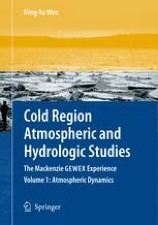
Cold Region Atmospheric and Hydrologic Studies. The Mackenzie GEWEX Experience: Vol.2: Hydrologic Processes
This book presents decade-long advances in atmospheric research in the Mackenzie River Basin in northern Canada, which encompasses environments representative of most cold areas on Earth. Collaborative efforts by a team of about 100 scientists and engineers have yielded knowledge entirely transferable to other high latitude regions in America, Europe and Asia. Emphases are placed on the investigation of processes (including storm genesis, precipitation, moisture and energy fluxes and frost), and the improvement and application of a suite of models and remote sensing to enhance the assessment of climate variability and water resources.

Cold Region Atmospheric and Hydrologic Studies : The Mackenzie GEWEX Experience ; Vol.1 : Atmospheric Dynamics
This book presents decade-long advances in atmospheric research in the Mackenzie River Basin in northern Canada, which encompasses environments representative of the coldest areas on Earth.
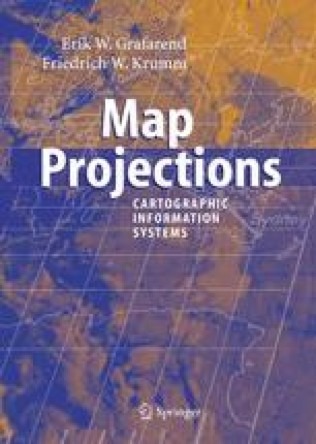
Map Projections : Cartographic Information Systems
In the context of Geographical Information Systems (GIS) the book offers a timely review of map projections (sphere, ellipsoid, rotational surfaces) and geodetic datum transformations. For the needs of photogrammetry, computer vision, and remote sensing space projective mappings are reviewed.

Manual of Digital Earth
This book offers a summary of the development of Digital Earth over the past twenty years. By reviewing the initial vision of Digital Earth, the evolution of that vision, the relevant key technologies, and the role of Digital Earth in helping people respond to global challenges, this publication reveals how and why Digital Earth is becoming vital for acquiring, processing, analysing and mining the rapidly growing volume of global data sets about the Earth.
