



الصفحة 1
الصفحة 1
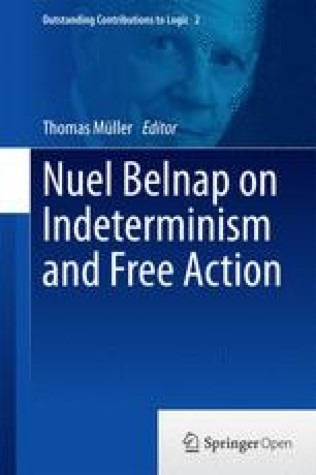
Nuel Belnap on Indeterminism and Free Action
Seeks to further the use of formal methods in clarifying one of the central problems of philosophy: that of our free human agency and its place in our indeterministic world. It celebrates the important contributions made in this area by Nuel Belnap, American logician and philosopher. Philosophically, indeterminism and free action can seem far apart, but in Belnap’s work, they are intimately linked. This book explores their philosophical interconnectedness through a selection of original research papers that build forth on Belnap’s logical and philosophical work. Some contributions take the form of critical discussions of Belnap's published work, some develop points made in his publications in new directions, and others provide additional insights on the topics of indeterminism and free action.

Natures Principles
One of the most basic problems in the philosophy of science involves determining the extent to which nature is governed by laws. This volume presents a wide-ranging overview of the contemporary debate and includes some of its foremost participants. It begins with an extensive introduction describing the historical, logical and philosophical background of the problems dealt with in the essays. Among the topics treated in the essays is the relationship between laws of nature and causal laws as well as the role of ceteris paribus clauses in scientific explanations. Traditionally, the problem of the unity of science was intimately connected to the problem of understanding the unity of nature. This fourth volume of Logic, Epistemology, and the Unity of Science tackles these problems as part of our consideration of the most fundamental aspects of scientific understanding.

Intuition and the Axiomatic Method
All of Hilbert, Gödel, Poincaré, Weyl and Bohr thought that intuition was an indispensable element in describing the foundations of science. They had very different reasons for thinking this, and they had very different accounts of what they called intuition. But they had in common that their views of mathematics and physics were significantly influenced by their readings of Kant. In the present volume, various views of intuition and the axiomatic method are explored, beginning with Kant’s own approach. By way of these investigations, we hope to understand better the rationale behind Kant’s theory of intuition, as well as to grasp many facets of the relations between theories of intuition and the axiomatic method,

Interdisciplinary Perspectives on Mortality and its Timings : When is Death?
This volume provides a series of illuminating perspectives on the timings of death, through in-depth studies of Shakespearean tragedy, criminal execution, embalming practices, fears of premature burial, rumours of Adolf Hitler’s survival, and the legal concept of brain death. In doing so, it explores a number of questions, including: how do we know if someone is dead or not? What do people experience at the moment when they die? Is death simply a biological event that comes about in temporal stages of decomposition, or is it a social event defined through cultures, practices, and commemorations? In other words, when exactly is death? Taken together, these contributions explore how death emerges in a series of stages that are uncertain, paradoxical, and socially contested.

Information — Consciousness — Reality : How a New Understanding of the Universe Can Help Answer Age-Old Questions of Existence
This book chronicles the rise of a new scientific paradigm offering novel insights into the age-old enigmas of existence. It is explores a radical paradigm shift uncovering the ontology of reality. It is found to be information-theoretic and participatory, yielding a computational and programmable universe.

Induction, Algorithmic Learning Theory, and Philosophy
This is the first book to collect essays from philosophers, mathematicians and computer scientists working at the exciting interface of algorithmic learning theory and the epistemology of science and inductive inference. Readable, introductory essays provide engaging surveys of different, complementary, and mutually inspiring approaches to the topic, both from a philosophical and a mathematical viewpoint.

Il senso e la narrazione = The sense and the narration
Humans are creatures of narration: infinitely they narrate and narrate themselves, intertwine dialogues, light up stories to illuminate the dark caves of the heart and the world, recover and transmute memories. We live between a firm and rough, unknowable reality, an enormous furnace of perturbations and calls and colors, and an elusive, delicate and ephemeral interiority: and between the two, between the world and us, we weave with thought and with words a fragile ponte, a bridge called sense. Swing this bridge at the unequal breath of a cosmic wind, dropping phosphoric fragments: sudden hourglasses, anonymous centaurs, sleepless geometers, distant syllogisms, vanished lineages, black basalts, crazy anchorites, silent plesiosaurs, flutes and bagpipes ... and they recompose figures, and we ask ourselves questions about those figures and tell stories. Only the vertigo of asking and narrating can give meaning to a life that some say is interwoven with pure chance. Forever detached from the flourishing matrix of the world, tormented by thought, prisoners of words, slaves of interpretation, lost in a long corridor of facing mirrors: we are at the center of a great, incomprehensible rumble.
Feyerabend’s Epistemological Anarchism : How Science Works and its Importance for Science Education
argues that the traditional image of Feyerabend is erroneous and that, contrary to common belief, he was a great admirer of science. It shows how Feyerabend presented a vision of science that represented how science really works. Besides giving a theoretical framework based on Feyerabend´s philosophy of science, offers criteria that can help readers to evaluate and understand research reported in important international science education journals, with respect to Feyerabend’s epistemological anarchism. includes an evaluation of general chemistry and physics textbooks.

Extensionalism : The Revolution in Logic
This vivid and thought-provoking book by the Israeli logician Nimrod Bar-Am impels one to rethink the place of logic in Western thought. It shows that the history of logic from Aristotle to Tarski is the history of the gradual undoing of the classic conflation of logic and empirical science. It sets tomorrow’s agenda for philosophers and historians of logic and scientific method by taking as its starting point the mere fact that, curiously, ancient logic is not as formal as current literature presents it. Rather, as Bar-Am explains, modern formal logic became possible only after a series of bold criticisms of the magnificent Aristotelian system. These criticisms begin with David Hume’s declaration that logic does not sanction induction, follow on with Kant’s view of logic as an extremely limited system, and culminating with Booles’ introduction of logic as an extensional system, and Russell’s solution to his own paradox.

Evidence-Based Medicine - A Paradigm Ready To Be Challenged? : How Scientific Evidence Shapes Our Understanding And Use Of Medicine
This book aims to clarify the term „evidence-based medicine“ (EBM) from a philosophy of science perspective. The author, Marie-Caroline Schulte discusses the importance of evi-dence in medical research and practice with a focus on the ethical and methodological prob-lems of EBM.

Ethical and Philosophical Consideration of the Dual-Use Dilemma in the Biological Sciences
This book examines the kinds of life-science experiments that give rise to the dual-use dilemma and provides philosophical analysis of the ethical issues and policy options surrounding dual-use research. this is the first book-length treatment of the topic by professional ethicists. It also challenges, and offers an alternative perspective to, the hugely influential U.S. National Research Council position on the dual-use dilemma.

Establishing medical reality : Essays in the metaphysics and epistemology of biomedical science
This volume approaches the philosophy of medicine from the broad naturalist perspective that holds that philosophy must be continuous with, constrained by, and relevant to empirical results of the natural and social sciences and that believes that the history, sociology, politics, and ethics of science provide relevant information for philosophical analysis. One traditional topic covered by several of the contributions is the nature of disease, but the approach is largely from the philosophy of science rather than traditional linguistic analysis. The complex interplay of epistemological and sociological factors in producing evidence in medicine is discussed by chapters on collective medical discussion making, experimental medicine, " genetic" diseases, mental illness, and race and gender categories. The upshot is a volume that ties medicine to contemporary issues in philosophy of science and metaphysics like no other.

Educational Research : Why 'What works' doesnt work
This book brings together an exceptional combination of international and cross-disciplinary scholars who bring the perspectives of history and philosophy of science to ask, ‘How did we arrive at this place? and ‘Where is educational research heading? The book illuminates the anti-intellectual consequences of a ‘what works’ mentality in education, and shows that the ostensibly ‘scientific’ revolution in educational research in fact reflects an ahistorical and conceptually muddled understanding of what actually constitutes ‘science.’ This book could not be more timely and important.’

Draughtsmen, Botanists and Nature : The Construction of Eighteenth-Century Botanical Illustrations
This book is the first in-depth study of eighteenth-century botanical illustrations, and its findings offer a completely new insight into the working practices of the botanists and scientific draughtsmen of this period. The author describes the different production stages of these illustrations, traces their uses by means of the private correspondence of participants and the documentation of the learned societies and academies, and explores their visual language, with particular emphasis placed on the difficult issue of colour. Finally, and for the first time, the author presents a convincing description of how these botanical illustrations developed.

Doing integrated history and philosophy of science : A case study of the origin of genetics
offers an integrated historical and philosophical examination of the origin of genetics. The author contends that an integrated HPS analysis helps us to have a better understanding of the history of genetics, and sheds light on some general issues in the philosophy of science. consists of three parts. It begins with historical problems, revisiting the significance of the work of Mendel, de Vries, and Weldon. Then it turns to integrated HPS problems, developing an exemplar-based analysis of the development and the progress in early genetics. Finally, it discusses philosophical problems: conceptual change, evidence, and theory choice.
Der junge Carnap in historischem kontext : 1918–1935 = Young Carnap in an historical context: 1918–1935
This volume is based on the 'Early Carnap in Context’ workshop that took place in Konstanz in 2017 and looks at Rudolf Carnap’s philosophy, documented in his recently released diaries, from a combination of historical, cultural and philosophical perspectives. It enables further evaluation of the diaries and traces newly found interrelationships and their systematic definition. From a cultural and historical point of view, Logical Empiricism and Carnap’s pivotal opus, The Logical Structure of the World, did not evolve in a vacuum

Data Journeys in the Sciences
This groundbreaking, book analyses and compares data practices across several fields through the analysis of specific cases of data journeys. It brings together leading scholars in the philosophy, history and social studies of science to achieve two goals: tracking the travel of data across different spaces, times and domains of research practice; and documenting how such journeys affect the use of data as evidence and the knowledge being produced.

Critical Questions in STEM Education
This volume is divided into three sections: the first one describes the nature of the component disciplines of STEM. The next section presents work from leaders representing all STEM disciplines and deals with aspects such as K-12 and post-secondary education. The last section draws conclusions regarding the natures of the disciplines, challenges and advantages of STEM education in terms of theoretical and practical implications. The two final chapters compile arguments from the research chapters, describing themes in research results, and making recommendations for best STEM education practice, and examining areas for future research in STEM education.

Continental Philosophy of Technoscience
This text draws upon continental authors such as Hegel, Engels, Heidegger, Bachelard and Lacan (and their fields of dialectics, phenomenology and psychoanalysis) in developing a coherent message around the technicity of science or rather, “technoscience”. Within technoscience, the focus will be on recent developments in life sciences research, such as genomics, post-genomics, synthetic biology and global ecology. This book uniquely presents continental perspectives that tend to be underrepresented in mainstream philosophy of science, yet entail crucial insights for coming to terms with technoscience as it is evolving on a global scale today.
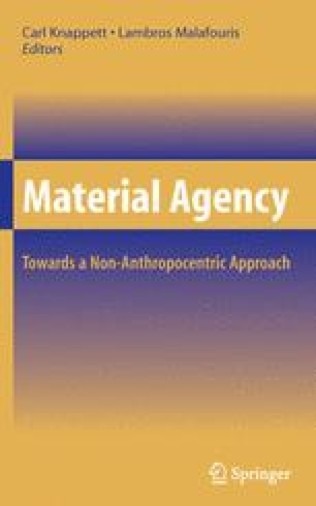
Material Agency : Towards a Non-Anthropocentric Approach
This book is a groundbreaking attempt to address questions of non-human and material agency from a wide range of perspectives and disciplines: archaeology, anthropology, sociology, cognitive science, philosophy, and economics. The editors and authors demostrate that a distributed, relational approach to agency, incorporating both humans and artifacts, has important ramifications for how we understand material culture.
