



الصفحة 1
الصفحة 1

Mémento de la recherche biomédicale portant sur un médicament à usage humain = Summary of biomedical research on a medicinal product for human use
Presents the reference texts, structures and authorities that govern clinical research in France, as well as its practical aspects. It is aimed at all of its stakeholders, both caregivers and patients. It will allow the most novices to familiarize themselves with the specific vocabulary of this discipline, to answer the questions raised during the conduct or participation in a therapeutic trial, and the most experienced to consider setting up a research structure. clinic in the rules of art.
Introduction to basics of pharmacology and toxicology ; Vol.3 : Experimental pharmacology : Research methodology and biostatistics
Elaborates on the general principles of experimental pharmacology. Describes about the screening methods for the evaluation of different categories of drugs. Summarizes the various aspects of research methodology and biostatistics.

Good pharmacovigilance practice (GVP) : Focus on risk mangement plan (RMP)
Pharmacovigilance which is the science and activities relating to the detection, assessment, understanding and prevention of adverse drug reactions or any other possible drug related problems and Risk Management Strategies which provides a structured and coherent approach to identifying, assessing and managing risk and builds in a process for regularly updating and reviewing the assessment based on new developments or actions taken, conference provides the foundation for strong strategic planning and practical decision-making in pharmacovigilance programs. Stakeholders from medicines research, global regulation, and healthcare will join together to analyse the challenges for safety and pharmacovigilance efforts in this uncertain environment and examine effective strategies for addressing gaps and needs.

Fitofarmacovigilanza : Vigilanza sulla sicurezza dei prodotti fitoterapici = Phytopharmacovigilance: Monitoring the safety of phytotherapeutic products
The use of herbal medicines is now widespread in large sections of the population to solve both acute and chronic problems, both trivial and very serious, and for health purposes. We know that phytotherapics can be obtained without a prescription, and that they are found, as well as in pharmacies, also in herbal medicine and supermarkets as food supplements. It is therefore essential to monitor the safety of these products through phytopharmacovigilance, which requires in-depth knowledge about the nature of the phytotherapic, its chemical components and the way in which it was prepared and used. Doctors, pharmacists, herbalists, and consumers themselves will find in this manual useful information on adverse reactions (ADRs) from herbal medicines; the industries of the herbal sector, and above all the legislator and the bodies responsible for control, will find incentives to improve the safety of use of these natural drugs.

Essentials of pharmacodynamics and drug action
Provides a comprehensive exploration of the dynamic field of pharmacology and its fundamental principles. It delves into the intricate interactions between drugs and the human body, focusing on pharmacokinetics, which explains the dynamics of drug actions in the body, and pharmacodynamics, which uncovers the mechanisms through which drugs exert their effects. The book also emphasizes the crucial aspects of therapeutics and gene-based therapy, shedding light on modern approaches to disease treatment.

Drug-Induced Oral Complications
Provides detailed information on the prevalence and manifestations of the most important oral complications associated with different drug treatments, focusing especially on recently developed therapies. Among the diverse adverse drug reactions covered are gingival overgrowth, ulcerations, lichenoid reactions, pigmentation, and bullous reactions. The potential direct toxic effects on bone of drugs that prevent bone mass loss, such as bisphosphonates and denosumab, are fully examined, as is the occurrence of spontaneous oral bleeding in patients receiving antithrombotic therapies. Further chapters focus on drug-induced taste disorders and salivary gland disturbances, including xerostomia, swelling, and hypersalivation. The enhanced risk of oral infections when using chemotherapy and biotherapy is addressed, and the closing chapter examines drug-related perioral and facial complications. This book is a collaborative work that brings together clinicians, surgeons, and specialists in drug safety surveillance.

Drug utilization research : Methods and applications
Drug Utilization Research (DUR) is a discipline which combines aspects of pharmacotherapy, epidemiology, and health services research into an interdisciplinary set of methods for analyzing and assessing the prescribing, dispensing and consumption of medicines. It combines both qualitative and quantitative approaches to facilitate the safe and effective use of pharmaceuticals. Drug Utilization Research: Methods and Applications provides a comprehensive introduction to this discipline, prepared by an international team of authors with broad experience in numerous fields. Now reorganized and updated to reflect the latest research and global challenges, it is an indispensable resource for understanding the use of pharmaceuticals.

Dictionary of Pharmaceutical Medicine
Defines various terms typically used in pharmaceutical medicine. A new, 4th edition includes adaptations of the text to the steadily increasing regulatory requirements, particularly in the area of genetics/gene therapy, product quality (e.g., protection against falsified medicines) and of product safety (pharmacovigilance). Further evolving areas that are covered by the 4th edition are typical “grey zones” (health effects often borderline to medicinal products) such as cosmetics and dietary supplements where misleading information is prohibited on one hand but where any health claims need formal authorisation on the other.

Clinical pharmacy education, practice and research clinical pharmacy, drug information, pharmacovigilance, pharmacoeconomics and clinical research
Stresses educational approaches that empower pharmacists with patient care and research competencies. The learning objectives and writing style of the book focus on clarifying the concepts comprehensively for a pharmacist, from regular patient counseling to pharmacogenomics practice. It covers all interesting topics a pharmacist should know. This book serves as a basis to standardize and coordinate learning to practice, explaining basics and using self-learning strategies through online resources or other advanced texts. With an educational approach, it guides pharmacy students and pharmacists to learn quickly and apply. Clinical Pharmacy Education, Practice and Research provides an essential foundation for pharmacy students and pharmacists globally.
Cancer drug safety and public health policy : A changing landscape
Description and analysis of recent developments and current trends in health policy with regard to cancer drug safety. Opens with an overview of pharmacovigilance for cancer blockbuster drugs, covering both general considerations and efforts to develop a structured framework for the identification and reporting of adverse drug reactions (ADRs). A number of important examples of serious ADRs to hematology and oncology drugs are then reviewed, with evaluation of the lessons learned and the policy implications of the ensuing legal cases and their settlements. Further, the difficulty of reporting such blockbuster side effects in the medical literature is explored in an empirical study. Significant advances have been achieved in analytic methods for the identification of ADRs, and here there is a particular focus on the value of optimal discriminant analysis. Finally, the impacts on pharmacovigilance and drug safety of the huge fines paid under the U.S. False Claims Act relating to the defrauding of governmental programs also receive careful attention – these fines are playing an important role in changing the landscape for pharmaceutical safety.

Artificial intelligence in pharmacy
Artificial intelligence (AI) is a branch of computer science that deals with the problem-solving by the aid of symbolic programming. It has greatly evolved into a science of problem-solving with huge applications in business, health care, and engineering. One of the pivotal applications of AI is the development of the expert system. With the advent of big data and Al, robots are now becoming more trustworthy for doctors, and a large number of institutions are now employing robots along with human supervision to carry out activities that were previously done by humans...
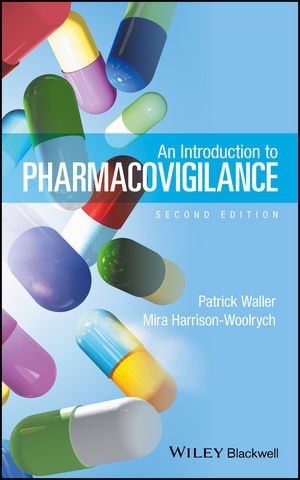
An introduction to pharmacovigilance ; 2nd ed.
Designed to aid the rapid understanding of the key principles of pharmacovigilance. Packed full of examples illustrating drug safety issues it not only covers the processes involved, but the regulatory aspects and ethical and societal considerations of pharmacovigilance. Covering the basics step-by-step, this book is perfect for beginners and is essential reading for those new to drug safety departments and pharmaceutical medicine students. The second edition is thoroughly revised and updated throughout and includes a new chapter on clinical aspects of pharmacovigilance.

A short guide to clinical pharmacokinetics
Consists of seven chapters that cover various aspects of pharmacokinetics and its clinical applications. The chapters are structured to provide clear objectives and keywords are bolded throughout the text to facilitate understanding. The topics covered include the significance of pharmacokinetics in clinical practice, factors affecting pharmacokinetic parameters, pharmacokinetic drug interactions, therapeutic drug monitoring, dosage adjustment in different population groups, the influence of hepatic diseases on pharmacokinetics and the impact of pharmacogenomics on pharmacokinetics and pharmacodynamics.
