



الصفحة 1
الصفحة 1

Nonparametric Functional Data Analysis : Theory and Practice
Modern apparatuses allow us to collect samples of functional data, mainly curves but also images. On the other hand, nonparametric statistics produces useful tools for standard data exploration. This book links these two fields of modern statistics by explaining how functional data can be studied through parameter-free statistical ideas. This book starts from theoretical foundations including functional nonparametric modeling, description of the mathematical framework, construction of the statistical methods, and statements of their asymptotic behaviors. It proceeds to computational issues including R and S-PLUS routines. Several functional datasets in chemometrics, econometrics, and pattern recognition are used to emphasize the wide scope of nonparametric functional data analysis in applied sciences. The companion Web site includes R and S-PLUS routines, command lines for reproducing examples presented in the book, and the functional datasets. Rather than set application against theory, this book is really an interface of these two features of statistics. A special effort has been made in writing this book to accommodate several levels of reading.

Handbook of Face Recognition
This authoritative handbook is the first to provide complete coverage of face recognition, including major established approaches, algorithms, systems, databases, evaluation methods, and applications. After a thorough introductory chapter from the editors, 15 chapters address the sub-areas and major components necessary for designing operational face recognition systems. Each chapter focuses on a specific topic, reviewing background information, reviewing up-to-date techniques, presenting results, and offering challenges and future directions.
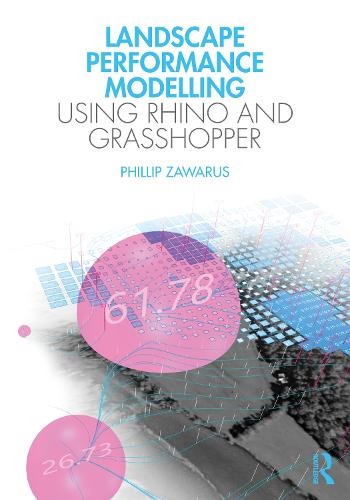
Landscape Performance Modeling Using Rhino and Grasshopper
A guidebook for landscape architects to learn the fundamental practices and use of the computational software Rhino 3D and the plugin Grasshopper for parametric modeling, landscape inventory, and performative analysis. This process visually connects intangible and abstract information with physical and spatial relationships to signify the impact ecological, climate, and cultural factors have on landscape performance and decision making.
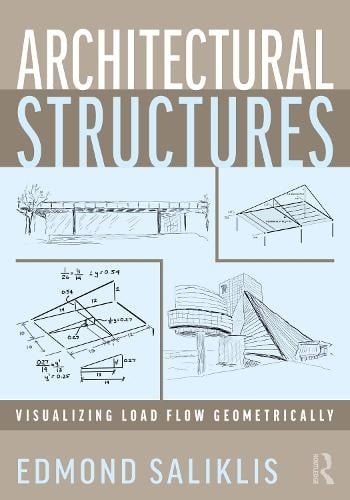
Architectural structures : Visualizing load flow geometrically
Presents an alternative approach to understanding structural engineering load flow using a visually engaging and three-dimensional format. This book presents a ground-breaking new way of establishing equilibrium in architectural structures using the Modern Müller-Breslau method. Includes approachable coverage of parametric modeling of two-dimensional and three-dimensional structures, as well as more advanced topics such as indeterminate structural analysis and plastic analysis. Hundreds of detailed drawings created by the author are included throughout to aid understanding. Architecture and structural engineering students can employ this novel method by hand sketching, or by programming in parametric design software.

Architectural scale models in the digital age : Design, representation and manufacturing
Complex geometric forms generated using virtual media can be tested and validated only by means of physical models, which also make it possible to assess their practical application. The complexity of contemporary architectural design requires the mastery of new methods of producing scale models, which opens a new chapter in the field of modeling, and is the focus of this book. Along with the traditional methods that provide the basis for modeling, this book presents the principles of digital NURBS modeling, parametric modeling, digital modeling support, and model creation, complete with a number of tutorials, practical advice and examples found in architectural practice today.
Architectonics and parametric thinking : computational modeling for beginning design
Architectonics and Parametric Thinking begins by clearly positioning the potentials of parametric design through a series of chapters written by leaders in their respective industries. This helps to situate the vast potential of parametric softwares, allowing the reader to understand the full range of what is made possible by working computationally. Following this theoretical introduction, the book presents a manual that walks readers through the step-by-step construction of parametric modeling scripts built through an architectonic lens using clear, compelling diagrams.
