



الصفحة 1
الصفحة 1

Mud and Mudstones : Introduction and Overview
Our book provides the first elementary overview of mud and mudstone written for a broad spectrum of professionals, teachers and students in geology, petroleum geology and engineering, urban planning and development, paleontology and paleoecology, and architecture and archaeology. Mud and mudstone provide the foundations to master all their aspects and prepares you to dig deeply into the many fascinating questions of their origin, relationships to earth history and practical uses. Key topics include the production of mud, its transport, the important role of bottom oxygen, sites of deposition, burial, provenance, mudstones in basins and an overview of practical uses followed by an appendix and extended glossary.

Image Analysis, Sediments and Paleoenvironments
This seventh volume of the DPER series examines imaging techniques for sedimentologists, paleolimnologists, paleoceanographers and microscopists working on issues related to paleoenvironmental reconstruction. It will help the researcher or graduate student to understand every step involved in the imaging process, from image acquisition to measurements.nbsp; Procedures are described to ensure that the right protocols and methodology are selected to solve a particular issue, and to evaluate the validity of scientific results. Case studies illustrate the wide range of information that can be obtained from many kinds of sediments (marine, lacustrine and aeolian) and different types of samples (cores, embedded blocks, microscopic slides) using different regions of the electromagnetic spectrum (visible, UV, IR, X-ray). The volume provides comprehensive protocols, guidelines, and recommendations for the use of low cost image analysis techniques, to facilitate intercomparisons of measurements.

High-Resolution Approaches in Stratigraphic Paleontology
This volume delves into a spectrum of theoretical as well as applied aspects of high-resolution stratigraphic approaches in paleontology. It explores how increasingly detailed knowledge of the fossil record can enhance our understanding of the evolution of life on Earth and also allows geoscientists to address a broad range of important evolutionary and environmental questions in this arena.

From Fossils to Astrobiology : Records of Life on Earth and Search for Extraterrestrial Biosignatures
From Fossils to Astrobiology reviews developments in paleontology and geobiology that relate to the rapidly-developing field of Astrobiology, the study of life in the Universe. Many traditional areas of scientific study, including astronomy, chemistry and planetary science, contribute to Astrobiology, but the study of the record of life on planet Earth is critical in guiding investigations in the rest of the cosmos. In this varied book, expert scientists from 15 countries present peer-reviewed, stimulating reviews of paleontological and astrobiological studies. The overviews of established and emerging techniques for studying modern and ancient microorganisms on Earth and beyond, will be valuable guides to evaluating biosignatures which could be found in the extraterrestrial surface or subsurface within the Solar System and beyond.

Evolutionary Stasis and Change in the Dominican Republic Neogene
In practice, however, science is no less susceptible to fads, culture shifts, and pendulum swings than any other realm of human endeavor. This is an especially important feature of science to keep in mind in the present climate of shrinking government funding (at least in prop- tion to the demand) and the resulting susceptibility of individual scientists and entire disciplines to being influenced by the changing priorities of funding agencies (even if, as such agencies maintain, those priorities come ultimately “from the c- munity”). The present volume is in several important respects a testimonial to both the threats and opportunities that such scientific culture swings pose, both for the individual researcher and a wider field. When scientific research in the Dominican Republic Neogene began more than a century ago, paleontology was an essentially descriptive discipline, focused mainly on finding, describing, and documenting the taxa represented in the fossil record, and (especially in invertebrate paleontology) on using these taxa for bi- tratigraphic correlation.

Elwyn Simons : A Search for Origins
Summarizes the current state of knowledge in many aspects of primate and human evolution that have been studied by Simons and his colleagues and places it in a broader paleontological and historical perspective.A Search for Origins contains the results of new research and reviews of many of the critical issues in primate and human paleontology during the last half of the twentieth century as well as other aspects of African paleontology, geology, and primate conservation.The chapters include a wide range of important new works that are valuable contributions to the field of physical anthropology and are certain to be widely cited and used in teaching. The authors of this text are an extremely distinguished group of international authorities on all aspects of primate evolution, human evolution, and primate behavior.
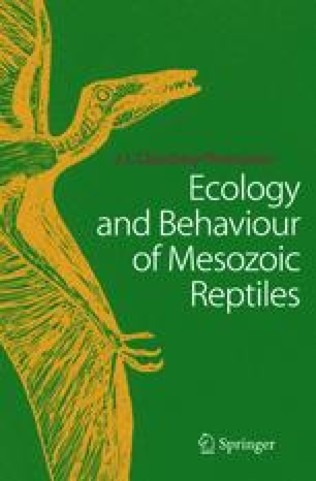
Ecology and Behaviour of Mesozoic Reptiles
Our knowledge of extinct animals depends almost entirely upon the study of fossils. This richly illustrated book clothes the skeletons of dinosaurs and other Mesozoic reptiles with flesh, and shows how these fascinating animals evolved and probably lived. Expert provides an interesting synthesis of current views on their ecology, physiology and behaviour, and outlines the various hypotheses that have been proposed to explain their extinction.

Current Developments in Bioerosion
The book opens with papers on the evolutionary significance of bioerosion, and subsequently ventures out to explore the remarkable diversity of bioerosive biota. From microboring bacteria to grazing echinoids, the studies use a variety of techniques ranging from field observations to sophisticated micro-computed tomography to investigate the ecological and environmental role of these organisms, including symbiotic interactions and alteration of non-carbonate substrates.

Culture history and convergent evolution : Can we detect populations in prehistory?
This volume brings together diverse contributions from leading archaeologists and paleoanthropologists, covering various spatial and temporal periods to distinguish convergent evolution from cultural transmission in order to see if we can discover ancient human populations. With a focus on lithic technology, analyzes ancient materials and cultures to systematically explore the theoretical and physical aspects of culture, convergence, and populations in human evolution and prehistory. will be of interest to academics, students and researchers in archaeology, paleoanthropology, genetics, and paleontology.
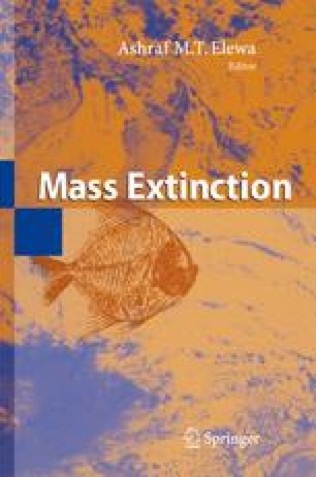
Mass Extinction
The present book combines three main aspects: five major mass extinctions; contributions on some other minor extinctions; and more importantly contributions on the current mass extinction.
Biomineralization : From molecular and nano-structural analyses to environmental science
Over the past 45 years, biomineralization research has unveiled details of the characteristics of the nano-structure of various biominerals; the formation mechanism of this nano-structure, including the initial stage of crystallization; and the function of organic matrices in biominerals, and this knowledge has been applied to dental, medical, pharmaceutical, materials, agricultural and environmental sciences and paleontology. As such, biomineralization is an important interdisciplinary research area, and further advances are expected in both fundamental and applied research.
Biogeography, Time, and Place : Distributions, Barriers, and Islands
Biogeography considers the distribution of biological units over a wide range of scales. The units range from genotypes, populations and species to families and higher taxa. Processes can be local, such as the isolation on islands due to sea-level fluctuations, or large-scale tectonic processes that separates continents and creates oceans. In all processes time is an important factor and by combining data on recent patterns with paleontological data the understanding of the distribution of extant taxa can be improved. This volume focuses on speciation due to isolation in island-like settings, and the evolution of large-scale diversity as the result of origination, maintenance and extinction.
