



الصفحة 1
الصفحة 1

Molecular Targeting in Oncology
In Molecular Targeting in Oncology, authors present an overview of the development of targeted therapies for the treatment of cancer with an emphasis on clinical application. The volume covers the complexity of the rapidly developing area of targeted therapies for the treatment of patients with cancer and is structured in a way so readers may begin with chapters that most interest them and work through the rest of the chapters in the order of their choice. The volume is divided into five sections that cover the most important elements of drug development. The first section focuses on approaches using targeted therapies to inhibit cell growth. The second section describes how clinicians are evaluating targeted therapies in specific organ systems. The third section illustrates how various classes of pharmacologic and immunologic agents are developed for individual molecular targets. The fourth section details new drugs that have novel mechanisms of action. The final section looks to the future of targeted therapeutics and includes chapters on appropriate patient selection, use of combination therapy, dealing with tumor cell resistance, and more. Comprehensive and cutting-edge, Molecular Targeting in Oncology is an essential reference for those working in the field.

Intraperitoneal Cancer Therapy
The volume details major clinical trails to date, including immunotherapy, hyperthermic treatment of colo-rectal and ovarian cancers. Authors also examine regional approaches to therapy, systemic therapy, and the use of carboplatin and paclitaxel as the standard treatment for women with stages III and IV ovarian cancer. Other chapters also investigate techniques and procedures in treatment, as well as the future direction of both normothermic and hyperthermic intraperitoneal chemotherapy.

Innovative Endocrinology of Cancer
Deals with developments in such topics as mechanisms of hormonal carcinogenesis, epidemiology and risk factors, hormone production by tumor tissue and hormonal sensitivity of the latter, genesis, dichotomy and endocrinology of cancer in females, and pharmacogenomics and proteomics in oncoendocrinology.

Hormonal carcinogenesis V
Information gathered from cell-free systems, cell cultures, animal models, and human studies, together will (1) provide important insights to our understanding of hormonal cancer causation, development, and prevention; (2) be the primary objective of these Symposia.

Hormonal Carcinogenesis IV
Uniquely, Hormonal Carcinogenesis IV, integrates salient aspects of hormone-related cancers of interest to epidemiologists, basic researchers, and clinicians. The most recent advances in the major hormone-related cancers are presented by leaders of their specialty. The chapters in this volume deal with the causation, dependence, and resistance of endocrine-related cancers with particular emphasis on the most common neoplasms occuring in men and woman world wide, such as breast, prostate, uterine, and ovarian cancers.

Gynecologic Cancer
Gynecologic Cancer, the fifth volume in the M. D. Anderson Cancer Care Series, details M. D. Anderson’s approach to the care of women with gynecologic cancers. Written for physicians, the book emphasizes the day-to-day aspects of practice, minimizing extensive literature review and approaches not yet incorporated into routine practice.

Gene Therapy for Cancer
The possibility of treating cancer, a disease defined by genetic defects, by introducing genes targeting these very alterations has led to an immense interest in gene therapy for cancer. Although incremental successes have been realized, enthusiasm for gene therapy has declined due to an increasing number of obstacles. These obstacles include vector systems that do not reach systemic metastases, therapeutic genes with redundant mec- nisms allowing for cellular resistance, and toxicities in clinical trials leading to premature closure of these studies. Different tactics to overcome or circumvent these obstacles have catalyzed the development of a wide range of gene therapy approaches. Thus far, almost two-thirds of gene therapy trials have focused on cancer. This reflects the concept that gene therapy approaches for the treatment of cancer do not necessarily require long-term expression of the gene as is necessary for the treatment of primary genetic defects like hemophilia or juvenile diabetes.

Les cancers ovariens = Ovarian cancers
Deals with ovarian cancers and their therapeutic management. Besides the epithelial tumors which are the most frequent, the rarer tumors, with attenuated malignancy, germ cells or of the ovarian stroma are also studied. Specialists from multiple backgrounds each deliver in their field the most recent knowledge on the fundamental aspects of the disease, its genetic, epidemiological and prognostic characteristics and its pathological peculiarities. Modern means of diagnosis are presented. The surgical technique, including laparoscopy, is detailed at the different stages of the disease. The therapeutic strategy aims to position the surgery and chemotherapy according to the stage. The current place of radiotherapy and isotopic therapies is indicated. Some more specific aspects are discussed, screening, lymph node dissection, the “second look”, intraperitoneal chemotherapy with or without hyperthermia, treatment of the elderly, monitoring after treatment… as well as the emergence of targeted therapies.
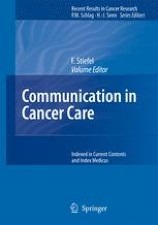
Communication in Cancer Care
This textbook represents one of the most fnding a way to support their loved one and help comprehensive as well as clinically relevant - them maintain hope, advocate on their behalf, ited volumes on the subject of communication help collect and integrate information. Tis must in cancer care to appear to date.

Cancer and Pregnancy
This book is written by experts with clinical expertise on diagnosis, treatment, and follow-up of women with cancer during pregnancy. It provides a comprehensive review of data and an overview of psychological, ethical, and social aspects.
