



الصفحة 1
الصفحة 1

Interceptive orthodontic treatment for general dentist
Interceptive orthodontic treatment is a critical component of early orthodontic care, aimed at identifying and addressing developing dentofacial problems during the mixed dentition phase. This project explores the principles, objectives, and clinical applications of interceptive orthodontics, including the management of space discrepancies, eruption disturbances, harmful oral habits, skeletal imbalances, and functional deviations. Emphasis is placed on diagnostic procedures.

Iatrogenic effects of orthodontic treatment : Decision-making in prevention, diagnosis, and treatment
This book is a well-illustrated guide to the iatrogenic effects of orthodontic treatment that provides practical information on orthodontic diagnosis, treatment planning, and post-treatment retention and highlights preventive measures to avoid complaints and lawsuits.

Fixed orthodontic appliances : A practical guide
This guide to fixed appliance-based orthodontics is designed to serve as a comprehensive ‘how to’ manual. It will offer detailed support on the use of fixed orthodontic appliances with practical orthodontic treatments, while providing a valuable refresher and reference for more experienced clinicians.

Esthetic and functional management of Diastema : A multidisciplinary approach
Offers detailed guidance on integrated orthodontic, periodontal, and restorative solutions for the treatment of diastema, highlighting the advantages of such a multidisciplinary approach and presenting suitable clinical protocols for esthetic reconstruction and functional improvement.

Digital orthodontics: providing a contemporary treatment solution
A comprehensive and detailed overview of the most contemporary techniques in orthodontics. It will help readers to understand complex software systems, software integrations and the equipment needed to deliver the latest techniques to patients undergoing orthodontic treatment. The book has been written in an easy-to-understand way and includes numerous flow diagrams and images of software programs and equipment in order to facilitate the understanding of modern systems.

Dentofacial anomalies : Implications for voice and wind instrument performance
Discusses how dentofacial anomalies affect voice and wind instrument playing with emphasis on upper airway space shape and volume Comprehensively reviews the anatomy and physiology of phonation, with guidelines on the work-up of patients with voice disorders Provides a concise and well-focused description of the common orthodontic disorders, both skeletal and non-skeletal, and their means of diagnosis and treatment

Debonding and Fixed Retention in Orthodontics : An Evidence-Based Clinical Guide
Guide reviews the protocols, materials, and techniques required at two key stages of orthodontic treatment. The book has been written as a reference guide and the chapters introduce the best-supported and most efficient approaches to each stage of debonding and fixed retainer bonding treatments, from choice of material through to final results.

Current techniques and materials in dentistry
Dental implants are one of the most interesting dental treatments. PEEK (polyetheretherketone) has recently been reported as a further innovation in polymer implant materials, although it has not yet met the requirements to be a biomechanical requirement. In the placement of mini-screws used in orthodontic treatments, micro-cracks caused by overtorquing in thick and hard bone, and the consequent heat production, can reduce the success rate. Computer-aided design/computer-aided manufacturing (CAD/CAM) techniques are becoming increasingly popular. Since complete dentures can be produced using an additive (3D printing) or subtractive (milling) process, CAD/CAM techniques for denture fabrication have many clinical and laboratory advantages.
Clinical Guide to Accelerated Orthodontics : Wth a Focus on Micro-Osteoperforations
A complete reference for all clinicians who are interested in incorporating into their daily practice the techniques available to reduce the duration of orthodontic treatment and to overcome other treatment limitations. It focuses especially on micro-osteoperforations (MOPs) as the most conservative, efficient, and versatile approach to increase the rate of tooth movement.
Clinical facial analysis : Elements, principles, and techniques
The present volume documents and analyzes facial features in preparation for aesthetic surgery and orthodontic treatment. It takes a multidisciplinary approach, emphasizing the relationships between different parts of the face. At the end of each of the central chapters, the reader will find a multiple-choice checklist that will help him perform a step-by-step regional facial analysis.

Clinical cases in early orthodontic treatment an atlas of when, how, and why to treat
Describes the most common types of malocclusion in children and presents illustrated step-by-step guidance on the procedures employed in their management, with the focus on early intervention. Advice is provided on the challenging decisions of when to start orthodontic treatment and whether to choose a one-phase or a two-phase treatment, taking into account the malocclusion, its severity, and its etiology.
Biology of orthodontic tooth movement : current concepts and applications in orthodontic practice
Presents the current knowledge and understanding of the biological processes involved in the orthodontic movement of teeth and discusses recent progress in the field. It links research advances to their immediate clinical applications and offers researchers and clinicians a state of the art reference on topical issues relating to orthodontic tooth movement.
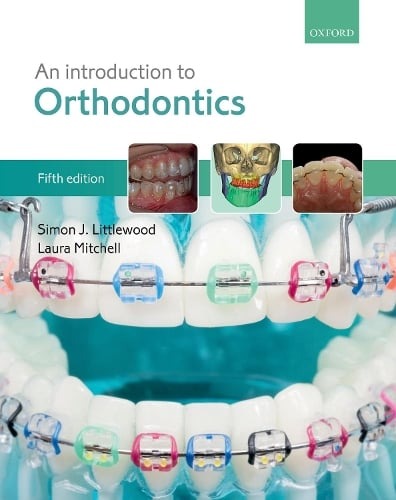
An introduction to orthodontics
This is the essential orthodontics text for all staff involved in orthodontic treatment, whether they are dental students, orthodontic therapists, postgraduate students at the beginning of their career, or more experienced clinicians wanting an evidence-based, concise update on the foundations of contemporary orthodontic care.

Aligner systems in invisible orthodontics: basic concepts and clinical management
Describes the processes, techniques and biomechanics involved in providing aligner treatment for different types of malocclusions. It opens with an overview of the material characteristics and the basic concepts of aligner therapy including topics like biocompatibility and intraoral deterioration. The main part of the book is dedicated to the various types of aligners, the methods used in their application and the practical aspects of delivery. It is structured based on the type of malocclusion being managed giving the reader a systematic pattern and a practical way of progressing through the book. The book closes with a discussion of the scientific data available.
3D diagnosis and treatment planning in orthodontics : an atlas for the clinician
A wide-ranging guide to modern diagnostics and treatment planning in orthodontics, which are mandatory prior to the initiation of any type of comprehensive treatment. The importance of three-dimensional (3D) imaging techniques has been increasingly recognized owing to the shortcomings of conventional two-dimensional imaging in some patients, such as those requiring complex adult treatment and those with temporomandibular joint dysfunctions or sleep disturbances.
