



الصفحة 1
الصفحة 1

Ontology Matching
Euzenat and Shvaiko’s book is devoted to ontology matching as a solution to the semantic heterogeneity problem faced by computer systems. Ontology matching aims at finding correspondences between semantically related entities of different ontologies. These correspondences may stand for equivalence as well as other relations, such as consequence, subsumption, or disjointness, between ontology entities.

Ontology Management : Semantic Web, Semantic Web Services, and Business Applications
This volume describes relevant tasks, practical and theoretical challenges, limitations and methodologies, plus available software tools. The editors discuss integrating the conceptual and technical dimensions with a business view on using ontologies, by stressing the cost dimension of ontology engineering and by providing guidance on how up-to-date tooling helps to build, maintain, and use ontologies. Also included is a one-stop reference on all aspects of managing ontological data and best practices on ontology management for a number of application domains.

Ontology Learning and Population from Text: Algorithms, Evaluation and Applications
Ontology Learning and Population from Text: Algorithms, Evaluation and Applications presents approaches for ontology learning from text and will be relevant for researchers working on text mining, natural language processing, information retrieval, semantic web and ontologies. Containing introductory material and a quantity of related work on the one hand, but also detailed descriptions of algorithms, evaluation procedures etc. on the other, this book is suitable for novices, and experts in the field, as well as lecturers.
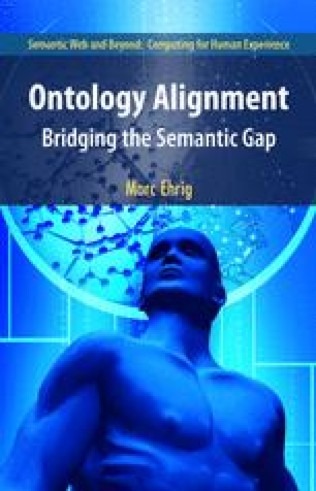
Ontology Alignment : Bridging the Semantic Gap
Ontology Alignment: Bridging the Semantic Gap introduces novel methods and approaches for semantic integration. In addition to developing new methods for ontology alignment, the author provides extensive explanations of up-to-date case studies. The topic of this book, coupled with the application-focused methodology, will appeal to professionals from a number of different domains.

Ontologies-Based Databases and Information Systems ; 1st and Second VLDB Workshops, ODBIS 2005/2006 Trondheim, Norway, September 2-3, 2005 Seoul, Korea, September 11, 2006 Revised Papers
This book constitutes the refereed post-proceedings of the First and Second VLDB Workshop Ontologies-based techniques for DataBases and Information Systems, held in Trondheim, Norway, September 2005 and Seoul, Korea, September 2006.

Ontologies-Based Business Integration
E-business integration is a vision we have developed over a long period of time. As we have worked in business practice for many years prior to and in parallel with our academic research, we have always thought of such - tegration not only as an intellectual challenge but also as a real business tool. Consequently, when we started our project on Ontologies-based R- onciliation for Business Integration (ORBI) in 2004, not only pure science but also business objectives were at the center of our research. We were very happy to be able to form a project consortium that consisted not only of renowned researchers but also of experienced business practitioners from a range of companies. Each played a specific role – as user, provider or co-developer of the application components that are based on the me- ods we have developed. So may this book find its way not only to the desks of researchers and students, but also into the offices and minds of business practitioners worldwide who are dealing with the challenge of integrating their business processes, applications and information.

Ontologies for Urban Development
Action C21 of the European programme for Cooperation in the field of Scientific and Technical Research (COST—http://www.cost.esf.org/) is dedicated to investigating urban ontologies for an improved communication in urban civil engineering projects. The Action, known informally as "Towntology", brings together a large and heterogeneous grouping from across Europe, whose interests range from construction to urban tourism and from transport infrastructure to resource visualisation. On 6-7 November 2006, in Geneva, the Action convened a successful workshop to address emerging issues in the field. This volume presents the contributions to that workshop, in many cases revised afterwards to capture some of the outcomes of discussion.

Ontologies for Software Engineering and Software Technology
The editors structured the contributions into three parts: first, a detailed introduction into the use of ontologies in software engineering and software technology in general; second, the use of ontologies to conceptualize different process-related domains such as software maintenance, software measurement, or SWEBOK, initiated by IEEE; third, the use of ontologies as artifacts in several software processes, like, for example, in OMG’s MOF or MDA.

Ontologies for Agents : Theory and Experiences
On the other hand, ontologies have established themselves as a powerful tool to enable kno- edge sharing, and a growing number of applications have bene?ted from the use of ontologies as a means to achieve semantic interoperability among heterogeneous, distributed systems. In principle ontologies and agents are a match made in heaven, that has failed to happen. What makes a simple piece of software an agent is its ability to communicate in a ”social” environment, to make autonomous decisions, and to be proactive on behalf of its user. Communication ultimately depends on und- standing the goals, preferences, and constraints posed by the user. Autonomy is theabilitytoperformataskwithlittleornouserintervention,whileproactiveness involves acting autonomously with no need for user prompting. Communication, but also autonomy and proactiveness, depend on knowledge. The ability to c- municate depends on understanding the syntax (terms and structure) and the semantics of a language. Ontologies provide the terms used to describe a domain and the semantics associated with them. In addition, ontologies are often comp- mented by some logical rules that constrain the meaning assigned to the terms. These constraints are represented by inference rules that can be used by agents to perform the reasoning on which autonomy and proactiveness are based.

Ontologies : A Handbook of Principles, Concepts and Applications in Information Systems
The primary objective of ONTOLOGIES: A Handbook of Principles, Concepts and Applications in Information Systems is to mobilize a collective awareness in the research community to the leading and emerging developments in ODIS, and consequently, highlight the enormous potential of ODIS research to both fundamentally transform and create innovative solutions to several problems in various domains. This book is a compilation of 32 leading-edge chapter contributions from some of the top researchers in the community working in various fundamental and applied disciplines related to ODIS. These chapters are organized into four broad themes: Foundations of ODIS, Ontological Engineering, ODIS Architectures, and ODIS Applications.
On the move to meaningful internet systemss 2005 : CoopIS, DOA, and ODBASE ; Vol. 3760 : OTM Confederated International Conferences, CoopIS, DOA, and ODBASE 2005, Agia Napa, Cyprus, October 31 - November 4, 2005, Proceedings Part I
such as the modeling of (legal) regulatory systems and the ubiquitous nature of their usage. Weweregladto seethatin 2005undertheinspiredleadershipofDr. Pilar Herrero, several of earlier successful workshops re-emerged with a second or even third edition (notably WOSE, MIOS-INTEROP and GADA), and that 5 new workshops could be hosted and successfully organized by their respective proposers: AWeSOMe, SWWS, CAMS, ORM and SeBGIS. .
On the move to meaningful internet systems 2006 : CoopIS, DOA, GADA, and ODBASE ; Vol. 4276 ; OTM Confederated International Conferences, CoopIS, DOA, GADA, and ODBASE 2006, Montpellier, France, October 29 - November 3, 2006, Proceedings, Part II
A two-volume set, which constitutes the refereed proceedings of the four confederated conferences CoopIS 2006, DOA 2006, GADA 2006, and ODBASE 2006 held as OTM 2006 in Montpellier, France. It contains 106 revised full and 9 short papers, which were carefully reviewed and selected from a total of 361 submissions.
On the move to meaningful internet systems 2006 : CoopIS, DOA, GADA, and ODBASE ; Vol. 4275 ; OTM Confederated International Conferences, CoopIS, DOA, GADA, and ODBASE 2006, Montpellier, France, October 29 - November 3, 2006, Proceedings, Part I
This two-volume set LNCS 4275/4276 constitutes the refereed proceedings of the four confederated conferences CoopIS 2006, DOA 2006, GADA 2006, and ODBASE 2006 held as OTM 2006 in Montpellier, France in October/November 2006. The 106 revised full and nine short papers presented together with four keynote speeches were carefully reviewed and selected from a total of 361 submissions.
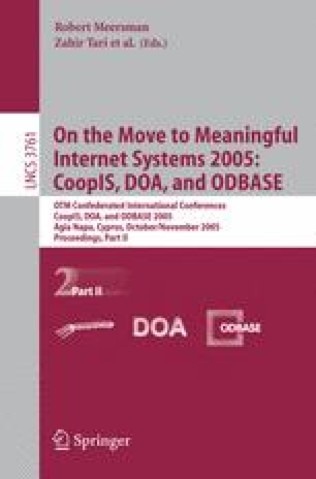
On the move to meaningful internet systems 2005 : CoopIS, DOA, and ODBASE ; Vol. 3761 : OTM Confederated International Conferences, CoopIS, DOA, and ODBASE 2005, Agia Napa, Cyprus, October 31 - November 4, 2005, Proceedings, Part II
Constitutes the refereed proceedings of the three confederated conferences CoopIS 2005, DOA 2005, and ODBASE 2005 held as OTM 2005 in Agia Napa, Cyprus in October/November 2005. This title presents 89 revised and 7 short papers together with 3 keynote speeches that were reviewed and selected from a total of 360 submissions.

On the Move to Meaningful Internet Systems : OTM 2008 ; OTM 2008 Confederated International Conferences, CoopIS, DOA, GADA, IS, and ODBASE 2008, Monterrey, Mexico, November 9-14, 2008, Proceedings, Part II
This two-volume set LNCS 5331/5332 constitutes the refereed proceedings of the five confederated international conferences on Cooperative Information Systems (CoopIS 2008), Distributed Objects and Applications (DOA 2008), Grid computing, high performAnce and Distributed Applications (GADA 2008), Information Security (IS 2008), and Ontologies, Databases and Applications of Semantics (ODBASE 2008), held as OTM 2008 in Monterrey, Mexico, in November 2008.

On the move to meaningful internet systems : OTM 2008 ; OTM 2008 Confederated International Conferences, CoopIS, DOA, GADA, IS, and ODBASE 2008, Monterrey, Mexico, November 9-14, 2008, Proceedings, Part I
This two-volume set LNCS 5331/5332 constitutes the refereed proceedings of the five confederated international conferences on Cooperative Information Systems (CoopIS 2008), Distributed Objects and Applications (DOA 2008), Grid computing, high performAnce and Distributed Applications (GADA 2008), Information Security (IS 2008), and Ontologies, Databases and Applications of Semantics (ODBASE 2008), held as OTM 2008 in Monterrey, Mexico, in November 2008.

Nutrition and Oral Health
Explores in depth the relationships between nutrition and oral health across all age groups. Discusses the latest knowledge on the consequences of poor diet for tooth loss and progression of oral diseases . Explains the importance of a disease-free and functional dentition for nutritional well-being
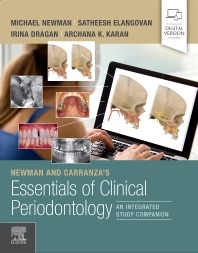
Newman and Carranza's essentials of clinical periodontology : An integrated study companion
An Integrated Study Companion provides core information on periodontology and implant dentistry in a format that reflects the current, case-based U.S. National Board Dental Examination. Each chapter ends with a case-based exercise, allowing you to apply your knowledge to the practice setting. Like the well-known Newman and Carranza’s Clinical Periodontology textbook, it covers everything from basic science and fundamental procedures to advanced techniques in reconstructive, esthetic, and implant therapy — but with a focus on need-to-know content.

Newman and Carranza's Clinical Periodontology and Implantology
Provides detailed, up-to-date information on the etiology and pathogenesis of periodontal disease. Basic and advanced evidence-based information on the various treatment modalities employed in periodontics and implantology is presented in an easy-to-read format, with callout boxes throughout the text highlighting the clinical relevance of foundational basic science information. Full-color photos and radiographic images depict periodontal conditions and procedures, and the Atlas of Periodontal Pathology is one of the most comprehensive ever compiled in a periodontal textbook. Written by a team of leading experts led by Michael G. Newman, this text not only demonstrates how to perform periodontal procedures but explains the evidence supporting each treatment and provides knowledge on how to achieve the best possible outcomes of periodontal therapy and implant treatment. An eBook version is included with print purchase, providing access to all the text, figures, and references, plus the ability to search, customize content, make notes and highlights, and have content read aloud.

Newman and Carranza’s Clinical Periodontology
An Integrated Study Companion provides core information on periodontology and implant dentistry in a format that reflects the current, case-based U.S. National Board Dental Examination. Each chapter ends with a case-based exercise, allowing you to apply your knowledge to the practice setting. Like the well-knownNewman and Carranza's Clinical Periodontology textbook, it covers everything from basic science and fundamental procedures to advanced techniques in reconstructive, esthetic, and implant therapy - but with a focus on need-to-know content.
