



الصفحة 1
الصفحة 1

Oncology : An Evidence-Based Approach
Reflect the principles and current practice of oncology with contributors from the fields of medical, surgical, and radiation oncology. The textbook will incorporate an evidence-based approach, enabling the reader to make decisions on the basis of concrete data. Sections on solid tumors, hematologic malignancies and the practice of oncology address the natural history and therapy for the full spectrum of neoplastic diseases in the adult. Further sections present fundamentals of supportive care of the cancer patient, the management of oncologic emergencies and acute toxicities of therapy, as well as care of metastatic disease and the terminally-ill patient. Breaking new ground, the textbook features thoughtful, in-depth sections on cancer prevention and control, cancer surviorship, the economics of cancer care, and cancer informatics. Cancer imaging is covered with an organ system-based approach, with an additional chapter on the especially intriguing potential of PET. Furthermore, a comprehensive section on translational basic science reviews the fundamentals of molecular biology, the cell cycle and signal transduction, carcinogenesis, cancer genetics, the biology of invations and metastasis, and tumor immunology.

Oncologic and Cardiologic PET/CT-Diagnosis : An Interdisciplinary Atlas and Manual
Since 1999/2000 simultaneous imaging of anatomical features and metabolic activities using fused PET and CT images has complemented and in many cases even replaced what was originally done as separate analysis. – Is this a small revolution? – In fact, this new approach can be considered to be without a rival for imaging diagnosis. The complementary efforts of nuclear medicine physicians and radiologists have improved the diagnostic value of PET/CT scans. The successful use of PET/CT in the field of oncology has been documented world-wide, and in cardiology we can take advantage of the significant findings of PET diagnosis, particularly in the USA. New prospects are now available for paediatric oncology and molecular medicine.

Oncogenes Meet Metabolism : From Deregulated Genes to a Broader Understanding of Tumour Physiology
In 1920s, Otto Warburg described the phenomenon of ‘aerobic glycolysis’, the ability of tumour cells to convert glucose to lactate in the presence of normal oxygen conditions. Warburg’s hypothesis of an altered metabolism in cancer cells found no immediate acceptance, though it was latter confirmed for most human tumours. With the advent of molecular biology the focus in tumour research has shifted towards the search for oncogenes. However, the interest in cancer molecular profiling eventually led to a renaissance of the Warburg effect trying to combine genetic alterations with effects on metabolism with the help of modern analytic technologies to rapidly analyze broad varieties of metabolites in various tissues and bodyfluids (metabonomics).

Oncofertility : Fertility Preservation for Cancer Survivors
While cancer survival rates have increased steadily over the last several decades, particularly among younger patients, the more aggressive forms of treatment that have made this possible often compromise a cancer patient's ability to later have biological children. In the past, pregnancy after cancer was largely unheard of. Today it is increasingly a possibility due to high survivorship rates in general and emerging reproductive technologies that give patients and their families options at the time of diagnosis to ensure a patient's future fertility (cryopreservation of ovarian tissue).
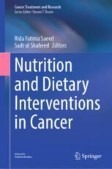
Nutrition and dietary interventions in cancer
Presents the most up-to-date information on the effects of nutrition and food on cancer prevention and management. The book will provide clinicians and other healthcare practitioners with an educational source on how to educate cancer patients and their families on nutrition and dietary during cancer treatment. Recent nutritional epidemiology studies have occasionally produced controversial or unexpected results and highlight the need for additional research on diet and cancer risk. Chapters within the book focus among others on the role of natural antioxidants in cancer, the importance of micronutrients in cancer prevention and nutritional genomics and their role in cancer prevention.

New Trends in Cancer for the 21st Century
It is difficult to imagine anyone who has not heard of cancer. This disease can affect families, friends or any one of us at any time in our lives. Every year nearly 3 million Europeans are diagnosed with cancer, leading to around 800,000 deaths per year. These deaths occur not only in aging populations, but also in children and adults who are in the most active period of their lives. This represents a tremendous problem that cannot be ignored by politicians or citizens. Fortunately, there is a constantly growing awareness that although cancer is a problem to be dealt with by clinicians, it should also be the concern of everyone. This volume contains the lectures held at the International Symposium on Cancer "New Trends in Cancer for the 21st Century". Fundamental researchers, politicians and representatives from patient coalitions share here their knowledge and interests as well as their concerns and experiences. Not only do these papers provide state-of-the-art information on cancer, they are also an opportunity to look at the problem from different points of view. It can be encouraging to realise that we are not alone in this fight.

New Technologies in Radiation Oncology
This book provides an overview of recent advances in radiation oncology, many of which have originated from physics and engineering sciences. After an introductory section on basic aspects of 3D medical imaging, the role of 3D imaging in the context of radiotherapy is explored in a series of chapters on the various modern imaging techniques. A further major section addresses 3D treatment planning for conformal radiotherapy, with consideration of both external radiotherapy and brachytherapy. Subsequently the modern techniques of 3D conformal radiotherapy are described, including stereotactic radiotherapy, intensity-modulated radiation therapy, image-guided and adaptive radiotherapy, and radiotherapy with charged particles. More clinically oriented chapters explore the use of brachytherapy in patients with prostate cancer, cardiovascular disorders and breast cancer. The book concludes with a section on quality assurance.

New diagnostic method th detect peritoneal metastases in colorectal cancer
Colorectal cancer is the third common reason of death in population worldwide therefore we will focus in our study about description of this type of cancer and its symptoms to raise the public awareness to go to the right specialist as soon as the symptoms appear to improve early detection of this disease and the overall survival and we will highlight the best diet and life style to avoid this type of cancer hopefully beside that we will present all the most successful therapies of this disease from different classes of compounds such as chemotherapy or anti angiogenic and Metformin and other bacterial therapy however the major goal of the experimental part of this research is performed to establish a new promising diagnostic tool by Near Infra-red camera after injection of indyocine green to detection the peritoneal metastasis of colorectal in 15 patients since this kind of metastasis

Neuro-Oncology of CNS Tumors
Diagnosis and treatment modalities for neuro-oncologic diseases have made considerable advances in recent years. There is hardly a segment of the field of solid tumours that is experiencing such dynamic development with regard to basic scientific findings and clinical results. In the present book the world's leading experts have compiled the current practice-relevant knowledge of neuro-oncologic deseases. The book's clear structure and the uniform presentation of all chapters make this volume a valuable reference, especially for practice-oriented activities, allowing swift access to information about current treatment standards. Hence it will be of great value to both clinicians and researchers.

Multimodal Concepts for Integration of Cytotoxic Drugs
The first part of this book summarizes the rationale and the preclinical data for combined treatment with ionizing radiation and pharmaceutical agents. Individual chapters focus on different forms of combined treatment, with due consideration being given to a range of drugs and to emerging combinations with small molecules and antibodies, derived from recent advances in molecular oncology. The second part of the book comprises a series of disease-specific chapters in which the clinical results of combined modality treatment are presented. In addition, the topics of acute and late toxicity, supportive treatment and tolerance in elderly patients are reviewed.

Multidetector-Row Computed Tomography : Scanning and Contrast Protocols
Multidetector-row computed tomography (MDCT) has advanced the approach to diagnostic assessment of many pathologies and now plays an integral role in imaging of both abdominal and cardiovascular diseases. The possibility to acquire diagnostic images with shorter scan duration, longer scan ranges, and/or thinner sections, MDCT has facilitated the opening of new horizons, such as interventional MDCT and functional imaging in stroke and oncology. In addition, advanced postprocessing techniques now permit high quality volumetric imaging in combination with maximum intensity projections, volume rendering, curved planar reformations and multiplanar reconstructions. This volume gathers contributions by internationally renowned specialists in the field who, through presenting their clinical experience, provide a thorough overview not only of MDCT and its practical applications, but also of workflow management in everyday clinical practice. Focussing on scanning and contrast protocols, the current advantages and disadvantages of non-enhanced vs. enhanced MDCT are discussed, along with insights into likely future developments. The volume represents an up-to-date source of technical and practically-oriented clinical information which should prove of great benefit to all who wish to improve or consolidate their knowledge and expertise in MDCT.

Molecular Targeting in Oncology
In Molecular Targeting in Oncology, authors present an overview of the development of targeted therapies for the treatment of cancer with an emphasis on clinical application. The volume covers the complexity of the rapidly developing area of targeted therapies for the treatment of patients with cancer and is structured in a way so readers may begin with chapters that most interest them and work through the rest of the chapters in the order of their choice. The volume is divided into five sections that cover the most important elements of drug development. The first section focuses on approaches using targeted therapies to inhibit cell growth. The second section describes how clinicians are evaluating targeted therapies in specific organ systems. The third section illustrates how various classes of pharmacologic and immunologic agents are developed for individual molecular targets. The fourth section details new drugs that have novel mechanisms of action. The final section looks to the future of targeted therapeutics and includes chapters on appropriate patient selection, use of combination therapy, dealing with tumor cell resistance, and more. Comprehensive and cutting-edge, Molecular Targeting in Oncology is an essential reference for those working in the field.

Molecular Biology of Human Cancers: An Advanced Student's Textbook
Presents many of the molecules and mechanisms generally important in human cancers. Following an overview on the cancer problem, individual chapters deal with cancer genetics and epigenetics, DNA damage and repair, oncogenes, tumor suppressors, regulatory pathways in cancer, apoptosis, cellular senescence, tumor invasion, and metastasis. A consensus is emerging that while these common mechanisms and molecules are all relevant to human cancers, in each cancer type (or even subtype) a selection of them are extremely important. For selected cancers, the route from genetic and epigenetic changes to their biological and clinical behavior can already be traced. Part II of the book presents a broad, but exemplary selection of cancers that serve as paradigms to illustrate this point. In fact, cancer research has now reached a critical stage, in which the accumulated knowledge on molecular mechanisms is gradually translated into improved prevention, diagnosis, and treatment. The state, pitfalls, and potential of these efforts are summarized in Part III. More than ever, cancer research is now an interdisciplinary effort which requires a basic knowledge of commonly used terms, facts, issues, and concepts. The aim of this book is to provide advanced students and practitioners of different disciplines with this basis, bridging the gap between standard textbooks of molecular biology, pathology, and oncology on the one hand and the specialized cancer literature on the other.
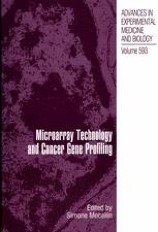
Microarray technology and cancer gene profiling
Cancer is a heterogeneous disease in most respects, including its cellularity, different genetic alterations and diverse clinical behaviors. In the present book, written by leading experts in each field, the technical features characterizing this powerful laboratory tool are discussed, and the applications so far described in the field of oncology are reviewed.
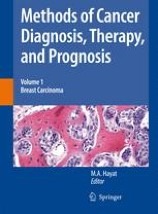
Methods of Cancer Diagnosis, Therapy and Prognosis : Breast Carcinoma
Focusing on Breast Carcinoma, this first volume in the series Methods of Cancer Diagnosis, Therapy and Prognosis brings together 56 leading scientists from around the world to deliver a comprehensive treatise on all aspects of breast cancer, including diagnosis, treatments and prognosis.

Métastases vertébrales = Vertebral metastases
Updating the technical progress made by each of the players, both diagnostic and therapeutic, was necessary and confirms the quality of the result of a joint venture serving a patient in a particularly delicate situation. It is intended to be practical for each of the care providers and didactic for those who are less specialized in one or another area. This has led us to make choices, of course debatable, leading to explanations that are sometimes a little too "obvious" for connoisseurs, a little too technical for neophytes, repetitions for everyone to find in "their" chapter what makes it so. interested.

Mémento de la recherche biomédicale portant sur un médicament à usage humain = Summary of biomedical research on a medicinal product for human use
Presents the reference texts, structures and authorities that govern clinical research in France, as well as its practical aspects. It is aimed at all of its stakeholders, both caregivers and patients. It will allow the most novices to familiarize themselves with the specific vocabulary of this discipline, to answer the questions raised during the conduct or participation in a therapeutic trial, and the most experienced to consider setting up a research structure. clinic in the rules of art.
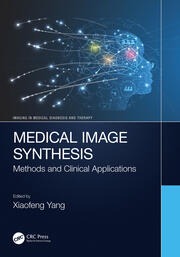
Medical image synthesis : Methods and clinical applications
Image synthesis across and within medical imaging modalities is an active area of research with broad applications in radiology and radiation oncology. This book covers the principles and methods of medical image synthesis, along with state-of-the-art research. First, various traditional non-learning-based, traditional machine-learning-based, and recent deep-learning-based medical image synthesis methods are reviewed. Second, specific applications of different inter- and intra-modality image synthesis tasks and of synthetic image-aided segmentation and registration are introduced and summarized, listing and highlighting the proposed methods, study designs, and reported performances with the related clinical applications of representative studies. Third, the clinical usages of medical image synthesis, such as treatment planning and image-guided adaptive radiotherapy, are discussed. Last, the limitations and current challenges of various medical synthesis applications are explored, along with future trends and potential solutions to solve these difficulties.

Maxillofacial prosthetics and dental oncology : Practical approach from a high volume head and neck cancer centre
An assimilation of clinical and practical work done at Tata Memorial Hospital. It reflects the evolution of Dental Oncology and Maxillofacial Prosthodontics and more than 33 years of exclusive maxillofacial prosthodontic experience of Dr. Kanchan Dholam. This book covers the clinical guidelines for treatment, based on sound scientific principles and published literature. It also provides a step-by-step approach in the fabrication of commonly-indicated maxillofacial prostheses.

Maxillofacial Imaging
Demonstrates how advanced medical imaging techniques can be successfully applied to dental and maxillofacial conditions. There is a focus on CT and MRI, but the use of all contemporary imaging techniques are illustrated including PET, PET/CT, ultrasonography, and cone beam CT. The presentation is in atlas style, with succinct, bulleted text and a wealth of high-quality images in multiple planes. All images for each patient are grouped to enable the reader very quickly to gain an imaging overview of the condition under consideration. After a comprehensive introductory chapter on normal imaging anatomy, the role of advanced imaging techniques is described in pathologic conditions of the mandible and maxilla, temporomandibular joint, regions closely related to the jaw, paranasal sinuses, oral cavity, salivary glands, and structures adjacent to the maxillofacial region. A concluding chapter examines the use of interventional procedures for diagnosis and treatment of maxillofacial conditions. Compared with the first edition, numerous additional cases have been incorporated and a completely new chapter focuses on cone beam CT.
