



الصفحة 1
الصفحة 1

Industrial enzymes : Structure, function and applications
Man's use of enzymes dates back to the earliest times of civilization. Important human activities such as the production of certain types of foods and beverages, and the tanning of hides and skins to produce leather for garments, serendipitously took advantage of enzyme activities. Important advances in our understanding of the nature of enzymes and their action were made in the late 19th and early 20th centuries, seeding the explosive expansion from the 1950s and 60s onward to the present billion dollar enzyme industry. Recent developments in the fields of genetic engineering and protein chemistry are bringing ever more powerful means of analysis to bear on the study of enzyme structure and function that will undoubtedly lead to the rational modification of enzymes to match specific requirements as well as the design of new enzymes with novel properties.

Crystalline cellulose and derivatives : Characterization and structures
Constitutes a valuable, concise and up-to-date guide for the materials and life science community interested in cellulose and related materials. Reliable crystal structures of all cellulose polymorphs and cellulose derivatives determined are critically reviewed and discussed. Models are represented in graphs together with a collection of geometrical data as well as the atomic coordinates for further use. The background for fiber diffraction, computer-aided modeling and spectroscopic investigations is briefly introduced and also included are the necessary molecular data from oligosaccharides as a basis for structure evaluations. X-ray diffraction patterns and spectroscopic diagrams are presented as references to characterize cellulosic materials and to serve as fingerprint tools for the exploration of unknown specimens of cell walls and of industrially processed films and fibers as well as solid-state materials.
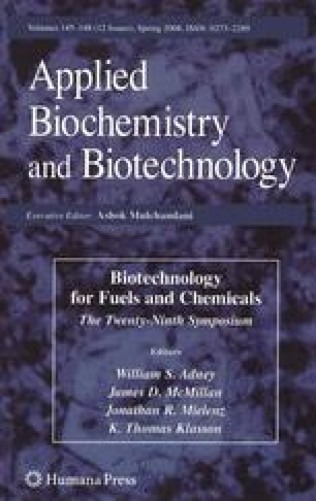
Biotechnology for Fuels and Chemicals : The Twenty-Ninth Symposium
In Biotechnology for Fuels and Chemicals: The Twenty-Ninth Symposium, leading US and international researchers from academia, industry, and government exchange cutting-edge technical information and update current trends in the development and application of biotechnology for sustainable production of fuels and chemicals. This symposium emphasizes advances in biotechnology to produce high-volume, low-price products from renewable resources, while improving the environment. The major areas of interest include advanced feedstock production and processing, enzymatic and microbial biocatalysis, bioprocess research and development, opportunities in biorefineries, and commercialization of biobased products. International and domestic progress on producing liquid biofuels, especially ethanol and biodiesel, is highlighted, and related topics, including bioseparations and optimal integration of biochemical and thermochemical conversion technologies, are featured.
