



الصفحة 1
الصفحة 1

International conference on terrain and geohazard challenges facing onshore oil and gas pipelines : Evaluation, routing, resign, construction, operation ; Proceedings of a three day international conference on terrain and geohazard challenges facing onshore oil and gas pipelines, organised by the Institution of Civil Engineers in association with BP Exploration and held at the Institution of Civil Engineers, London, UK, on 2 – 4 June 2004
To access global oil and gas deposits, major pipelines must traverse remote regions with extreme terrains. There are a significant number of pipeline projects, active or planned, in tropical jungles, mountains and deserts, in permafrost and in areas of wetland. Each of these natural environments is associated with a range of geohazards, which may include landslides, soil erosion, karst, river migration, and seismic or volcanic activity. At the same time, society demands increasing availability and reliability of supply, together with improved environmental standards, all making for substantial challenges.

Habitats and Biota of the Gulf of Mexico : Before the deepwater horizon oil spill ; Vol.2 : Fish resources, fisheries, sea turtles, avian resources, marine mammals, diseases and mortalities
The Gulf of Mexico is an open and dynamic marine ecosystem rich in natural resources but heavily impacted by human activities, including agricultural, industrial, commercial and coastal development. Nutrients and pollutants from coastal communities and dozens of rivers flow into the Gulf, including material from the Mississippi River watershed, which drains over one third of continental United States. The Gulf of Mexico has been continuously exposed to petroleum hydrocarbons for millions of years from natural oil and gas seeps on the sea floor, and more recently from oil drilling and production activities located in the water near and far from shore. Major accidental oil spills in the Gulf are infrequent; two of the most significant include the Ixtoc I blowout in the Bay of Campeche in 1979 and the Deepwater Horizon Oil Spill in 2010.

Habitats and Biota of the Gulf of Mexico : Before the deepwater horizon oil spill ; Vol.1 : Water quality, sediments, sediment contaminants, oil and gas Seeps, coastal habitats, offshore plankton and benthos, and shellfish
The Gulf of Mexico is an open and dynamic marine ecosystem rich in natural resources but heavily impacted by human activities, including agricultural, industrial, commercial and coastal development. Nutrients and pollutants from coastal communities and dozens of rivers flow into the Gulf, including material from the Mississippi River watershed, which drains over one third of continental United States. The Gulf of Mexico has been continuously exposed to petroleum hydrocarbons for millions of years from natural oil and gas seeps on the sea floor, and more recently from oil drilling and production activities located in the water near and far from shore. Major accidental oil spills in the Gulf are infrequent; two of the most significant include the Ixtoc I blowout in the Bay of Campeche in 1979 and the Deepwater Horizon Oil Spill in 2010.

Evaporites : Sediments, Resources and Hydrocarbons
The monograph offers a comprehensive discussion of the role of evaporites in hydrocarbon generation and trapping. For the first time, diverse knowledge on exploitable salts has been assembled and organized, along with a summary of evaporate karst hazards as well as a summary of exploitative methods and pitfalls in dealing with evaporites in conventional and solution mining. Written by a field specialist in research and exploration, the book presents a comprehensive synthesis of the low temperature realm of evaporite evolution. It is aimed for earth science professionals, sedimentologists, oil and gas explorers, mining geologists, as well as environmental geologists.

Environmental Technology in the Oil Industry
This significantly updated edition looks at each stage in the life cycle of petroleum products, from exploration to end use, examining the environmental pressures on the Oil Industry and its response. The Oil Industry produces a range of products without which modern civilization could not exist. Nevertheless, in today’s environmentally conscious world, society demands that the industry manufactures and markets the products without unduly polluting the environment. Its ability and willingness to comply determines whether society will allow it a licence to operate. Technical developments are progressing in line with environmental concerns and increasing sophistication of computer modelling techniques. These subjects are inter-related, but have often been dealt with independently.

Emerging Threats to Energy Security and Stability; Proceedings of the NATO Advanced Research Workshop on Emerging Threats to Energy Security and Stability, London, United Kingdom, from 23 to 25 January 2004
In particular, it sought to assess emerging threats to energy security and stability and discuss new security strategies to protect global energy supplies from regional instability and terrorism. The format involved a wide-ranging international group of poli- formers and advisers from NATO, Partner and other countries, in a unique forum for intensive expert discussion. Background The international community is increasingly conscious of the need to develop new energy security strategies in order to protect global energy supplies from regional instability and terrorism. Energy security is a vital element in international stability. However, a variety of energy-related economic, technical, and military/political factors pose serious challenges to the international community’s pursuit of energy security and stability: The global economy is expected to continue to be largely dependent on oil and gas for the next twenty to thirty years.

Corporate Sustainability Management in the Energy Sector : An Empirical Contigency Approach
Corporate social responsibility, sustainability, and citizenship are terms that often evoke considerable scepticism and cynicism, particularly in civil society. Much needed sector-specific and comparative research, which could facilitate a more fact-oriented debate, is still missing from the literature. The present study aims to fill this gap by presenting data collected from two groups of managers, namely sustainability experts and non-sustainability experts, from two different industry sectors (integrated oil and gas vs. electric utilities) and several geographical regions. Oliver Salzmann provides a comprehensive view on corporate sustainability management in companies such as Shell and RWE and investigates the key social and environmental issues driving the energy sector. The author analyses the influence which stakeholder pressure exercises on energy companies and their efforts to become more responsive. Moreover, he develops a model for strategic, thus profit-oriented, corporate sustainability management.

Contracting and safety : Exploring outsourcing practices in high-hazard industries
This book examines the increase in outsourcing, contracting and subcontracting as ways of organising work. It explores the impact of these employment arrangements on public safety, particularly when they are linked to complex supply networks in a range of engineering industries including oil and gas, nuclear power and aviation.

Mathematical methods and modelling in hydrocarbon exploration and production
Hydrocarbon exploration and production incorporate great technology challenges for the oil and gas industry. In order to meet the world's future demand for oil and gas, further technological advance is needed, which in turn requires research across multiple disciplines, including mathematics, geophysics, geology, petroleum engineering, signal processing, and computer science. This book addresses important aspects and fundamental concepts in hydrocarbon exploration and production. Moreover, new developments and recent advances in the relevant research areas are discussed, whereby special emphasis is placed on mathematical methods and modelling. The book reflects the multi-disciplinary character of the hydrocarbon production workflow, ranging from seismic data imaging, seismic analysis and interpretation and geological model building, to numerical reservoir simulation. Various challenges concerning the production workflow are discussed in detail.
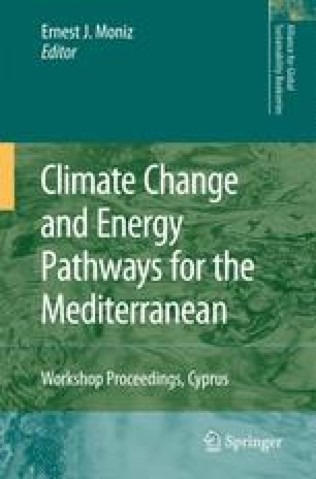
Climate Change and Energy Pathways for the Mediterranean : Workshop Proceedings, Cyprus
This the workshop proceedings present an overview of the implications of climate change for the eastern Mediterranean and the impact of climate change response on regional economic activity, particularly in the hydrocarbon industry.
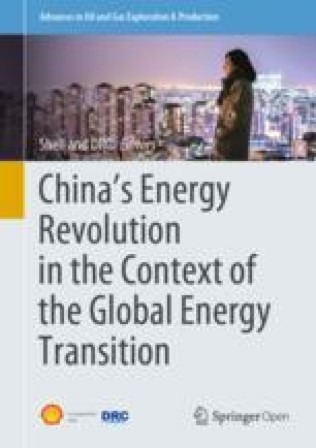
China's Energy Revolution in the Context of the Global Energy Transition
This book is an encyclopaedic analysis of the current and future energy system of the world’s most populous country and second biggest economy. What happens in China impacts the planet. In the past 40 years China has achieved one of the most remarkable economic growth rates in history. Its GDP has risen by a factor of 65, enabling 850,000 people to rise out of poverty.
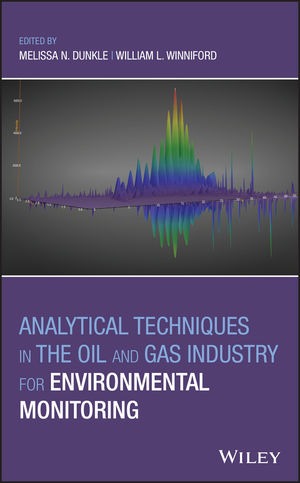
Analytical Techniques in the Oil and Gas Industry for Environmental Monitoring
The book discusses the conventional analyses for oil and natural gas feeds, along with their limitations. It offers detailed descriptions of advanced analytical techniques that are commercially available, plus explanations of gas and oil industry equipment and instrumentation. You’ll find technique descriptions supplemented with a list of references as well as with real-life application examples. With this book as a reference, you can prepare to apply specific analytical methods in your organization’s lab environment. Analytical Techniques can also serve as your comprehensive resource on key techniques in the characterization of oil and gas samples, within both refinery and environmental contexts.
14th International Congress for Applied Mineralogy (ICAM2019) ; Belgorod State Technological University named after V. G. Shukhov, 23–27 September 2019, Belgorod, Russia
This proceedings of the 14th International Council for Applied Mineralogy Congress (ICAM) in Belgorod, Russia cover a wide range of topics including applied mineralogy, advanced and construction materials, ore and industrial minerals, mineral exploration, cultural heritage, etc. It includes contributions to geometallurgy, industrial minerals, oil and gas reservoirs as well as stone artifacts and their preservation. The International Congress on Applied Mineralogy strengthens the relation between the research on applied mineralogy and the industry.
