



الصفحة 1
الصفحة 1

Geoenvironmental Engineering : Integrated management of groundwater and contaminated land
Contains the proceedings of the 4th Geoenvironmental Engineering Conference, organised by the British Geotechnical Association and Cardiff University's School of Engineering, held in Stratford-Upon-Avon in June 2004. The theme of the conference was Integrated Management of Groundwater and Contaminated Land. This book is a compilation of peer-reviewed papers; grouped according to the sessions under which they were presented at the conference.

Geoenvironmental Engineering : Geoenvironmental impact management ; Proceedings of the third conference organized by the British Geotechnical Association and Cardiff School of Engineering, Cardiff University, and held in Edinburgh on 17–19 September 2001
Geoenvironmental engineering contains the collected papers from the third Geoenvironmental Engineering Conference, organised by the British Geotechnical Association and Cardiff School of Engineering, Cardiff University. Authors from around the world have submitted the papers in this volume. They aim to share knowledge and experience to the international geoenvironmental engineering community. The main theme of this third conference is Geoenvironmental Impact Management.

Environmental Crises
This book studies the art and science of analyzing, assessing and anticipating environmental change. Among the issues considered are the observational evidence, statistical analysis and dynamic modeling as well as visioning of not-implausible changes in the environment, the changing public perception of the environment, functions of the environment and its use. Coverage also reviews a series of four prominent cases, namely climate change, the emissions of gasoline lead into the atmosphere and water bodies, fisheries policies and the management of marine oil pollution.

Contaminated land : Investigation, assessment and remediation
The first edition of this ICE design and practice guide became one of the most popular ICE publications after it was published in 1994. Since the first edition, there has been a multitude of legislation on the environment and the adoption of many of the principles of the European Landfill Directive. This has meant specialists, regulators and engineers are grappling with interpretation of guidance frameworks, new levels of testing accuracy and increased public perception of environmental damage.
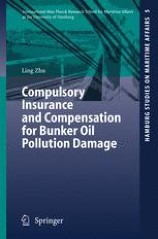
Compulsory Insurance and Compensation for Bunker Oil Pollution Damage
Oil tankers are not the only vessels that have caused oil pollution at sea. Numerous spills in the past have been of heavy fuel oil from non-tankers. However, the international liability and compensation regime covered only oil pollution damage caused by oil tankers. There was thus a need to bring the law on marine oil pollution responsive to oil pollution damage caused by non-tankers. In March 2001, the International Convention on Civil Liability for Bunker Oil Pollution Damage was adopted following a diplomatic conference at the International Maritime Organization. Though this convention has not yet come into force, its various aspects should already be considered as they will surely affect the maritime industry as a whole and the non-tanker sector, in particular. This book provides a timely and comprehensive study on the concept of compulsory insurance, its main purpose of ensuring compensation and its interrelations with other features such as the rule of strict liability and the limitation of liability under the convention.
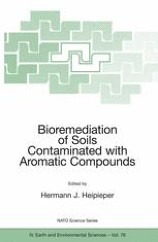
Bioremediation of Soils Contaminated with Aromatic Compounds
Environmental biotechnology, which was in its infancy in the early 80's, has evolved thanks to the revolution brought about by molecular biology. Multiple successes in the biological cleanup of civil and industrial wastewater and of hydrocarbon soil pollution, demonstrate the vast power of clean technologies. In addition, the buildup of information on the activities of microorganisms as catalysts in all sorts of natural, industrial and animal environments has flourished. There is a continuing realization of the critical role of microbial processes in biological, industrial and geological systems. Since environmental biotechnology has matured, it is ready to tackle bigger challenges: the scaling up of many bioremediation systems still in progress, the search for novel biocatalysts for industrial applications, the continuing effort against common human life-threatening processes such as antibiotic resistance, the accumulation of hormone-mimicking substances (endocrine disrupters), the deposition of air-borne pesticides in the environment and, the degradation of recalcitrant contaminants. These endeavors will help prevent the contamination of food chains, protect human life and allow for human activity and economic development that do not compromise environmental sustainabijity.
