



الصفحة 1
الصفحة 1

Ocean Weather Forecasting : An Integrated View of Oceanography
This volume covers a wide range of topics and summarizes our present knowledge in ocean modeling, ocean observing systems, and data assimilation.
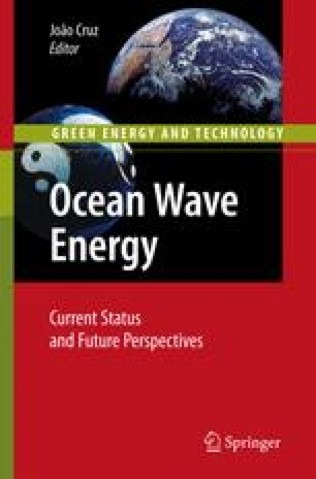
Ocean Wave Energy : Current Status and Future Prespectives
The authors of this reference provide an updated and global view on ocean wave energy conversion for wave energy developers as well as for students and professors. The book is orientated to the practical solutions that this new industry has found so far and the problems that any device needs to face. It describes the actual principles applied to machines that convert wave power in electricity. Additionally, an historical review, state of the art of modern systems, a full scale prototype experience, and future perspectives are given.

Nonlinear Physical Oceanography : A Dynamical Systems Approach to the Large Scale Ocean Circulation and El Niño
Taken from a review of the first edition in SIAM:"This text is different from most others in that it combines several different disciplines and draws on many scientific studies in order to deduce mechanisms of ocean circulation.
Modelling and Monitoring of Coastal Marine Processes
Although numerous books have been written on both monitoring and modelling of coastal oceans, there is a practical need for an introductory multi-disciplinary volume to non-specialists in this field. The articles commisioned for this book, organized into four major themes, are written by experts in their disciplines while the text is intended for scientists who do not have extensive training in marine sciences and coastal zone management. As such, the articles in this monograph can be a valuable reference for practicing professionals.

Image Analysis, Sediments and Paleoenvironments
This seventh volume of the DPER series examines imaging techniques for sedimentologists, paleolimnologists, paleoceanographers and microscopists working on issues related to paleoenvironmental reconstruction. It will help the researcher or graduate student to understand every step involved in the imaging process, from image acquisition to measurements.nbsp; Procedures are described to ensure that the right protocols and methodology are selected to solve a particular issue, and to evaluate the validity of scientific results. Case studies illustrate the wide range of information that can be obtained from many kinds of sediments (marine, lacustrine and aeolian) and different types of samples (cores, embedded blocks, microscopic slides) using different regions of the electromagnetic spectrum (visible, UV, IR, X-ray). The volume provides comprehensive protocols, guidelines, and recommendations for the use of low cost image analysis techniques, to facilitate intercomparisons of measurements.
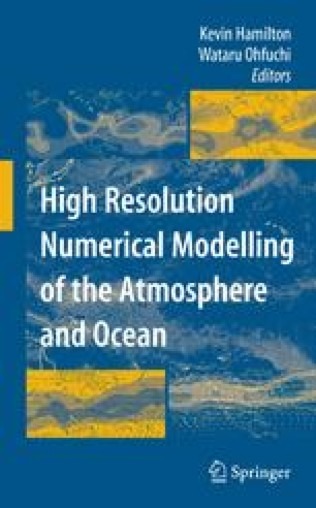
High resolution numerical modelling of the atmosphere and ocean
This book includes 15 individual papers that highlight the emerging research in atmospheric and oceanic science that has been made possible by exploiting newly available computational resources. Results from regional atmospheric, global atmospheric, global ocean, and global coupled ocean-atmosphere models are discussed in the various contributions.

Geostatistics for environmental applications ; Proceedings of the Fifth European Conference on geostatistics for environmental applications
Once applied only to problems of mining-reserves assessment or petroleum-reservoir characterization, geostatistics is now being used in an increasingly large number of disciplines in environmental sciences. On the one hand, it enables the analysis and handling, in a rigorous probabilistic framework of the issues of spatial and temporal interpolation of continuous or categorical environmental variables. On the other hand, the methodology is also used to design and optimize sampling campaigns. "Geostatistics for Environmental Applications" contains forty selected contributions covering the latest progress in a broad spectrum of fields including air quality, climatology, ecology, groundwater hydrology, surface hydrology, oceanography, soil contamination, epidemiology and health, natural hazards, and remote sensing.

Extreme Ocean Waves
The book details the vast progress that has been achieved in the understanding of the physical mechanisms of rogue wave phenomenon in recent years. The selected articles address such issues as the formation of freak waves due to modulation instability of nonlinear wave field, physical and statistical properties of rogue wave generation in deep water and in shallow water, various models of nonlinear water waves, special analysis of nonlinear resonances between water waves and the relation between observations and freak wave theories.
Encyclopedia of Coastal Science
This new Encyclopedia of Coastal Science stands as the latest authoritative source in the field of coastal studies, making it the standard reference work for specialists and the interested lay person
Earthquakes : Simulations, Sources and Tsunamis
This book includes a variety of studies that focus on the modeling of tsunamis and earthquakes, both large-scale simulation and visualization programs, as well as detailed models of small-scale features. Particular attention is paid to computational techniques, languages, and hardware that can be used to facilitate data analysis, visualization, and modeling. Also included are studies of several earthquake forecasting techniques and associated comparisons of their results with historic earthquake data. Finally, the volume ends with theoretical analyses of statistical properties of seismicity by internationally recognized experts in the field. This volume will be of particular interest to researchers interested in the multiscale simulation and visualization of large earthquakes and tsunamis.

Dynamical Oceanography
This textbook provides a mathematical introduction to the theory of large-scale ocean circulation and is accessible for readers with an elementary knowledge of mathematics and physics, including continuum mechanics and solution methods for ordinary differential equations. The book consists of four parts. Part I (chapters 1 - 4) is a very brief introduction to ocean circulation and the mathematical formulation of the governing equations of ocean flows. In addition, concepts are introduced that are necessary to describe and understand large-scale ocean currents. In part II (chapters 5 - 10), the theory of mid-latitude wind-driven ocean circulation is presented. Part III (chapters 11 - 12) focuses on the understanding of equatorial currents and El Nino. In the last part IV, chapters 13 - 16, the theory of planetary scale flows is presented, covering topics such as the thermocline problem, the Antarctic Circumpolar Current, the stability of the thermohaline circulation and the Arctic Ocean circulation.

Coral Reefs of the USA
This book will therefore be of broad general interest. For the first time, complete scholarly reviews are given for the geology, geomorphology and the biology of reefs encompassing a vast area stretching from the Mariana Islands in the west, Samoa in the south, Hawaii in the north and the Virgin Islands in the east.
Computational Methods in Transport ; Granlibakken 2004
Based on a series of lectures given in the Granlibakken workshop was devoted to providing a forum, where computational transport researchers could communicate their methods with their results. This book presents computational transport in mathematics, astrophysics, high energy density physics, atmospheric physics, oceanography, and plant canopies.

Cold-Water Corals and Ecosystems
Following the exciting exploration of hot vent and cold seep ecosystems, the rediscovery of cold-water coral ecosystems with high-technology instrumentation is currently another hot topic in multidisciplinary marine research. Conventionally, coral reefs are regarded as restricted to warm and well-illuminated tropical seas, not associated with cold and dark waters of higher latitudes. However, ongoing scientific missions have shed light on the global significance of this overlooked ecosystem. Cold-water coral ecosystems are involved in the formation of large seabed structures such as reefs and giant carbonate mounds, and they represent unexploited paleo-environmental archives of earth history. Like their tropical cousins, cold-water coral ecosystems harbour rich species diversity. Despite the great water depths, commercial interests overlap more and more with the coral occurrences. Human activities already impinge directly on cold-water coral reefs causing severe damage to this vulnerable ecosystem. In this volume, the current key institutions involved in cold-water coral research have contributed 62 state-of-the-art articles from geology and oceanography to biology and conservation.
Marine carbon biogeochemistry : A primer for earth system scientists
This book discusses biogeochemical processes relevant to carbon and aims to provide with insight into the functioning of marine ecosystems. A carbon centric approach has been adopted, but other elements are included where relevant or needed. The book focuses on concepts and quantitative understanding of primary production, organic matter mineralization and sediment biogeochemistry. The impact of biogeochemical processes on inorganic carbon dynamics and organic matter transformation are also discussed.
Links between geological processes, microbial activities & evolution of life : Microbes and geology
Microbial activities influence water-rock interaction processes and chemical transport between the major geochemical reservoirs and the formation/transformation of minerals and rocks, whereas geological processes and geochemical controls influence the microbial ecology in extreme environments. How biological activity influences geological processes and what role these processes played in the geological evolution of the Earth are fundamental questions.

Light Absorption in Sea Water
Takes a fresh, holistic approach to the problems of light absorption and absorbers in seawaters, discussing the fundamentals of light absorption at various depths in seawaters of different trophicity by absorbers of diverse origin. The authors have drawn their information from a substantial body of contemporary research results published in the subject literature (over 700 references) as well as their own work during the last 30 years. No other book presently available examines the issues of light absorption and absorbers in seawaters in such a manner. The physical and chemical properties, as well as the optical constants, of organic and inorganic suspended particulate matter (SPM), are discussed in the context of their relationship to the light absorption properties of SPM. Special emphasis is placed on the role of the phytoplankton and the pigments it contains which are particularly strong and important absorbers of visible light in the sea.

IUTAM Symposium on Hamiltonian Dynamics, Vortex Structures, Turbulence ; Proceedings of the IUTAM Symposium held in Moscow, 25–30 August, 2006
This work brings together previously unpublished notes contributed by participants of the IUTAM Symposium on Hamiltonian Dynamics, Vortex Structures, Turbulence (Moscow, 25-30 August 2006). The study of vortex motion is of great interest to fluid and gas dynamics: since all real flows are vortical in nature, applications of the vortex theory are extremely diverse, many of them (e.g. aircraft dynamics, atmospheric and ocean phenomena) being especially important. The last few decades have shown that serious possibilities for progress in the research of real turbulent vortex motions are essentially related to the combined use of mathematical methods, computer simulation and laboratory experiments. These approaches have led to a series of interesting results which allow us to study these processes from new perspectives.
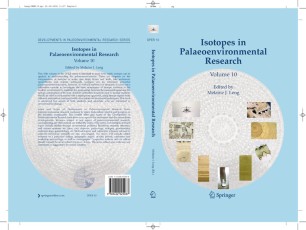
Isotopes in Palaeoenvironmental Research
This thorough reference shows how stable isotopes can be applied to understanding the palaeoenvironment, with chapters on the interpretation of isotopes in water, tree rings, bones and teeth, lake sediments, speleothems and marine sediments.
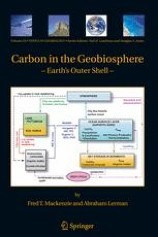
Carbon in the Geobiosphere : Earth's outer shell
Carbon and carbon dioxide always played an important role in the geobiosphere that is part of the Earth’s outer shell and surface environment. The book’s eleven chapters cover the fundamentals of the biogeochemical behavior of carbon near the Earth’s surface, in the atmosphere, minerals, waters, air-sea exchange, and inorganic and biological processes fractionating the carbon isotopes, and its role in the evolution of inorganic and biogenic sediments, ocean water, the coupling to nutrient nitrogen and phosphorus cycles, and the future of the carbon cycle in the Anthropocene. This book is mainly a reference text for Earth and environmental scientists; it presents an overview of the origins and behavior of the carbon cycle and atmospheric carbon dioxide, and the human effects on them. The book can also be used for a one-semester course at an intermediate to advanced level addressing the behavior of the carbon and related cycles.
