



الصفحة 1
الصفحة 1

Nuclear Law : The Global Debate
This open access book traces the journey of nuclear law: its origins, how it has developed, where it is now, and where it is headed. As a discipline, this highly specialized body of law makes it possible for us to benefit from the life-saving applications of nuclear science and technology, including diagnosing cancer as well as avoiding and mitigating the effects of climate change. This book seeks to give readers a glimpse into the future of nuclear law, science and technology. It intends to provoke thought and discussion about how we can maximize the benefits and minimize the risks inherent in nuclear science and technology. This compilation of essays presents a global view in discipline as well as in geography.

International Cooperation for Enhancing Nuclear Safety, Security, Safeguards and Non-proliferation–60 Years of IAEA and EURATOM ; Proceedings of the XX Edoardo Amaldi Conference, Accademia Nazionale dei Lincei, Rome, Italy, October 9-10, 2017
Examines key aspects of international cooperation to enhance nuclear safety, security, safeguards, and non-proliferation, thereby assisting in development and maintenance of the verification regime and fostering progress toward a nuclear weapon-free world. The book opens by addressing important political, institutional, and legal dimensions. Current challenges are discussed and attempts made to identify possible solutions and future improvements. Subsequent sections consider scientific developments that have the potential to increase the effectiveness of implementation of international regimes, particularly in critical areas, technology foresight, and the ongoing evaluation of current capabilities. The closing sections examine scientific and technical challenges and discuss the role of international cooperation and actions of the scientific community in leading the world toward peace and security.
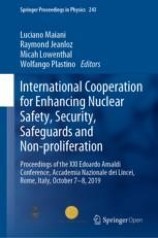
International Cooperation for Enhancing Nuclear Safety, Security, Safeguards and Non-proliferation ; Proceedings of the XXI Edoardo Amaldi Conference, Accademia Nazionale dei Lincei, Rome, Italy, October 7–8, 2019
This book examines key aspects of international cooperation to enhance nuclear safety, security, safeguards, and nonproliferation, thereby assisting in development and maintenance of the verification regime and fostering progress toward a nuclear weapon-free world.

Justifying the Dependability of Computer-based Systems : With Applications in Nuclear Engineering
The book also explores some of the more fundamental aspects of safety evaluation, such as the nature of models, arguments, evidence and documentation, and the ways to deal with different types of risk and uncertainty. Justifying the Dependability of Computer-based Systems will be of value to software, computer system, instrumentation and control engineers, and regulators working in industry sectors such as nuclear safety.
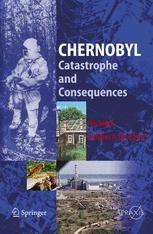
Chernobyl: Catastrophe and Consequences
The long-term effects of the Chernobyl incident on the environment are still becoming apparent, twenty years after the event. This book, written by two researchers with frontline experience in this field, provides a detailed review of these over a wide range of ecosystems. It also discusses the responses and countermeasures utilised to combat the effects of the accident, as well as considering the health, social, psychological and economic impacts on the human population. Chernobyl - Catastrophe and Consequences / provides a comprehensive assessment of the Chernobyl accident and its long-term consequences draws on the most recent measurements of contamination in the terrestrial and aquatic food chains / discusses the sociological consequences of such disasters in detail / This book adds valuable weight to the debate about the environmental cost of nuclear power and the issue of nuclear safety.
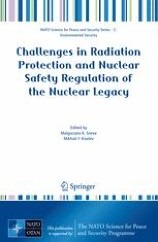
Challenges in Radiation Protection and Nuclear Safety Regulation of the Nuclear Legacy
The book covers radiation protection and nuclear safety supervision of installations built during the cold war, particularly in relation to regulatory strategies for safe decommissioning of unique or unusual nuclear facilities and remediation
