



الصفحة 1
الصفحة 1

Novel NMR and EPR Techniques
This book delivers a survey of recent research in the fields of condensed matter physics and chemistry based on novel NMR and ESR techniques. Applications include quantum computing, metal nanoparticles, low dimensional magnets, fullerenes as atomic cages, superconductors, porous media, and laser assisted studies. The book is dedicated to Professor Robert Blinc, on the occasion of his seventieth birthday, in appreciation of his remarkable scientific accomplishments in the NMR of condensed matter.

NMR-MRI, µSR and Mössbauer Spectroscopies in Molecular Magnets and magnetic nanoparticles
In this book an extensive overview on the results obtained during the last decade and on recent achievements in the study of molecular magnets by means of Nuclear Magnetic Resonance, Muon Spin Rotation, Magnetic Resonance Imaging and Mossbauer techniques is presented. The aim is to introduce the reader to these techniques and to give a general background on their application to molecular spin systems.

NMR - From Spectra to Structures : An Experimental Approach
Nuclear magnetic resonance spectroscopy is one of the most powerful analytical methods. This practice-oriented textbook aims at teaching how NMR experiments should be used to make structural asssignments. The book is intended as a practical guide for students and laboratory personnel, so that the emphasis is on practical rather than on theoretical aspects, which are treated only to the extent necessary to understand the experiments and to interpret the results.The second edition has been expanded to include several other heteronuclei (15N, 19F, 29Si, 77Se, 113Cd, 117Sn/119Sn, 195Pt, 207Pb) and a new chapter on solid state NMR. The problems section has been enlarged and now includes 50 problems.

New Techniques in Solid-State NMR
After the discovery of nuclear magnetic resonance, [1, 2] the new spectroscopy was used for the study of 1 H nuclei in liquids, but then the signal from copper in the receiver coil itself, the first observation of NMR in the solid state, was found.“Wide-line NMR”, named thus because of the line-broadening effects of dipolar interaction and chemical shift anisotropy, was not far behind, and soon led to significant advances through the analysis of spectral lineshapes. Inthis way Richards and Smith [3] demonstrated the presence of H3O+ cations in solid hydrates of strong acids, while Andrew and Eades [4] investigated the details of molecular motion in three solid benzenes. Even now, 50 years later, it is difficult to think of a technique which would provide a more convincing demonstration of the reality of these effects.

Intrinsic Molecular Mobility and Toughness of Polymers II
The series Advances in Polymer Science presents critical reviews of the present and future trends in polymer and biopolymer science including chemistry, physical chemistry, physics and material science . the authors highlight the dual role of segmental jumps and displacements to improve toughness by energy dissipation and relaxation of critical stresses and to influence without exception all damage mechanisms. The dynamic response of a chain segment to thermo-mechanical excitation strongly depends on in-chain cooperative motions. By combining the powerful techniques of multi-dimensional Nuclear Magnetic Resonance and of dielectric and dynamic mechanical analysis Monnerie,

Intrinsic Molecular Mobility and Toughness of Polymers I
The series Advances in Polymer Science presents critical reviews of the present and future trends in polymer and biopolymer science including chemistry, physical chemistry, physics and material science . the authors highlight the dual role of segmental jumps and displacements to improve toughness by energy dissipation and relaxation of critical stresses and to influence without exception all damage mechanisms. The dynamic response of a chain segment to thermo-mechanical excitation strongly depends on in-chain cooperative motions. By combining the powerful techniques of multi-dimensional Nuclear Magnetic Resonance and of dielectric and dynamic mechanical analysis Monnerie,

In situ NMR Methods in Catalysis
In Situ NMR Methods in Catalysis is part of the Springer series Topics in Current Chemistry. The book contains five chapters and a helpful author and subject index. Chapter by chapter, the individual contributions are well written and structured . The book presents an excellent resource for the reader who is interested in a delivery of topics related to homogenous catalysis, some of which can be investigated by NMR.This will be a must-have work for scientists and practitioners in any field related to modern chemical research. It will also be highly useful for many workers in industry who are required to keep up-to-date with the latest news in chemistry and applied chemistry. So much is covered here in critical review, from the present position of developing research to future trends.
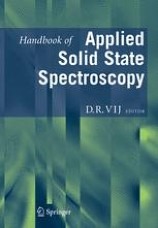
Handbook of Applied Solid State Spectroscopy
Solid-State spectroscopy is a burgeoning field with applications in many branches of science, including physics, chemistry, biosciences, surface science, and materials science. Handbook of Applied Solid-State Spectroscopy brings together in one volume information about various spectroscopic techniques that is currently scattered in the literature of these disciplines. This concise yet comprehensive volume covers theory and applications of a broad range of spectroscopies, including NMR, NQR, EPR/ESR, ENDOR, scanning tunneling, acoustic resonance, FTIR, auger electron emission, x-ray photoelectron emission, luminescence, and optical polarization, and more. Emphasis is placed on fundamentals and current methods and procedures, together with the latest applications and developments in the field.

Groundwater Geophysics : A Tool for Hydrogeology
Geophysical techniques can map the underground conditions apart from boreholes. The use of these methods for hydrogeological applications is demonstrated for mapping of porous and structural aquifers, determination of groundwater quality (mineralization), assessment of hydraulic properties, determination of aquifer vulnerability and mapping of contaminated sites. Additionally, a description of geophysical techniques used for groundwater studies is given including seismics, resistivity methods, magnetics, ground penetrating radar and NMR (nuclear magnetic resonance).

Essential NMR : For Scientists and Engineers
ESSENTIAL NMR is a set of lecture notes for scientists and engineers who want to brush up on their knowledge of NMR. This book is also a compendium for graduate and postgraduate students of physics and chemistry as well as for their teachers, covering all fields of NMR, i.e. NMR methodology and hardware, chemical analysis, 2D-spectroscopy, NMR imaging, flow NMR, and quality control NMR. The material, selected and organized for a one-semester course, is presented with pairs of pages addressing particular topics. One page of each pair provides a text containing the key information, the other page shows a color illustration. This is the most comprehensive textbook on NMR to date.

ESR Spectroscopy in Membrane Biophysics
Membrane proteins offer the greatest challenge in structural biology, and there is an urgent need to develop and apply new biophysical methodologies that are able to generate detailed structural information. Among modern biophysical techniques, site-directed spin-labeling electron spin resonance (SDSL-ESR) appears to show the highest potential to further develop the field. The objective of this book is to provide in-depth information about new advances of SDSL-ESR in membrane biophysics, emphasizing recent developments in the application to membrane proteins.

Electromagnetic Aquametry : Electromagnetic wave interaction with water and moist substances
This book covers all aspects of Electromagnetic Aquametry. It summarizes the wide area of metrology and its applications in electromagnetic sensing of moist materials. The physical properties of water in various degrees of binding interacting with electromagnetic fields is presented by model systems. The book describes measurement methods and sensors in the frequency domain, TDR-techniques for environmental problems, methods and sensors for quality assessment of biological substances, and nuclear magnetic resonance techniques

Computational and Instrumental Methods in EPR
This volume is devoted to both instrumentation and computation aspects of EPR, while addressing applications such as spin relaxation time measurements, the measurement of hyperfine interaction parameters, and the recovery of Mn(II) spin Hamiltonian parameters via spectral simulation.

Characterization II
Molecular Sieves - Science and Technology covers, in a comprehensive manner, the science and technology of zeolites and all related microporous and mesoporous materials. Authored by renowned experts, the contributions to this handbook-like series are grouped together topically in such a way that each volume deals with a specific sub-field. Volume 5 complements Volume 4 (Characterization I) in that it is devoted to the characterization of molecular sieves by a variety of non-spectroscopic techniques (Characterization II). Thus, Volume 5 comprises Chemical Analysis, Thermal Analysis, Pore-Size Characterization by Molecular Probes, Characterization by 129Xe NMR, Coke Characterization, Synthesis and Characterization of Isomorphously Substituted Molecular Sieves.

Adsorption and Diffusion
Molecular Sieves - Science and Technology covers, in a comprehensive manner, the science and technology of zeolites and all related microporous and mesoporous materials. Authored by renowned experts, the contributions to this handbook-like series are grouped together topically in such a way that each volume deals with a specific sub-field. Volume 7 is treating fundamentals and analyses of adsorption and diffusion in zeolites including single-file diffusion, i.e. phenomena of basic importance, especially with respect to separation processes and catalysis. Various methods of measuring adsorption and diffusion are described and discussed, i.e. techniques such as chromatographic, gravimetric and barometric uptake and desorption, nuclear magnetic resonance, infrared spectroscopy, interference microscopy, neutron scattering, frequency response as well as proton profiling.
