



الصفحة 1
الصفحة 1

The Human Nervous System : Structure and Function
Offers medical students and interested neuroscientists a readily understandable and awe-inspiring view of the organization of the human nervous system. Its explanatory power and visual insight make this book an indispensable source of quick understanding that readers will consult gratefully again and again.

The Emerging Physics of Consciousness
Consciousness remains one of the major unsolved problems in science. How do the feelings and sensations making up conscious experience arise from the concerted actions of nerve cells and their associated synaptic and molecular processes? Can such feelings be explained by modern science, or is there an entirely different kind of explanation needed? And how can this seemingly intractable problem be approached experimentally? How do the operations of the conscious mind emerge out of the specific interactions involving billions of neurons? This book seeks answers to these questions on the underlying assumption that consciousness can be understood using the intellectual potential of modern physics and other sciences. There are a number of theories of consciousness, some based on classical physics while others require the use of quantum concepts. The latter ones have drawn criticism from the parts of the scientific establishment while simultaneously claiming that classical approaches are doomed to failure. The contributing authors present a spectrum of opinions from both sides of this on-going scientific debate, allowing readers to decide for themselves which of the approaches are most likely to succeed.

The Coma
A coma, sometimes also called persistent vegetative state, is a profound or deepstate of unconsciousness. Persistent vegetative state is not brain-death. An individual in a state of coma is alive but unable to move or respond to his or her environment.

The Clinical Neurophysiology Primer
With the growth of combined clinical neurophysiology fellowship training programs and their corresponding “pan-physiology” board examinations, there has been an increased need for educational materials that span the range of clinical neurophysiology topics. The Clinical Neurophysiology Primer aims to meet this need by providing a broad and intentionally basic treatment of the most central topics within clinical neurophysiology. The Clinical Neurophysiology Primer initially took shape within the clinical neurophysiology sections at Hospital

Spatial Processing in Navigation, Imagery and Perception
Serves as a state-of-the-art platform, on which the very latest developments in spatial processing are presented. The findings presented in this book, emerge from different disciplines such as cognitive neuroscience, cognitive psychology, neuropsychology, neuroanatomy, computer science and robotics.

Retinal ganglion cells : Methods and protocols
Provides methods and techniques employed when culturing, manipulating, quantifying, and functionally assessing retinal ganglion cells (RGCs), vital for better understanding various ocular diseases and for developing novel therapies. The book features exhaustive and detailed protocols for the study of RGCs at both the in vitro and in vivo level, including the culture of rodent and human cells, and immunohistochemical, morphological, and functional assessments of various in vivo models of RGC death.

Psychoanalysis and Neuroscience
The book focuses on the possibility of interactions between psychoanalysis and neuroscience - i.e., emotions and the right hemisphere, serotonin and depression - and will be a unique tool not only for for professionals and students working in these fields, but also for operators of allied disciplines, such as psychology and psychotherapy.

Plasticity in the Visual System : From Genes to Circuits
Plasticity is the basis for learning, memory formation and cognition, and the adaptability it affords is essential for normal day-to-day functioning. Many diseases of brain functioning can be described as, or affect, plasticity mechanisms. The goal of Plasticity in the Visual System: From Genes to Circuits is to assemble and integrate the various levels of analysis required to approach a more complete picture of plasticity in the visual system. Researchers with backgrounds varying from systems neuroscience to molecular biology present a coherent picture of visual system plasticity, in which an array of genetic and molecular processes becomes linked with changes in neuronal connectivity, physiological changes, and ultimately, learning behavior. Because of its interdisciplinary view on plasticity, this book will appeal to the wide neuroscience community.

Orofacial Pain and Headache
Integrate knowledge across these disciplines to improve diagnostic accuracy and clinical management of chronic pain conditions and foster a beneficial collaboration between headache specialists and orofacial pain experts. The first chapters cover the diagnostic process, psychosocial modifying factors, and the anatomy and neurophysiology of the trigeminal nerve, but the bulk of the book is given over to a comprehensive review of the major clinical families of craniofacial pain. In this new edition, the authors place a focus on presenting clinical features and outlining treatment strategies, and the clinical case reports offer insight into the complexity of orofacial pain diagnosis and management.

Object Recognition, Attention, and Action
This book provides an excellent introduction to the issues that are involved, with chapters that address the ways in which humans and machines attend to, recognize, and act toward objects in the visual environment.

Neurodegeneration in Multiple Sclerosis
In multiple sclerosis (MS), conventional magnetic resonance imaging (cMRI) has proved to be a valuable tool to increase diagnostic reliability and to monitor the efficacy of experimental treatment. However, cMRI has limited specificity and accuracy as to the most disabling aspects of the MS pathology, known to occur in and outside macroscopic lesions. Modern quantitative MR techniques have the potential to overcome the limitations of cMRI, and their application is dramatically changing our understanding of how MS causes irreversible disability.

Neuroanatomical Tract-Tracing : Molecules, Neurons, and Systems
"The content of the book also serves to emphasize that neuroanatomy is, perhaps more than ever, a thriving and important part of the neurosciences...Most contributions have in common the combination of modern tract-tracing methods with other means of characterizing neural tissue, and thus the book also serves to highlight the gradual disappearance of borders between traditional neuroanatomy and other approaches to the study of the nervous system...this book should continue to be a useful source of information, and deserves to be available in all laboratories applying or considering to apply neuroanatomical methods."

Mechanisms, Symbols, and Models Underlying Cognition ; 1st International Work-Conference on the Interplay Between Natural and Artificial Computation, IWINAC 2005, Las Palmas, Canary Islands, Spain, June 15-18, 2005, Proceedings, Part I
Constitute the refereed proceedings of the First International Work-Conference on the Interplay between Natural and Artificial Computation, IWINAC 2005. This two-volume set contains papers that are related with the conceptual developments in the fields of Neurophysiology and cognitive science, and also to bioinspired programming strategies.

Human Haptic Perception : Basics and Applications
Active touch perception – also known as haptic perception – is of primary importance for the planning, direction and execution of everyday actions. This most complex of human sensory systems is gaining ever more importance for various scientific disciplines as well as practical industrial applications.In this book an international team of 80 authors presents a comprehensive collection of writings on both aspects of research on human haptic perception. After a theoretical and historical introduction, the chapters are dedicated to neurophysiological basics as well as the psychological, clinical and neuropsychological aspects of haptic perception. Results of studies into human haptic perception in the fields of virtual haptics and robotics are also included. In the final section, contributions from the applied and industrial sectors illustrate the practical uses of knowledge about the human sense of touch.

Fundamentals of anatomy and physiology of speech, language, and hearing
Each topic is explored in bullet-point form with augmentative paragraph information, in-depth box features, and detailed illustrations. High-resolution Anatomage virtual dissection table figures derived from real cadavers offer an unparalleled glimpse into the anatomical structures of the human body, featuring true-to-life colors and an impressive level of detail. Topics explored include respiration, phonation, articulation, swallowing, resonance, hearing, balance, neuroanatomy, and neurophysiology.

Foundations of Sport-Related Brain Injuries
A major take-home point from this book should be the assumption that symptom resolution does not necessarily mean injury resolution. As can be seen by research focusing on global metabolic cascades and neural activity of the brain, long-standing dysfunctional pathways continue to exist for extended periods of time even after a minor concussion. Until we completely understand the consequences of short-term perturbations and long-term residual brain dysfunctions, concussions must be treated with respect and given a higher priority for continued research activity.

Drugs, the brain, and behavior : The pharmacology of therapeutics and drug use disorders
Provides a comprehensive overview of the brain and explores the clinical and pharmacological issues surrounding drug abuse and dependence. Dr Brick provides definitions, historic discoveries about the nervous system, and original, eye-catching illustrations to discuss the brain/behavior relationship, basic neuroanatomy, neurophysiology, and the mechanistic actions of mood-altering drugs. Topics include: how psychoactive drugs affect cognition, behavior, and emotion; the brain/behavior relationship; the specific effects of major addictive and psychoactive drug groups; new definitions and thinking about abuse and dependence; and the medical uses of drugs, such as cannabinoids. A new chapter on biobehavioral markers explores how markers can guide the clinician in the diagnosis of some disorders. This book offers a quick reference guide which uses a balance of instruction, illustrations, tables, and formulas, that will give you a broad, lasting introduction to this intriguing subject.

Dendritic Neurotransmitter Release
This book presents recent developments in the neurophysiology of dendritic release of several chemical classes of transmitters in a number of different areas of the mammalian central nervous system. Once released from a neuron, these substances can act as neurotransmitters and/or neuromodulators, to autoregulate the original neuron, its synaptic inputs, and adjacent cells or, by volume transmission, to affect distant cells.
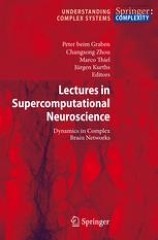
Lectures in Supercomputational Neurosciences : Dynamics in Complex Brain Networks
The present volume is an introduction, largely from the physicists' perspective, to the subject matter with in-depth contributions by system neuroscientists. A conceptual model for complex networks of neurons is introduced that incorporates many important features of the real brain, such as various types of neurons, various brain areas, inhibitory and excitatory coupling and the plasticity of the network. The computational implementation on supercomputers, which is introduced and discussed in detail in this book, will enable the readers to modify and adapt the algortihm for their own research.
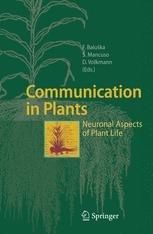
Communication in Plants : Neuronal Aspects of Plant Life
Plant neurobiology is a newly emerging field of plant sciences. It covers signalling and communication at all levels of biological organization – from molecules up to ecological communities. In this book, plants are presented as intelligent and social organisms with complex forms of communication and information processing. Authors from diverse backgrounds such as molecular and cellular biology, electrophysiology, as well as ecology treat the most important aspects of plant communication, including the plant immune system, abilities of plants to recognize self, signal transduction, receptors, plant neurotransmitters and plant neurophysiology. Further, plants are able to recognize the identity of herbivores and organize the defence responses accordingly. The similarities in animal and plant neuronal/immune systems are discussed too. All these hidden aspects of plant life and behaviour will stimulate further intense investigations in order to understand the communicative plants in their whole complexity.
