



الصفحة 1
الصفحة 1

Neuropsychiatric Disorders : An Integrative Approach
This multidisciplinary book includes current research papers and reviews in the areas of basic neuroscience, neural mechanisms underlying neurodegenerative disorders. It further includes new approaches for neuroprotective treatments, clinical, neurobiological and treatment aspects of psychiatric disorders. The book was conceived as a celebration of the professional life and work of Peter Riederer to mark the occasion of his retirement.

Neuroacanthocytosis Syndromes II
Awareness of neuroacanthocytosis disorders has increased significantly in recent years. There have been a number of important developments in the field since the publication of the first volume, Neuroacanthocytosis Syndromes. This book contains the latest research in this area. Recent advances have identified the range of mutations in the causative genes, shedding light on potential phenotypegenotype correlations. Studies of the proteins affected in these disorders have resulted in increased understanding of their functions and distribution. In vitro studies have identified potential protein interactions, which have important implications for pathophysiology. Work on erythrocyte membranes suggests mechanisms for the generation of acanthocytes. Animal models are being generated which will greatly facilitate understanding the role of gene mutations in humans, and provide the foundation for possible therapeutic interventions. In addition, advances in other neurodegenerative disorders, such as Huntington’s and Parkinson’s diseases, have implications for neuroacanthocytosis.

Ion channels as targets in drug discovery
Built around ion channel research and, more specifically, ion channels as important therapeutic drug targets. Under the editorial leadership of Gary Stephens in academic research and Edward Stevens from industry, the aim is to bring these strands together to provide a cutting-edge translational reference on ion channel drug discovery. Exploiting our knowledge of ion channel structure and function has clear current and future potential to intervene and correct the pathophysiology associated with debilitating conditions, including cardiovascular disease, diabetes, cystic fibrosis, pain, epilepsy, and neurodegenerative disorders. Individual chapters have a disease focus, also providing a “case study story” that will also appeal to a clinical audience

Human microbiome : Clinical implications and therapeutic interventions
The human microbiome refers to the complete microorganisms inhabiting the human body sites including skin, ear, nose, oral cavity, the genital, gastrointestinal and respiratory tracts, and body fluids such as breast milk, saliva, and urine. It is a significant and essential organ recognized for the body and has an established involvement in the host wellbeing, in terms of nutritional requirements and immunomodulation. Talks about how alteration and imbalance in the same can have clinical implications associated with a multitude of gastrointestinal, lifestyle-associated, and neurodegenerative disorders. How the proliferation of specific groups of bacteria and their metabolic activities, as a result of intestinal dysbiosis leads to the 'leaky gut' condition thereby influences brain activity via the bidirectional gut-brain axis. It also coves the importance of microbial seeding and how it can be influenced by the mode of delivery, nutrition, and medication. This book also provides various therapeutic interventions such as the establishment of stool banks and Faecal microbiota transplantation (FMT) that have recently proved promising in the treatment of ASD, Inflammatory Bowel Disease, and Ulcerative Colitis. This book provides a deeper understanding of the development of the human gut microbiome and the factors driving its dysbiosis. This book is a valuable read for health professionals, medical students, nutritionists, and scientific research communities who are eager to update themselves with recent trends in microbiome research. It will also aid gastroenterologists and nutritionists to make well-informed choices regarding therapeutic regimes.

Heat Shock Proteins and the Brain : Implications for Neurodegenerative Diseases and Neuroprotection
Neurodegenerative disorders such as Alzheimer’s disease, Huntington’s disease, Parkinson’s disease and amyotrophic lateral sclerosis have been termed ‘protein misfolding disorders’ that are char- terized by the neural accumulation of protein aggregates. Manipulation of the cellular stress response involving the induction of heat shock proteins offers a the- peutic strategy to counter conformational changes in neural proteins that trigger pathogenic cascades resulting in neurodegenerative diseases. Heat shock proteins are protein repair agents that provide a line of defense against misfolded, aggregati- prone proteins. Heat Shock Proteins and the Brain: Implications for Neurodegenerative Diseases and Neuroprotection reviews current progress on neural heat shock proteins (HSP) in relation to neurodegenerative diseases (Part I), neuroprotection (Part II), ext- cellular HSP (Part III) and aging and control of life span (Part IV).

Computational methods for rational drug design
Covers the tools and techniques of drug design with applications to the discovery of small molecule-based therapeutics, detailing methodologies and practical applications and addressing the challenges of techniques like AI/ML and drug design for unknown receptor structures. Divided into 23 chapters, the contributors address various cutting-edge areas of therapeutic importance such as neurodegenerative disorders, cancer, multi-drug resistant bacterial infections, inflammatory diseases, and viral infections.
Machine learning for neurodegenerative disorders : advancements and applications
Explores the application of machine learning to the understanding, early diagnosis, and management of neurodegenerative disorders. With a specific focus on its role in ongoing clinical trials, the book covers essential topics such as data collection, pre-processing, feature extraction, model development, and validation techniques. It delves into the applications of neuroimaging techniques like magnetic resonance imaging (MRI), computed tomography (CT), and positron emission tomography (PET) in the diagnosis and understanding of neurodegenerative disorders. Additionally, the book examines various machine-learning algorithms employed for biomarker discovery in neurodegenerative disorders. It highlights the role of neuroinformatics and big data analysis in advancing the understanding and management of neurodegenerative disorders. Furthermore, the book reviews future prospects and presents the ethical considerations and regulatory challenges associated with implementing machine learning approaches in the diagnosis, treatment, and prevention of neurodegenerative disorders.
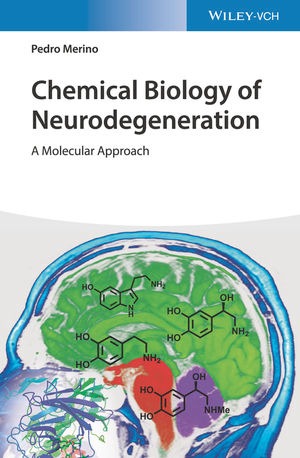
Chemical Biology of Neurodegeneration : A Molecular Approach
This book focuses on the main actors involved in neurodegenerative disorders at a molecular level, and places special emphasis on structural aspects and modes of action. Drawing on recent data on enzyme structure, mode of action, and inhibitor design, it describes?from a biochemical point of view?the six most important neurotransmitter systems and their constituent enzymes and receptors. Misfolding and aggregation of proteins within the brain is also covered.
