



الصفحة 1
الصفحة 1

Natural Disasters as Interactive Components of Global-Ecodynamics
This book opens a new approach to the study of global environmental changes having unfavourable character for mankind and other living systems. The main advantage of the book consists in the accumulation of knowledge from different sciences to parametrize the global ecodynamic process. Natural catastrophes are considered as an interactive element of global natural dynamics which are described by means of simulation models of global nature/society. The realization of this approach allows the integration within a complex structure of all international and national means of environmental monitoring and provides a tool for objective evaluation of the environmental quality. The main purpose of this book is to develop a universal information technology to estimate the state of environmental subsystems functioning under various climatic and anthropogenic conditions.

Natural Disasters and Extreme Events in Agriculture : Impacts and Mitigation
Agricultural production is highly dependent on weather, climate and water availability and is adversely affected by the weather and climate-related disasters. Droughts and natural disasters such as floods can result in crop failures, food insecurity, famine, loss of property and life, mass migration and negative national economic growth. It may not be possible to prevent the occurrence of these natural disasters, but the resultant disastrous effects can be reduced considerably through proper planning and effective preparation. Vulnerability associated with the hazards of natural disasters can be controlled to some extent by accurate and timely prediction and by taking counter-measures to reduce their impacts on agriculture. This book based on an expert meeting held in Beijing, China should be of interest to all organizations involved in disasters reduction and mitigation of extreme events.

Mitigation of Natural Hazards and Disasters : International Perspectives
This book examines the aspects of prevention, mitigation, and management of environmental hazards and disasters from an international perspective. In light of the recent debate on climate change and the possible effects of such a change upon increasing frequency and magnitude of extreme environmental events, this publication overviews various policy and response discourse. Several case studies, from various countries and world regions, depicting recent experience in mitigation policy and program development and implementation and establishing interlinks between vulnerability and mitigation are presented to provide further insights.
International Perspectives on Natural Disasters : Occurrence, Mitigation, and Consequences
Reports of natural disasters fill the media with regularity. Places in the world are affected by natural disaster events every day. Such events include earthquakes, cyclones, tsunamis, wildfires – the list could go on for considerable length. In the 1990s there was a concentrated focus on natural disaster information and mitigation during the International Decade for Natural Disasters Reduction (IDNDR). The information was technical and provided the basis for major initiatives in building structures designed for seismic safety, slope stability, severe storm warning systems, and global monitoring and reporting. Mitigation, or planning in the event that natural hazards prevalent in a region would suddenly become natural disasters, was a major goal of the decade-long program. During the IDNDR, this book was conceptualized, and planning for its completion began.

Handbook of Bioterrorism and Disaster Medicine
This comprehensive volume, written by experts in the field, is the essential portable handbook on bioterrorism and disaster medicine. The volume covers all pertinent topics with meticulous organization and includes an abundance of invaluable web-based resources. Written as both a practical and clinical guide to various types of disasters, it includes planning and response procedures to help mitigate the impact of disasters on affected individuals and communities. Designed to be used in the field, all the essential aspects are included: public health, bioterror agents, chemical warfare, radioactive agents, manmade disasters, natural disasters, humanitarian disasters, infectious and tropical diseases, and basics of emergency medicine. Handbook of Bioterrorism and Disaster Medicine is the ideal tool for researchers, first responders, medical students, physicians, and other healthcare providers who work in the field.

First Responder's Guide to Abnormal Psychology : Applications for Police, Firefighters and Rescue Personnel
Natural disasters. Hostage situations. Terror attacks. During these and other emergency situations, first responders make split-second judgments: evaluating risks, identifying dangerous conditions, and—often the hardest job of all—attending to those distressed and disturbed by their ordeal. First Responder's Guide to Abnormal Psychology gives readers critical insights into the human impact of extreme trauma, and the various levels of mental impairment suffered by both victims and survivors. Renowned trauma experts William Dorfman and Lenore Walker give this book immediate relevance through the use of real-life examples from a wide range of crisis situations. They have also deliberately minimized research citations within the text for greater readability.

Extremes in Nature : An Approach Using Copulas
The study of the statistics of extreme events is an essential first step in the mitigation of natural catastrophies, that often cause severe economic losses worldwide. This book is about the theoretical and practical aspects of the statistics of Extreme Events in Nature. Most importantly, this is the first text in which Copulas are introduced and used in Geophysics. Several topics are fully original, and show how standard models and calculations can be improved by exploiting the opportunities offered by Copulas. In addition, new quantities useful for design and risk assessment are introduced. Practicioners in all research areas of Geosciences and extreme events (including Finance and Insurance, closely related to natural disasters) will definitely benefit from the new Copula-approach outlined in the book.

Ethnocultural Perspectives on Disaster and Trauma : Foundations, Issues, and Applications
In this pioneering volume, experts on individual and collective trauma experience, posttraumatic stress and related syndromes, and emergency and crisis intervention – share knowledge and insights on the cultural context of working with ethnic and racial minority communities during disasters. In each chapter, emotional, psychological, and social needs as well as communal strengths and coping skills that arise in disasters are documented for major minority groups in the United States including specific chapters on African Americans, Native Americans, Arab Americans, Asian Indians, Chinese Americans, Caribbean Americans, Latin Americans, Native Hawaiians, and Vietnamese Americans

Environmental Security in Harbors and Coastal Areas : Management Using Comparative Risk Assessment and Multi-Criteria Decision Analysis
This book explores the challenges facing coastal areas during the next few decades and the difficult decisions needed to prevent a repeat of the past. Establishing, maintaining or enhancing a sense of environmental security in different coastal regions and improving the management of critical infrastructure will require (i) matching human demands with available environmental resources; (ii) recognition of environmental security threats and infrastructure vulnerabilities; and, (iii) identification of the range of available options for preventing and/or minimizing natural disasters, technological failures, and/or terror actions. This book emphasizes beliefs that the convergence of seemingly disparate viewpoints and often uncertain and limited information is possible only by using one or more available risk assessment methodologies and decision-making tools such as multi-criteria decision analysis (MCDA).

Ecological Responses to the 1980 Eruption of Mount St. Helens
The eruption of Mount St. Helens on May 18, 1980, had a momentous impact on the fungal, plant, animal, and human life from the mountain to the far reaches of the explosion's ash cloud and mudflows. Although this intense natural event caused loss of substantial life and property, it also created a unique opportunity to examine a huge disturbance of natural systems and their subsequent responses. Based on one of the most studied areas of volcanic activity, this book synthesizes the ecological research that has been conducted for twenty-five years since the eruption.

Crisis Reporters, Emotions, and Technology : An Ethnography
This book explores the emotional labour of crisis reporters in an original style that combines fictional and factual narrative. Exploring how journalists make sense of their emotional experience and development in relation to their professional ideology, it illustrates how media professionals learn to think and act within crisis situations. Drawing on in-depth interviews with journalists reporting on wars, terror attacks and natural disasters, the book rethinks traditional concepts in journalistic thought. Finally, it reflects on the specific, contemporary vulnerabilities of industry professionals, including the impact of new technologies, specific forms of precarity, and a particular strain of cynicism central to the industry. Combining comprehensive, empirical research with the fictional narrative of a journalist protagonist, Crisis Reporters, Emotions and Technology establishes an innovative approach to academic storytelling.
Macroeconomic Risk Management Against Natural Disasters : Analysis focussed on governments in developing countries
Natural disasters cause considerable economic damage. While developed countries usually are able to cope with the impacts of natural hazards, developing countries are faced with severe consequences for their resources. In order to prevent long-term macroeconomic repercussions, governments need a comprehensive disaster risk management strategy.Budgetary resources are allocated to pre-disaster risk management strategies to reduce the probability of financing gaps. The framework and model approach allows cross country comparisons as well as the assessment of financial vulnerability, macroeconomic risk, and risk management strategies.
Louisiana's response to extreme weather : A coastal state's adaptation challenges and successes
Takes an in-depth look at Louisiana as a state which is ahead of the curve in terms of extreme weather events, both in frequency and magnitude, and in its responses to these challenges including recovery and enhancement of resiliency.
Climate and Land Degradation
In many parts of the world, climatic variations are recognized as one of the major factors contributing to land degradation impacting on agricultural systems performance and management. To accurately assess sustainable land management practices, the climate resources and the risk of climate-related or induced natural disasters in a region must be known. Only when climate resources are paired with management or development practices can the land degradation potential be assessed and appropriate mitigation technologies be developed. This book is based on an International Workshop held in Arusha, Tanzania and should be of interest to all organizations and agencies interested in sustainable land management to arrest land degradation.

Catastrophe modeling : A new approach to managing risk
Catastrophe Modeling: A New Approach to Managing Risk is the first book that systematically analyzes how catastrophe models can be used for assessing and managing risks of extreme events. It focuses on natural disaster risk, but also discusses the management of terrorism risk. A unique feature of this book is the involvement of three leading catastrophe modeling firms, AIR Worldwide, EQECAT, and Risk Management Solutions, who examine the role of catastrophe modeling in rate setting, portfolio management and risk financing. Given the uncertainties associated with terrorism the book points out the opportunities for utilizing catastrophe models to set insurance rates and to examine public-private partnerships for providing financial assistance in the event of a terrorist attack. This book is strongly recommended for individuals who must make decisions regarding the management of impacts of catastrophe risks including those in both the public and private sector.
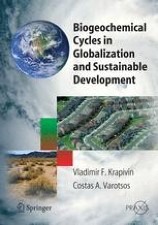
Biogeochemical cycles in globalization and sustainable development
This valuable study of environmental subsystems functioning under various climatic and anthropogenic conditions provides a unique insight into the social context of global changes in biogeochemical cycles and demonstrates current understanding of globalization and sustainable development.

Atlas of global change risk of population and economic systems
Iillustrates the spatial distribution of the global change risk of population and economic systems with the maps of environment, global climate change, global population and economic systems, and global change risk. The risks of global change are mapped at 0.25 degree grid unit. The risk results and their contribution rates of the world at national level are unprecedentedly derived and ranked. The book can be a good reference for researchers and students in the field of global climate change and natural disaster risk management, as well as risk managers and enterpriser to understand the global change risk of population and economic systems.
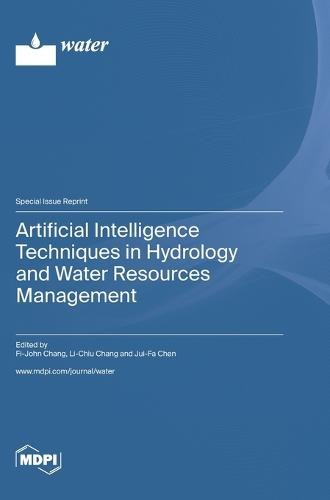
Artificial intelligence techniques in hydrology and water resources management
The sustainable management of water cycles is crucial in the context of climate change and global warming. It involves managing global, regional, and local water cycles, as well as urban, agricultural, and industrial water cycles, to conserve water resources and their relationships with energy, food, microclimates, biodiversity, ecosystem functioning, and anthropogenic activities. Hydrological modeling is indispensable for achieving this goal, as it is essential for water resources management and the mitigation of natural disasters. In recent decades, the application of artificial intelligence (AI) techniques in hydrology and water resources management has led to notable advances. In the face of hydro-geo-meteorological uncertainty, AI approaches have proven to be powerful tools for accurately modeling complex, nonlinear hydrological processes and effectively utilizing various digital and imaging data sources, such as ground gauges, remote sensing tools, and in situ Internet of Things (IoT) devices.
