



الصفحة 1
الصفحة 1

omputational science and its applications - ICCSA 2005 ; Vol. 3480 ; International Conference, Singapore, May 9-12, 2005, Proceedings, Part I
The four volume set assembled following The 2005 International Conference on Computational Science and its Applications, ICCSA 2005, held in Suntec International Convention and Exhibition Centre, Singapore, from 9 May 2005 till 12 May 2005, represents the ?ne collection of 540 refereed papers selected from nearly 2,700 submissions. Computational Science has ?rmly established itself as a vital part of many scienti?c investigations, a?ecting researchers and practitioners in areas ranging from applications such as aerospace and automotive, to emerging technologies such as bioinformatics and nanotechnologies, to core disciplines such as ma- ematics, physics, and chemistry. Due to the shear size of many challenges in computational science, the use of supercomputing, parallel processing, and - phisticated algorithms is inevitable and becomes a part of fundamental t- oretical research as well as endeavors in emerging ?elds.

New Methods of Concurrent Checking
New Methods of Concurrent Checking is the ultimate reference to answer the question as to how the best possible state-of-the-art error detection circuits can be designed. The most effective methods of concurrent checking for digital circuits are comprehensively described which were developed in the last 15 years. Some of the methods are published for the first time. How concurrent checking can be combined with soft error correction is also shown for the first time. This book is invaluable in considering the design of reliable systems in the emerging Nanotechnologies with an associated growing number of transient faults.

Nanotechnology ¿ Toxicological Issues and Environmental Safety and Environmental Safety
Nanotechnology is one of the fastest growing technological fields of the 21st century. Nanotechnologies will impact numerous industries, including daily consumer products, health care, energy, and transportation. However, the success of the emerging nanotechnology applications will depend on dynamic development of nanomaterial toxicology, risk and exposure assessment. Little is known about the potential adverse health and ecological effects of exposure to engineered nanomaterials, the main components of many nanotechnologies. Concerns are coming from the initial toxicological studies as well as the research and epidemiological reports on ultrafine particle toxicity. This book provides a summary of the state-of-art knowledge on nanomaterials and nanoparticles – toxicological issues; risk assessment and control measures.

Nanotechnologies, Hazards and Resource Efficiency : A Three-Tiered Approach to Assessing the Implications of Nanotechnology and Influencing its Development
Nanotechnology is frequently described as an enabling technology and 1 fundamental innovation, i.e. it is expected to lead to numerous innovative developments in the most diverse fields of technology and areas of app- cation in society and the marketplace. The technology, it is believed, has the potential for far-reaching changes that will eventually affect all areas of life. Such changes will doubtlessly have strong repercussions for society and the environment and bring with them not only the desired and intended effects such as innovations in the form of improvements to products, pr- esses and materials; economic growth; new jobs for skilled workers; relief for the environment; and further steps toward sustainable business, but also unexpected and undesirable side effects and consequences.

Nanoscience : Nanotechnologies and Nanophysics
Nanotechnologies and nanosciences are a fast-developing field of research, which sit at the point of convergence of several disciplines (physics, chemistry, biology, mechanics, etc.). This practically-oriented overview is designed to provide students and researchers with essential information on both the tools of manufacture and specific features of the nanometric scale, as well as applications within the most active fields (electronics, magnetism, information storage, biology).

Multifunctional Barriers for Flexible Structure : Textile, Leather and Paper
The intent of this book is to give a complete overview of the present state of the art of flexible barrier materials such as textile, paper and leather, including methods for barrier evaluation. It will be of interest to readers in industries, consumers, and members of the scientific community. The scope of the field is clearly delineated here for the first time, and it deals with a number of specific topics such as barrier to fire, antibacterial properties, resistance to waves (electrostatic, electromagnetic, acoustics), anti-odor, etc. combined with characterization techniques as well as material nanotechnology.

Fibre reinforced concrete : Improvements and innovations II : X rILEM-fib international symposium on fibre reinforced concrete (BEFIB) 2021
Highlights the latest advances, innovations, and applications in the field of fibre-reinforced concrete (FRC). It discusses a diverse range of topics concerning FRC: technological aspects, nanotechnologies related with FRC, mechanical properties, long-term properties, analytical and numerical models, structural design, codes and standards, quality control, case studies, Textile-Reinforced Concrete, Geopolymers.

Emerging Nanotechnologies : Test, Defect Tolerance, and Reliability
Emerging Nanotechnologies: Test, Defect Tolerance and Reliability covers various technologies that have been developing over the last decades such as chemically assembled electronic nanotechnology, Quantum-dot Cellular Automata (QCA), and nanowires and carbon nanotubes. Each of these technologies offers various advantages and disadvantages.

Computational science and its applications - ICCSA 2006 ; Vol. 3983 ; International Conference, Glasgow, UK, May 8-11, 2006, Proceedings, Part IV
This ?ve-volume set was compiled following the 2006 International Conference on Computational Science and its Applications, ICCSA 2006. It represents the outstanding collection of almost 664 refereed papers selected from over 2,450 submissions to ICCSA 2006. Computational science has ?rmly established itself as a vital part of many scienti?c investigations, a?ecting researchers and practitioners in areas ranging from applications such as aerospace and automotive, to emerging technologies such as bioinformatics and nanotechnologies, to core disciplines such as ma- ematics, physics, and chemistry.

Computational science and its applications - ICCSA 2006 ; Vol. 3982 ; International Conference, Glasgow, UK, May 8-11, 2006, Proceedings, Part III
This ?ve-volume set was compiled following the 2006 International Conference on Computational Science and its Applications, ICCSA 2006. It represents the outstanding collection of almost 664 refereed papers selected from over 2,450 submissions to ICCSA 2006. Computational science has ?rmly established itself as a vital part of many scienti?c investigations, a?ecting researchers and practitioners in areas ranging from applications such as aerospace and automotive, to emerging technologies such as bioinformatics and nanotechnologies, to core disciplines such as ma- ematics, physics, and chemistry.

Computational science and its applications - ICCSA 2006 ; Vol. 3981 ; International Conference, Glasgow, UK, May 8-11, 2006, Proceedings, Part II
This ?ve-volume set was compiled following the 2006 International Conference on Computational Science and its Applications, ICCSA 2006. It represents the outstanding collection of almost 664 refereed papers selected from over 2,450 submissions to ICCSA 2006. Computational science has ?rmly established itself as a vital part of many scienti?c investigations, a?ecting researchers and practitioners in areas ranging from applications such as aerospace and automotive, to emerging technologies such as bioinformatics and nanotechnologies, to core disciplines such as ma- ematics, physics, and chemistry.

Computational science and its applications - ICCSA 2006 ; Vol. 3980 ; International Conference, Glasgow, UK, May 8-11, 2006, Proceedings, Part I
This ?ve-volume set was compiled following the 2006 International Conference on Computational Science and its Applications, ICCSA 2006. It represents the outstanding collection of almost 664 refereed papers selected from over 2,450 submissions to ICCSA 2006. Computational science has ?rmly established itself as a vital part of many scienti?c investigations, a?ecting researchers and practitioners in areas ranging from applications such as aerospace and automotive, to emerging technologies such as bioinformatics and nanotechnologies, to core disciplines such as ma- ematics, physics, and chemistry.

Computational science and its applications - ICCSA 2006 ;Vol. 3984 ; International Conference, Glasgow, UK, May 8-11, 2006, Proceedings, Part V
This ?ve-volume set was compiled following the 2006 International Conference on Computational Science and its Applications, ICCSA 2006. It represents the outstanding collection of almost 664 refereed papers selected from over 2,450 submissions to ICCSA 2006. Computational science has ?rmly established itself as a vital part of many scienti?c investigations, a?ecting researchers and practitioners in areas ranging from applications such as aerospace and automotive, to emerging technologies such as bioinformatics and nanotechnologies, to core disciplines such as ma- ematics, physics, and chemistry.

Computational science and its applications - ICCSA 2005 ; Vol. 3483 ; International Conference, Singapore, May 9-12, 2005, Proceedings, Part IV
The four volume set assembled following The 2005 International Conference on Computational Science and its Applications, ICCSA 2005, held in Suntec International Convention and Exhibition Centre, Singapore, from 9 May 2005 till 12 May 2005, represents the ?ne collection of 540 refereed papers selected from nearly 2,700 submissions. Computational Science has ?rmly established itself as a vital part of many scienti?c investigations, a?ecting researchers and practitioners in areas ranging from applications such as aerospace and automotive, to emerging technologies such as bioinformatics and nanotechnologies, to core disciplines such as ma- ematics, physics, and chemistry. Due to the shear size of many challenges in computational science, the use of supercomputing, parallel processing, and - phisticated algorithms is inevitable and becomes a part of fundamental t- oretical research as well as endeavors in emerging ?elds.

Computational science and its applications - ICCSA 2005 ; Vol. 3482 ; International Conference, Singapore, May 9-12. 2005, Proceedings, Part III
The four volume set assembled following The 2005 International Conference on Computational Science and its Applications, ICCSA 2005, held in Suntec International Convention and Exhibition Centre, Singapore, from 9 May 2005 till 12 May 2005, represents the ?ne collection of 540 refereed papers selected from nearly 2,700 submissions. Computational Science has ?rmly established itself as a vital part of many scienti?c investigations, a?ecting researchers and practitioners in areas ranging from applications such as aerospace and automotive, to emerging technologies such as bioinformatics and nanotechnologies, to core disciplines such as ma- ematics, physics, and chemistry. Due to the shear size of many challenges in computational science, the use of supercomputing, parallel processing, and - phisticated algorithms is inevitable and becomes a part of fundamental t- oretical research as well as endeavors in emerging ?elds.

Computational science and its applications - ICCSA 2005 ; International Conference, Singapore, May 9-12, 2005, Proceedings, Part II
The four volume set assembled following The 2005 International Conference on Computational Science and its Applications, ICCSA 2005, held in Suntec International Convention and Exhibition Centre, Singapore, from 9 May 2005 till 12 May 2005, represents the ?ne collection of 540 refereed papers selected from nearly 2,700 submissions. Computational Science has ?rmly established itself as a vital part of many scienti?c investigations, a?ecting researchers and practitioners in areas ranging from applications such as aerospace and automotive, to emerging technologies such as bioinformatics and nanotechnologies, to core disciplines such as ma- ematics, physics, and chemistry. Due to the shear size of many challenges in computational science, the use of supercomputing, parallel processing, and - phisticated algorithms is inevitable and becomes a part of fundamental t- oretical research as well as endeavors in emerging ?elds.
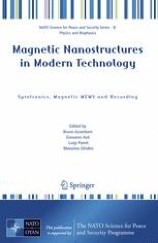
Magnetic Nanostructures in Modern Technology ; Spintronics, Magnetic MEMS and Recording
A team of outstanding scientists in the field of modern magnetic nanotechnologies illustrates the state of the art in several areas of advanced magneto-electronic devices, magnetic micro-electromechanical systems and high density information storage technologies.The physics and chemistry of nano-scale systems have made rapid advances and there are real prospects of translating exciting scientific findings into a new generation of processes and high technology products with a potential impact on several industrial sectors. In particular the development of nano-structured magnetic materials plays a leading role in the increasing miniaturization of devices with superior performances.

Biotechnology of medicinal plants with antiallergy properties : Research trends and prospects
Covers critically investigated information on medicinal plants prioritized for their anti-allergy properties. It offers insights into strategies related to the distribution, mechanism of action, and assessment of antiallergic medicinal plants, and also delves into crucial aspects of modern biotechnological tools, addressing their implementation challenges, presenting innovative approaches through case studies, and exploring opportunities for nanotechnologies. These elaborated discussions aim to raise awareness and bridge the gap between human health and the biodiversity of antiallergic medicinal plants.
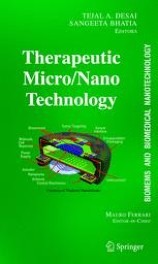
BioMEMS and biomedical nanotechnology ; Vol. III : Therapeutic Micro/Nanotechnology
The human body is composed of structures organized in a hierarchical fashion: from biomolecules assembled into polymers, to multimeric assemblies such as cellular or-ganelles, to individual cells, to tissues, to organ systems working together in health and disease- each dominated by a characteristic length scale. Decades of science and engineer-ing are now converging to provide tools that enable the orderly manipulation of biological systems at previously inaccessible, though critically important, length scales (<100 mi-crons). Thus, the approaches described in this volume provide a snapshot of how micro-and nanotechnologies can enable the investigation, prevention, and treatment of human disease.The volume is divided into three parts. The first part, Cell-based therapeutics; cov- ers the merger of cells with micro- and anosystems for applications in regenerative medicine spanning the development of novel nanobiomaterials.
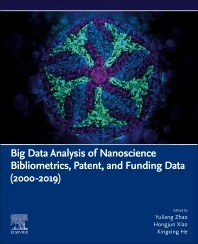
Big data analysis of nanoscience bibliometrics, patent, and funding data (2000-2019)
Presents an evaluation of nanotechnologies outputs (academic outputs and patents) and their impact from 2000-2019. The evaluation uses Elsevier’s Scopus (the largest abstract and citation database of peer-reviewed literature), SciVal (a scientific research analysis platform), Funding Institutional (a funding database), and PatentSight (a patent analysis platform). It covers four key topics regarding nanoscience research, including: 1) An overview of nano-related scholarly output, 2) Nanoscience and its contribution to basic science, 3) Nanoscience and its impact on and collaboration with industry partners, and 4) Key factors that promote the development of nanoscience.
