



الصفحة 1
الصفحة 1

Nanostructured Coatings
Controlling the performance of structures and components of all sizes and shapes through the use of engineered coatings has long been a key strategy in materials processing and technological design. The ever-increasing sophistication of en- neered coatings and the rapid trend toward producing increasingly smaller devices with greater demands on their fabrication, properties and performance have led to signicant progress in the science and technology of coatings, particularly in the last decade or two. Nanostructured coatings constitute a major area of sci- ti?c exploration and technological pursuit in this development.Nanostructured coatings demand study in a highly interdisciplinary research arena which encompasses: surface and interface science study of defects modern characterization methodologies cutting-edge experimental developments to deposit.

Nanomaterials and nanotechnology in medicine
The use of nanotechnology and nanomaterials more generally is an emerging field that has generated a lot of interest in the last few years. To this point, there have been few books that deal with the recent advances in nanomaterials or nanocomposites in the medical discipline. Intended as a one-stop reference, Nanomaterials and Nanotechnology in Medicine provides the reader with the most-up-to-date and comprehensive exploration of the field of nanomedicine. The scope of the topic is huge, with nano applications in every medical specialization—from diagnostics to pharmaceuticals, from biological therapies to surgical devices, and from regenerative therapies to gene therapy. As such, this volume provides the most comprehensive coverage of this intriguing field of study.
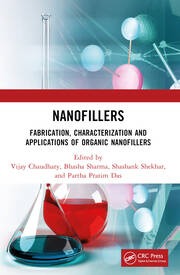
Nanofillers : Fabrication, characterization and applications of organic nanofillers
Explores the modifying effects of various nanofillers on mechanical and physical properties of polymer nanocomposites. Looking at the four basic aspects of processing, characterization, properties, and applications, it analyzes how their features can allow for innovative multifunction within industry. Covering design, production, and manufacture, this book focuses on meeting end-use requirements and the fabrication of materials. The importance of mindful design and the use of an appropriate synthesis method is the primary lens through which theory and practice are discussed. This volume looks at the various synthesis methods available for organic nanofillers and what characterizes them. Properties including mechanical, thermal, electrical, and tribological are thoroughly examined, along with the various computational techniques used to determine them. With important sustainable properties, nanofillers are essential to meeting the increasing demand for biodegradable and environmentally friendly materials. This book details the role nanofillers have to play in sustainability, alongside economic factors such as efficient manufacturing processes.

Nanocomposites : Ionic Conducting Materials and Structural Spectroscopies
Nanocomposites have been receiving more and more attention given the improvement of synthesis techniques and the availability of powerful characterization techniques. The aim of the book is to introduce nanocomposite materials using a broad range of inorganic and organic solids. Furthermore, it is intended to present recent and not very common developments in especially spectroscopic characterization techniques, including Mössbauer, EXAFS, NMR. This should make the book attractive for a broad range of readers, including chemists and physicists.

Micromechanics of Heterogeneous Materials
The micromechanics of random structure heterogeneous materials is a burgeoning multidisciplinary research area which overlaps the scientific branches of materials science, mechanical engineering, applied mathematics, technical physics, geophysics, and biology. Micromechanics of Heterogeneous Materials features rigorous theoretical methods of applied mathematics and statistical physics in materials science of microheterogeneous media. The prediction of the behavior of heterogeneous materials by the use of properties of constituents and their microstructures is a central issue of micromechanics. This book is the first in micromechanics to provide a useful and effective demonstration of the systematic and fundamental research of the microstructure of the wide class of heterogeneous materials of natural and synthetic nature.

Metallopolymer Nanocomposites
Highly dispersed nanoscale particles in polymer matrices are currently attracting great interest in many fields of chemistry, physics and materials science. This book presents and analyzes the essential data on nanoscale metal clusters dispersed in, or chemically bonded with polymers. Special attention is paid to the in situ synthesis of the nanocomposites, their chemical interactions, and the size and distribution of the particles in the polymer matrix. Numerous novel nanocomposites are described with regard to their mechanical, electrophysical, optical, magnetic, catalytic and biological properties. Their applications, present and future, are outlined. The book is addressed both to researchers who actively use these materials and to students entering this multidisciplinary field.

Inorganic Polymeric Nanocomposites and Membranes
This series presents critical reviews of the present and future trends in polymer and biopolymer science including chemistry, physical chemistry, physics and materials science. It is addressed to all scientists at universities and in industry who wish to keep abreast of advances in the topics covered.This Book reviews different methods of synthesis of polysilalkylene or silarylene siloxanes that are sometimes called "hybrid" silicones. This special type of silicone has been developed to avoid the drawback of the depolymerization of classical polysiloxanes in certain conditions and to obtain elastomers with enhanced thermal and fuel resistance properties.

Hydrogen bonded polymers
Control of polymeric structure is among the most important endeavours of modern macromolecular science. In particular, tailoring the positioning and strength of intermolecular forces within macromolecules by synthetic me- odsandthusgaining structuralcontrolover the'nalpolymeric materials has become feasible, resulting in the ?eld of supramolecular polymer science. - sides other intermolecular forces, hydrogen bonds are unique intermolecular forces enabling the tuning of material properties via self-assembly processes, The important contribution of hydrogen bondstotheareaofsupramole- lar polymer chemistry is de'nitely outstanding, most of all since the potency of hydrogen-bonding systems has been found to be unique in relation to other supramolecular interactions.

Handbook of nanoencapsulation : Preparation, characterization, delivery, and safety of nutraceutical nanocomposites
Nutraceutical encapsulation envelopes protection of products from oxidative damage, controlled delivery of nanoencapsulated nutraceuticals and improved nutraceutical bioavailability as well as biological action. It is a promising technique to ensure the stabilization of such labile compounds and to protect the core ingredients from premature reactions and interactions In a comprehensive manner, the Handbook of Nanoencapsulation: Preparation, Characterization, Delivery and Safety of Nutraceutical Nanocomposites presents various nanosystems/nanocarriers, physical and chemical techniques used in encapsulation of various nutraceuticals, and the targeted delivery of various significant nutraceuticals.

Handbook of Biodegradable Materials
Discusses the recent advances in biodegradation technologies and highlights emerging sustainable materials, including environmentally friendly nano-based materials for replacing plastics. It is useful to scientists, engineers, biologists, medical doctors and provides alternative eco-friendly materials to replace the currently used ones with harmful impact on the environment and life. The chapters present different types of alternative materials in diverse areas, such as food packaging materials, materials for construction and agricultural materials. The principles and types of biodegration technologies are described in depth.
Chitosan-based nanocomposite materials : fabrication, characterization and biomedical applications
Discovery in the use of chitosan-based nanocomposites in biomedical applications, including the scope to which these novel materials have been incorporated by the community. It provides an exceptional insight into the strategies for the synthesis and chemical modifications of chitosan, characterization techniques, their use as anticancer agents, antimicrobial, antiviral, and antifungal agents, their role in the biomedical field, and applications in drug delivery, gene therapy, dentistry, orthopedics, etc. This book will also emphasize the challenges with previous signs of progress and way for further research, details relating to the current pioneering technology, and future perspectives with a multidisciplinary approach. Furthermore, it presents up-to-date information on the economics, toxicity, and regulations related to these novel materials.
Biomineralization I : Crystallization and Self-Organization Process
The five chapters of Biomineralization, volume 1, provide a bridge between the mineralogy and the organic substrates that enable the mineral formation by organisms in nature and under laboratory conditions. The book is a most useful reference for all concerned with biomineralization and biogenic minerals.In nature, biological organisms produce mineralized tissues such as bone, teeth, diatoms, and shells. Biomineralization is the sophisticated process of production of these inorganic minerals by living organisms. Construction of organic–inorganic hybrid materials with controlled mineralization analogous to those produced by nature has recently received much attention because it can aid in understanding the mechanisms of the biomineralization process and development of biomimetic materials processing.
Biocompatible nanocomposites : From synthesis to applications
Presents a focused overview of biocompatible nanocomposites, emphasizing recent advancements in material design, synthesis techniques, and their expanding applications in biomedicine. It spans key areas such as regenerative medicine, drug delivery, cancer therapy, biosensing, diagnostic imaging, and vaccine delivery —illustrating how these materials are transforming modern healthcare. The book reviews widely used biomaterials including polycaprolactone, bioactive ceramics, and polymer-based hybrids, discussing their roles in cardiovascular, orthopedic, dental, maxillofacial, and ophthalmic applications.
