



الصفحة 1
الصفحة 1

Nanomaterials and Nanochemistry
Nanomaterials are a fast developing field of research and applications lie in many separate domains, such as in hi-tech (optics, electronics, biology, aeronautics), but also in consumer industries (automotive, concrete, surface treatments (including paints), cosmetics, etc.).

Modern avenues in metal-nucleic acid chemistry
Provides a timely overview of selected relevant developments in a field which previously had a pronounced focus on fundamental chemistry aspects such as coordination principles, structural chemistry, and consequences for biological processes and disease-related medicinal issues. More recently, also as a consequence of the advent of supramolecular chemistry, advancements in nanochemistry, and new bio-analytical methods, novel aspects of this field have emerged. MILS-25 gives a state-of-the-art account on the present state of research in this field, addressing, among others, porous materials, non-covalent interactions, stimuli-responsive bioconjugates, DNA-templated metal arrays and nanoclusters, genotyping, guanine quadruplexes, and riboswitches.

Interfacial Nanochemistry : Molecular Science and Engineering at Liquid-Liquid Interfaces
The presence of liquid-liquid interface means that real liquids are far from ideal liquids that must be miscible with any kinds of liquids and have no interface. Thus it can be said that the non-ideality of liquids might generate the liquid-liquid interface indeed and that biological systems might be generated from the non-ideal interface. The liquid-liquid interface has been, therefore, studied as a model of biological membrane. From pairing two-phases of gas, liquid and solid, nine different pairs can be obtained, which include three homo-pairs of gas-gas, liquid-liquid and solid-solid pairs. The gas-gas interface, however, is practically no use under the ordinary conditions. Among the interfaces produced by the pairing, the liquid-liquid interface is most slippery and difficult to be studied experimentally in comparison with the gas-liquid and solid-liquid interfaces, as the liquid-liquid interface is flexible, thin and buried between bulk liquid phases. Therefore, in order to study the liquid-liquid interface, the invention of innovative measurement methods has a primary importance.

Handbook of nutraceuticals and natural products : Biological, medicinal, and nutritional properties and applications ; 2 Volume set
Describes the preparation techniques and functional uses of nutraceuticals and natural products with a focus on the technologies involved. The book includes coverage of the biological, medicinal, and nutritional properties and applications of functional foods, as well as the advanced technologies used in the extraction and functionalization of nano components and the nanomaterial and nanochemical aspects of the products.

DNA and RNA origami : methods and protocols
Detials diverse methodological approaches on the assembly and applications of DNA origami assemblies. Chapters guide readers through different synthetic and computational methods, isolation and structural characterization of 2D and 3D DNA origami nanoarchitectures, nanophotonics, drug delivery, biophysics, and synthetic biology.Written in the successful Methods in Molecular Biology series format, chapters include introductions to their respective topics, lists of the necessary materials and reagents, step-by-step, readily reproducible protocols, and notes on troubleshooting and avoiding known pitfalls.
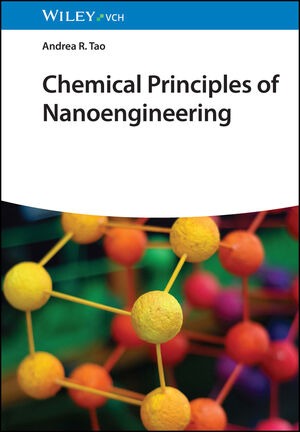
Chemical principles of nanoengineering
Nanomaterials, which possess at least one dimension lower than 100 nanometers, are increasingly at the forefront of technological and chemical innovation. The properties of these uniquely minute materials give them distinctive applications across a huge range of industries and research fields. It is therefore critical that the next generation of engineers and materials scientists understand these materials, their chemical properties, and how they form bonds

Calixarenes in the Nanoworld
Calixarenes have been widely exploited in all areas of supramolecular chemistry over the past three decades and many recent developments have concerned their applications in the production of chemical entities with the dimensions of nanometres, as in "nanochemistry".Calixarenes in the Nanoworld Relates calixarenes to nanochemistry – key information for industries engaged in the production of high-tech materials. Provides a timely review of both what is known and the exciting prospects provided by calixarenes, Contains several review articles which define the importance of calixarenes as reagents in nanochemistry.
Biocompatible nanocomposites : From synthesis to applications
Presents a focused overview of biocompatible nanocomposites, emphasizing recent advancements in material design, synthesis techniques, and their expanding applications in biomedicine. It spans key areas such as regenerative medicine, drug delivery, cancer therapy, biosensing, diagnostic imaging, and vaccine delivery —illustrating how these materials are transforming modern healthcare. The book reviews widely used biomaterials including polycaprolactone, bioactive ceramics, and polymer-based hybrids, discussing their roles in cardiovascular, orthopedic, dental, maxillofacial, and ophthalmic applications.
