



الصفحة 1
الصفحة 1

Numerical Methods and Applications ; 6th International Conference, NMA 2006, Borovets, Bulgaria, August 20-24, 2006, Revised Papers
This book constitutes the thoroughly refereed post-proceedings of the 6th International Conference on Numerical Methods and Applications, NMA 2006. The papers are organized in topical sections on numerical methods for hyperbolic problems, robust preconditioning solution methods, Monte Carlo and quasi-Monte Carlo for diverse applications, metaheuristics for optimization problems, uncertain/control systems and reliable numerics, interpolation and quadrature processes, large-scale computations in environmental modelling, and contributed talks.

Nonparametric Monte Carlo Tests and Their Applications
A fundamental issue in statistical analysis is testing the fit of a particular probability model to a set of observed data. Monte Carlo approximation to the null distribution of the test provides a convenient and powerful means of testing model fit. Nonparametric Monte Carlo Tests and Their Applications proposes a new Monte Carlo-based methodology to construct this type of approximation Every chapter of the book includes algorithms, simulations, and theoretical deductions. The prerequisites for a full appreciation of the book are a modest knowledge of mathematical statistics and limit theorems in probability,empirical process theory.

New Political Economy of Exchange Rate Policies and the Enlargement of the Eurozone
This work examines the political economy of exchange-rate policies in the context of the eastward enlargement of the eurozone. The analysis shows that prospective members of the EMU are likely to pass on some of the incurred Maastricht costs of convergence to the current EMU-members. The transmission mechanism is an altered exchange-rate policy that is carried out utilizing a "threaten-thy-neighbour"-strategy. The nature of the arising conflict between current and prospective EMU-members originates from both parties' admitted inclination to complete the enlargement process, complicated by their disinclination to bear the costs. The ensuing moral-hazard behaviour of the CEECs proves to be one of brinkmanship.

New Computational Methods in Power System Reliability
Power system reliability is in the focus of intensive study due to its critical role in providing energy supply to the modern society. This book is not aimed at providing the overview of the state of the art in power system reliability. On the contrary, it describes application of some new specific techniques: universal generating function method and its combination with Monte Carlo simulation and with random processes methods, Semi-Markov and Markov reward models and genetic algorithm.

New Algorithms for Macromolecular Simulation
Molecular simulation is a widely used tool in biology, chemistry, physics and engineering. This book contains a collection of articles by leading researchers who are developing new methods for molecular modelling and simulation. Topics addressed here include: multiscale formulations for biomolecular modelling, such as quantum-classical methods and advanced solvation techniques; protein folding methods and schemes for sampling complex landscapes; membrane simulations; free energy calculation; and techniques for improving ergodicity. The book is meant to be useful for practitioners in the simulation community and for those new to molecular simulation who require a broad introduction to the state of the art.
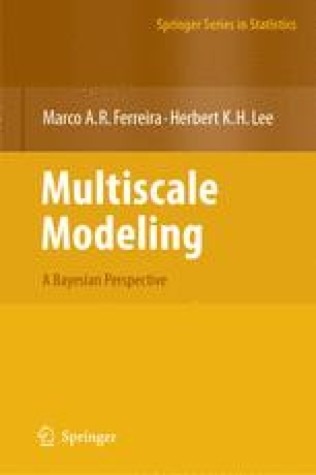
Multiscale Modeling : A Bayesian Perspective
The book is aimed at statisticians, applied mathematicians, and engineers working on problems dealing with multiscale processes in time and/or space, such as in engineering, finance, and environmetrics. The book will also be of interest to those working on multiscale computation research. The main prerequisites are knowledge of Bayesian statistics and basic Markov chain Monte Carlo methods. A number of real-world examples are thoroughly analyzed in order to demonstrate the methods and to assist the readers in applying these methods to their own work. To further assist readers, the authors are making source code (for R) available for many of the basic methods discussed herein.

Monte Carlo Methods in Fuzzy Optimization
This book is a concise and readable introduction to Monte Carlo methods to find good approximate solutions to fuzzy optimization problems. Various basic applications and illustrative examples are presented in an understandable way. The aim of the book is to convince the reader that Monte Carlo methods can be useful in generating approximate solutions to fuzzy optimization problems.

Monte Carlo and Quasi-Monte Carlo Methods 2006
This book represents the refereed proceedings of the Seventh International Conference on Monte Carlo and Quasi-Monte Carlo Methods in Scientific Computing, held in Ulm (Germany) in August 2006. The proceedings include carefully selected papers on many aspects of Monte Carlo and quasi-Monte Carlo methods and their applications, as well as providing information on current research in these very active areas. Besides covering theory, the book is an excellent resource work for practitioners as well.

Monte Carlo and Quasi-Monte Carlo Methods 2004
The proceedings include many aspects of Monte Carlo methods, quasi-Monte Carlo methods, and the numerical solution of partial differential equations.

Molecular Gas Dynamics : Theory, Techniques, and Applications
This self-contained work is an up-to-date treatment of the basic theory of molecular gas dynamics and its various applications. Recent progress in the field has greatly enhanced the original theory and stimulated interesting and critical gas dynamic phenomena and problems. This book, unique in the literature, presents working knowledge, theory, techniques, and typical phenomena in rarefied gases for theoretical development and applications.

Modern Hematology : Biology and Clinical Management
The first chapters of this book contain a self-contained introduction to path integrals in Euclidean quantum mechanics and statistical mechanics. The resulting high-dimensional integrals can be estimated with the help of Monte Carlo simulations based on Markov processes. The most commonly used algorithms are presented in detail so as to prepare the reader for the use of high-performance computers as an “experimental” tool for this burgeoning field of theoretical physics. Several chapters are then devoted to an introduction to simple lattice field theories and a variety of spin systems with discrete and continuous spins, where the ubiquitous Ising model serves as an ideal guide for introducing the fascinating area of phase transitions. As an alternative to the lattice formulation of quantum field theories, variants of the flexible renormalization group methods are discussed in detail. Since, according to our present-day knowledge, all fundamental interactions in nature are described by gauge theories, the remaining chapters of the book deal with gauge theories without and with matter.

Modern Aspects of Electrochemistry ; Vol. 39
This volume of Modern Aspects covers a wide spread of topics presented in an authoritative, informative and instructive manner by some internationally renowned specialists. Professors Politzer and Dr. Murray provide a comprehensive description of the various theoretical treatments of solute-solvent interactions, including ion-solvent interactions. Both continuum and discrete molecular models for the solvent molecules are discussed, including Monte Carlo and molecular dynamics simulations. The advantages and drawbacks of the resulting models and computational approaches are discussed and the impressive progress made in predicting the properties of molecular and ionic solutions is surveyed.
Introduction to Bayesian Statistics
This is the second and translated edition of the German book “Einf ̈uhrung in die Bayes-Statistik, Springer-Verlag, Berlin Heidelberg New York, 2000”. It has been completely revised and numerous new developments are pointed out together with the relevant literature. The Chapter 5.2.4 is extended by the stochastic trace estimation for variance components. The new Chapter 5.2.6 presents the estimation of the regularization parameter of type Tykhonov regularization for inverse problems as the ratio of two variance components.The reconstruction and the smoothing of digital three-dimensional images is demonstrated in the new Chapter 5.3. The Chapter 6.2.1 on importance sampling for the Monte Carlo integration is rewritten to solve a more general integral. This chapter contains also the derivation of the SIR (sampling-importance-resampling) algorithm as an alternative to the rejection method for generating random samples. Markov Chain Monte Carlo methods are now frequently applied in Bayesian statistics.

Inference in Hidden Markov Models
This book is a comprehensive treatment of inference for hidden Markov models, including both algorithms and statistical theory. Topics range from filtering and smoothing of the hidden Markov chain to parameter estimation, Bayesian methods and estimation of the number of states.In a unified way the book covers both models with finite state spaces, which allow for exact algorithms for filtering, estimation etc. and models with continuous state spaces (also called state-space models) requiring approximate simulation-based algorithms that are also described in detail. Simulation in hidden Markov models is addressed in five different chapters that cover both Markov chain Monte Carlo and sequential Monte Carlo approaches. Many examples illustrate the algorithms and theory. The book also carefully treats Gaussian linear state-space models and their extensions and it contains a chapter on general Markov chain theory and probabilistic aspects of hidden Markov models.

Implementing Models in Quantitative Finance : Methods and Cases
This book puts numerical methods into action for the purpose of solving concrete problems arising in quantitative finance. Part one develops a comprehensive toolkit including Monte Carlo simulation, numerical schemes for partial differential equations, stochastic optimization in discrete time, copula functions, transform-based methods and quadrature techniques. The content originates from class notes written for courses on numerical methods for finance and exotic derivative pricing held by the authors at Bocconi University since the year 2000. Part two proposes eighteen self-contained cases covering model simulation, derivative valuation, dynamic hedging, portfolio selection, risk management, statistical estimation and model calibration. It encompasses a wide variety of problems arising in markets for equity, interest rates, credit risk, energy and exotic derivatives.
Implementing machine learning for finance : A systematic approach to predictive risk and performance analysis for investment portfolios
Introduces pattern recognition and future price forecasting that exerts effects on time series analysis models, such as the Autoregressive Integrated Moving Average (ARIMA) model, Seasonal ARIMA (SARIMA) model, and Additive model, and it covers the Least Squares model and the Long Short-Term Memory (LSTM) model. It presents hidden pattern recognition and market regime prediction applying the Gaussian Hidden Markov Model. The book covers the practical application of the K-Means model in stock clustering. It establishes the practical application of the Variance-Covariance method and Simulation method (using Monte Carlo Simulation) for value at risk estimation. It also includes market direction classification using both the Logistic classifier and the Multilayer Perceptron classifier. Finally, the book presents performance and risk analysis for investment portfolios. You will: Understand the fundamentals of the financial market and algorithmic trading, as well as supervised and unsupervised learning models that are appropriate for systematic investment portfolio management / Know the concepts of feature engineering, data visualization, and hyperparameter optimization / Design, build, and test supervised and unsupervised ML and DL models / Discover seasonality, trends, and market regimes, simulating a change in the market and investment strategy problems and predicting market direction and prices / Structure and optimize an investment portfolio with preeminent asset classes and measure the / underlying risk

High Frequency Financial Econometrics : Recent Developments
This exciting volume presents cutting-edge developments in high frequency financial econometrics, spanning a diverse range of topics: market microstructure, tick-by-tick data, bond and foreign exchange markets and large dimensional volatility modelling. The chapters on market microstructure deal with liquidity, asymmetries of information, and limit order aggressiveness in pure limit order book markets. The chapters on tick-by-tick data present statistical techniques for the analysis of the discrete nature of price movements, the intraday seasonal patterns of financial durations, and the joint probability law of prices, volume and durations. Bond markets are brought into focus through the analysis of macroeconomic announcements in the future bond market as a function of the business cycle.

Global Optimization ; Vol. # 84 : From Theory to Implementation
Global optimization describe the theory of the algorithms, whereas a given implementation’s quality never depends exclusively on the theoretical soundness of the algorithms that are implemented. The literature rarely discusses the tuning of algorithmic parameters, implementation tricks, software architectures, and the embedding of local solvers within global solvers. And yet, there are many good software implementations "out there” from which the entire community could learn something. The scope of this book is moving a few steps toward the systematization of the path that goes from the invention to the implementation and testing of a global optimization algorithm.

Finite Mixture and Markov Switching Models
The prominence of finite mixture modelling is greater than ever. Many important statistical topics like clustering data, outlier treatment, or dealing with unobserved heterogeneity involve finite mixture models in some way or other. The area of potential applications goes beyond simple data analysis and extends to regression analysis and to non-linear time series analysis using Markov switching models.It is the first time that the Bayesian perspective of finite mixture modelling is systematically presented in book form. It is argued that the Bayesian approach provides much insight in this context and is easily implemented in practice. Although the main focus is on Bayesian inference, the author reviews several frequentist techniques, especially selecting the number of components of a finite mixture model, and discusses some of their shortcomings compared to the Bayesian approach. The aim of this book is to impart the finite mixture and Markov switching approach to statistical modelling to a wide-ranging community. This includes not only statisticians, but also biologists, economists, engineers, financial agents, market researcher, medical researchers or any other frequent user of statistical models. This book should help newcomers to the field to understand how finite mixture and Markov switching models are formulated, what structures they imply on the data, what they could be used for, and how they are estimated.

Evolution of Thin Film Morphology : Modeling and Simulations
Thin film deposition is the most ubiquitous and critical of the processes used to manufacture high tech devices. Morphology and microstructure of thin films directly controls their optical, magnetic, and electrical properties. This book focuses on modeling and simulations used in research on the morphological evolution during film growth. The authors emphasize the detailed mathematical formulation of the problem both through numerical calculations based on Langevin continuum equations, and through Monte Carlo simulations based on discrete surface growth models when an analytical formulism is not convenient. Evolution of Thin-Film Morphology will be of benefit to university researchers and industrial scientists working in the areas of semiconductor processing, optical coating, plasma etching, patterning, micro-machining, polishing, tribology, and any discipline that requires an understanding of thin film growth processes.
