



الصفحة 1
الصفحة 1
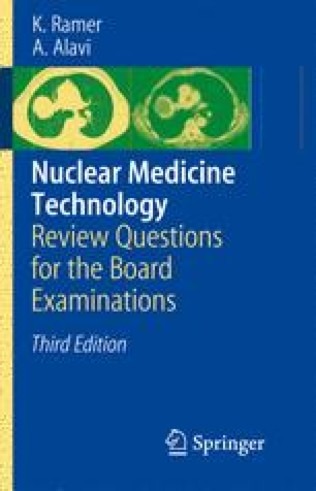
Nuclear Medicine Technology : Review Questions for the Board Examinations
Nuclear medicine technology has been a fascinating subject ever since the early rectilinear scanner produced images, and is becoming ever more interesting (and demanding) with the growth of positron emission tomography and other molecular imaging. Taking and passing the exam offered by the Nuclear Medicine Technology Certi? cation Board (NMTCB), or that offered by the American Registry of Radiologic Techno- gists (ARRT), is the ? nal step in reaching the status of Nuclear M edicine Technologist. These exams are both challenging and the breadth of knowledge that they cover mean that a th- ough review is in order before attempting either exam. This book was created to assist in preparation for those exams. In addition to recalling information, the questions require application of information, and analysis of situations.

MR Imaging in White Matter Diseases of the Brain and Spinal Cord
Comprises a series of comprehensive and up-to-date reviews on the use of MR imaging in these major neurological conditions. The diverse available MR techniques, such as magnetization transfer MRI, diffusion-weighted MRI, MR spectroscopy, functional MRI, cell-specific MRI, perfusion MRI, and microscopic imaging with ultra-high field MRI, offer an extraordinarily powerful means of gaining fundamental in vivo insights into disease processes. The strengths and weaknesses of all these techniques in the study of multiple sclerosis and other relevant diseases are extensively considered. After an introductory section on neuroimaging technology, subsequent sections address disorders of myelination, demyelinating diseases, immune-mediated disorders, and white matter disorders related to aging and other conditions. This book provides a valuable summary of the state of the art in the field, and defines important areas for future research.

Molecular Imaging II
The aim of this textbook of molecular imaging is to provide an up to date review of this rapidly growing field and to discuss basic methodological aspects necessary for the interpretation of experimental and clinical results. Emphasis is placed on the interplay of imaging technology and probe development, since the physical properties of the imaging approach need to be closely linked with the biologic application of the probe (i.e. nanoparticles and microbubbles). Various chemical strategies are discussed and related to the biologic applications. Reporter-gene imaging is beeing addressed not only in experimental protocols, but also first clinical applications are discussed. Finally, strategies of imaging to characterize apoptosis and angiogenesis are described and discussed in the context of possible clinical translation.
Molecular Imaging I
The aim of this textbook of molecular imaging is to provide an up to date review of this rapidly growing field and to discuss basic methodological aspects necessary for the interpretation of experimental and clinical results. Emphasis is placed on the interplay of imaging technology and probe development, since the physical properties of the imaging approach need to be closely linked with the biologic application of the probe (i.e. nanoparticles and microbubbles). Various chemical strategies are discussed and related to the biologic applications. Reporter-gene imaging is being addressed not only in experimental protocols, but also first clinical applications are discussed. Finally, strategies of imaging to characterize apoptosis and angiogenesis are described and discussed in the context of possible clinical translation.

Molecular Imaging ; An Essential Tool in Preclinical Research, Diagnostic Imaging, and Therapy
The continuous progress in the understanding of molecular processes of disease formation and progression attributes an increasing importance to biomedical molecular imaging methods. The purpose of this workshop was to discuss and overview multiple applications and emerging technologies in the area of diagnostic imaging including its fundamental capabilities in preclinical research, the opportunities for medical care, and the options involving therapeutic concepts. The book provides the reader with state-of-the-art information on the different aspects of diagnostic imaging, illuminating new developments in molecular biology, imaging agents and molecular probe design, and therapeutic techniques.

Molecular Imaging : Computer Reconstruction and Practice
This book reports the majority of lectures given during the NATO Advanced Study Institute ASI-982440, which was held at the European Scienti?c Institute of Archamps (ESI, Archamps – France) from November 9 to November 21, 2006. The ASI course was structured in two parts, the ?rst was dedicated to individual imaging techniques while the second is the object of this volume and focused on data modelling and processing and on image archiving and distribution. Courses devoted to nuclear medicine and digital imaging techniques are collected in a c- plementary volume of NATO Science Series entitled “Physics for Medical Imaging Applications”

Integrated diagnostics and theranostics of thyroid diseases
Provides basic concepts on Integrated Diagnostics and Theranostics with special emphasis on different human thyroid diseases. Thyroid diseases are increasingly detected (incidentally in many cases) but are clinically negligible in a significant proportion of patients. Accordingly, it is urgent to move from the simple disease detection to a reliable disease characterization in order to concentrate efforts on patients in need of tailored disease management.

In Vivo Imaging of Cancer Therapy
In Vivo Imaging of Cancer Therapy addresses a variety of cutting-edge imaging techniques, including their use for best practice, and provides examples of results found in both pre-clinical and clinical studies. This comprehensive text covers the entire spectrum of in vivo imaging for oncology, including current approaches to detailed anatomic measurements, MR and optical spectroscopy, and molecular imaging techniques requiring exogenously administered imaging agents. The challenges and approaches to quantification are also outlined. The authors describe technologies and methods that are currently clinically available, and many that are still in a developmental stage or useful only in animal studies.

Imaging in Drug Discovery and Early Clinical Trials
Efficient tools for the selection and validation of drug targets both at the preclinical and clinical level are required. Non-invasive imaging and in particular molecular imaging methods are becoming essential technologies to support drug discovery and dvelopment. Imaging provides structural, functional, metabolic and molecular readouts that are being applied to characterize a disease phenotype (diagnosis), to elucidate molecular mechanisms involved, to evaluate drug efficacy and safety, and to identify potential biomarkers of the drug's mechanism-of-action, efficacy and safety. Non-invasive imaging techniques constitute a bridge between preclinical and clinical drug evaluation. In this monograph the contribution of imaging modalities to the various stages of drug discovery and development, from early target validation to their use in clinical development programs, is described. Chapters are devoted to the description of the drug discovery process as such, to the various imaging modalities being used both preclinically and clinically, to applications of imaging during the optimization of a lead compound (addressing issues such as bioavailability and efficacy) and during the drug safety evaluation.

Handbook of Radiopharmaceuticals : Methodology and Applications ; 2nd ed.
A comprehensive review of the field, presenting up-to-date coverage of central topics such as radionuclide production, synthetic methodology, radiopharmaceutical development and regulations, and a wide range of practical applications. A valuable reference work for those new to the Radiopharmaceutical Sciences and experienced professionals alike, this volume explores the latest concepts and issues involving both targeted diagnostic and therapeutic radiopharmaceuticals. Contributions from a team of experts from across sub-disciplines provide readers with an immersive examination of radiochemistry, nuclear medicine, molecular imaging, and more. Features extensive new and revised content throughout Covers key areas of application for diagnosis and therapy in oncology, neurology, and cardiology Emphasizes the multidisciplinary nature of Radiopharmaceutical Sciences Discusses how drug companies are using modern radiopharmaceutical imaging techniques to support drug discovery Examines current and emerging applications of Positron Emission Tomography (PET) and Single Photon Emission Computed Tomography (SPECT)

Functional MRI : Basic principles and clinical applications
This practical and timely volume presents an overview of the principles of fMRI and explains key concepts, including scanning methodologies, experimental research design, and data analysis. Informative discussions cover the technical and clinical challenges associated with fMRI. A neuroanatomical atlas adds to the sensible approach and serves as a useful reference by clearly illustrating normal functioning for important areas of the brain.

Diagnostic Nuclear Medicine
The present text, supplemented with many detailed and informative illustrations, represents an adjunct to the standard knowledge of diagnostic nuclear medicine and provides both the student and the professional with an overview of developments during the past decade.

Cancer Metastasis and the Lymphovascular System : Basis for Rational Therapy
Sentinel lymph node (SLN) procedures have opened a window of opportunity for the study of micrometastasis. In eighty percent (80%) of metastasis there lies an orderly pattern of progression via the lymphatic network, while 20% of the time systemic metastasis occurs, bypassing the lymphatic system. During the past two decades, significant progress has been achieved in understanding the anatomical, functional, cellular and molecular aspects of the lymphovascular system and the metastasis process.Molecular imaging advances help to localize early cancers more precisely.
Biomarkers for alzheimer’s disease drug development
Aims to build a new generation of experts with a broader understanding of key topics in the Alzheimer’s disease field. Chapters guide readers through innovative approaches to the discovery of novel biomarkers in cerebrospinal fluid, innovation in blood-based biomarkers, a comprehensive overview of magnetic resonance imaging and molecular imaging approaches and their value for developing drugs for Alzheimer’s disease, cutting-edge developments in neuropathology and their relevance for Alzheimer’s disease trials, novel genomic strategies for biomarker development, and related topics including neuropsychological testing and advanced analytical methods.Written in the highly successful Methods in Molecular Biology series format, chapters include introductions to their respective topics, lists of the necessary materials and reagents, step-by-step, readily reproducible laboratory protocols, and tips on troubleshooting and avoiding known pitfalls.

Atlas of endomicroscopy
Deals with the new insights of endomicroscopy and provides you an overview about the development, the requirements, the technique, current indications and further possibilities of endomicroscopy.
A Personal History of Nuclear Medicine
In A Personal History of Nuclear Medicine, Dr. Henry N. Wagner, Jr. outlines his significant contribution to the field of nuclear medicine over the past half-century, while also discussing the hurdles that the field faced in becoming a major component of modern medical practice. Further, the author explores challenges within the academic and medical establishments, which have often been known for resisting change
