



الصفحة 1
الصفحة 1

Nucleic Acids and Proteins in Soil
With millions of different bacterial species living in soil, the microbial community is extremely complex, varying at very small scales. Microbe-driven functions are essential for most processes in soil. Thus, a better understanding of this microbial diversity will be invaluable for the management of the various soil functions. Nucleic Acids and Proteins in Soil combines traditional approaches in soil microbiology and biochemistry with the latest techniques in molecular microbial ecology. Included are methods to analyse the presence and importance of nucleic acids and proteins both inside and outside microbial cells, the horizontal gene transfer which drives bacterial diversity, as well as soil proteomes. Further chapters describe techniques such as PCR, fingerprinting, the challenging use of gene arrays for structural and functional analysis, stable isotope probing to identify in situ metabolic functions, and the use of marker and reporter genes in soil microbial ecology.
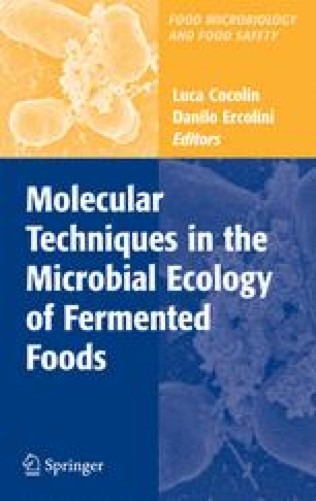
Molecular Techniques in the Microbial Ecology of Fermented Foods
Molecular Methods and Microbial Ecology of Fermented Foods presents the latest findings in microbial ecology as determined by the application of molecular methods, reports the most recent advances in the field, and offers details on primers and protocols most suitable for studying specific food ecosystems. It provides analytical details and suggestions useful in research, as well as evaluation of the criticism of using novel approaches in food fermentation microbiology. This book also discusses new insights drawn from the use of bio-molecular techniques in the microbial ecology of fermented foods.

Microorganisms in the deterioration and preservation of cultural heritage
This book offers a comprehensive overview of the role and potential of microorganisms in the degradation and preservation of cultural materials (e.g. stone, metals, graphic documents, textiles, paintings, glass, etc.).

Microorganisms in Foods 6 : Microbial Ecology of Food Commodities
The second edition of Microorganisms in Foods 6: Microbial Ecology of Food Commodities is intended for those primarily in applied aspects of food microbiology. For 17 commodity areas it describes the initial microbial flora and the prevalence of pathogens, the microbiological consequences of processing, typical spoilage patterns, episodes implicating those commodities with foodborne illness, and measures to control pathogens and limit spoilage. The control measures are presented in a standardized format in line with international developments in risk management. A comprehensive index has also been added.

Methods in Gut microbial ecology for ruminants
As a result of various human activities, such as increase in human population,decrease in arable land due to soil degradation, urbanization, industrialization and associated increase in the demand for livestock products, dramatic changes are occurring in the global ruminant livestock sector. These changes includeshift inthesize of regional livestock populations and in the types of management and feeding systems under which ruminant livestock are held, and increased demand of a wider range of quality attributes from animal agriculture, not just of the products themselves but also of the methods used in their production. The livestock sector will need to respond to new challenges of increasing live stock productivity while protecting environment and human health and conservingbiodiversity and natural resources. The micro-organisms in the digestive tracts of ruminant livestock have a profound in?uence on the conversion offeedinto end products, which can impact on the- imal and theenvironment. As the livestock sector grows particularly in developing countries, there will be an increasing need to understand these processes for b- ter management and use ofbothfeed and other natural resources that underpinthe development of sustainable feeding systems.

From Fossils to Astrobiology : Records of Life on Earth and Search for Extraterrestrial Biosignatures
From Fossils to Astrobiology reviews developments in paleontology and geobiology that relate to the rapidly-developing field of Astrobiology, the study of life in the Universe. Many traditional areas of scientific study, including astronomy, chemistry and planetary science, contribute to Astrobiology, but the study of the record of life on planet Earth is critical in guiding investigations in the rest of the cosmos. In this varied book, expert scientists from 15 countries present peer-reviewed, stimulating reviews of paleontological and astrobiological studies. The overviews of established and emerging techniques for studying modern and ancient microorganisms on Earth and beyond, will be valuable guides to evaluating biosignatures which could be found in the extraterrestrial surface or subsurface within the Solar System and beyond.
Links between geological processes, microbial activities & evolution of life : Microbes and geology
Microbial activities influence water-rock interaction processes and chemical transport between the major geochemical reservoirs and the formation/transformation of minerals and rocks, whereas geological processes and geochemical controls influence the microbial ecology in extreme environments. How biological activity influences geological processes and what role these processes played in the geological evolution of the Earth are fundamental questions.
Bergeys manual of systematic bacteriology ; Vol.2 : The proteobacteria ; Part A : Introductory essays
Includes introductory chapters on classification of prokaryotes, the concept of bacterial species, numerical and polyphasic taxonomy, bacterial nomenclature and the etymology of prokaryotic names, nucleic acid probes and their application in environmental microbiology, culture collections, and the intellectual property of prokaryotes.
