



الصفحة 1
الصفحة 1

Methods of microarray data analysis V
In this volume, all investigators analyzed a single dataset on the lifecycle of the most deadly of malaria parasites, Plasmodium falciparum. The emphasis this year is on the application of novel and existing computational methodologies towards infectious disease. We highlight an introductory chapter by Raphael D. Isokpehi, a leading expert in the field of malaria. Ten of the papers presented at the conference are included, which range from the inference of genetic networks to the analysis of the spatial correlation of array data. This book is an excellent reference for academic and industrial researchers who want to keep abreast of the state-of-the-art in microarray data analysis.

Methods of microarray data analysis IV
As studies using microarray technology have evolved, so have the data analysis methods used to analyze these experiments. The CAMDA conference plays a role in this evolving field by providing a forum in which investors can analyze the same data sets using different methods. METHODS OF MICROARRAY DATA ANALYSIS IV is the fourth book in this series, and focuses on the important issue of associating array data with a survival endpoint. Previous books in this series focused on classification (Volume I), pattern recognition (Volume II), and quality control issues (Volume III). In this volume, four lung cancer data sets are the focus of analysis. We highlight three tutorial papers, including one to assist with a basic understanding of lung cancer, a review of survival analysis in the gene expression literature, and a paper on replication. In addition, 14 papers presented at the conference are included. This book is an excellent reference for academic and industrial researchers who want to keep abreast of the state-of-the-art of microarray data analysis.
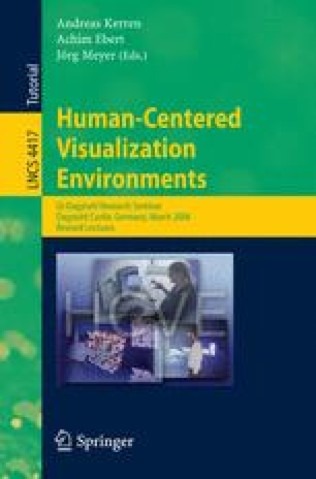
Human-centered visualization environments : GI-Dagstuhl Research Seminar, Dagstuhl Castle, Germany, March 5-8, 2006, Revised Papers
This tutorial book features an augmented selection of the material presented at the GI-Dagstuhl Research Seminar on Human-Centered Visualization Environments, HCVE 2006, held in Dagstuhl Castle, Germany in March 2006. It presents eight tutorial lectures that are the thoroughly cross-reviewed and revised versions of the summaries and findings presented and discussed at the seminar.

Data mining and knowledge management ; Chinese academy of sciences symposium CASDMKD 2004, Beijing, China, July 12-14, 2004, Revised Paper
Knowledge management for enterprise: These papers address various issues related to the application of knowledge management in corporations using various techniques. A particular emphasis here is on coordination and cooperation. • Risk management: Better knowledge management also requires more advanced techniques for risk management, to identify, control, and minimize the impact of uncertain events, as shown in these papers, using fuzzy set theory and other approaches for better risk management. • Integration of data mining and knowledge management: As indicated earlier, the integration of these two research fields is still in the early stage. Nevertheless, as shown in the papers selected in this volume, researchers have endearored to integrate data mining methods such as neural networks with various aspects related to knowledge management,

Computational methods in systems biology ; Vol. 3082 ; International Conference CMSB 2004, Paris, France, May 26-28, 2004, Revised Selected Papers
present CMBSlib, a library of Computational Models of Biological Systems. It is aimed at providing a list of test problems for formalisms, modeling issues and implementation issues in systems biology. The main motivation for CMBSlib is to stimulate research on the formal modeling of biological systems, by facilitating the exchange of formal models between researchers, and by providing a forum of comparison and validation of not only models, but also modeling formalisms and implementations. Unlike a standardization effort, CMBSlib welcomes the most exotic formalisms and models provided they attack the modeling of well documented biological systems. Models of biological systems written in any referenced formalism can be submitted to CMBSlib. No special format or standard is required. We discuss the advantages of and problems encountered in building such a library, give an example of typical entry in the library, and most of all we invite the community to become active contributors to CMBSlib.
