



الصفحة 1
الصفحة 1
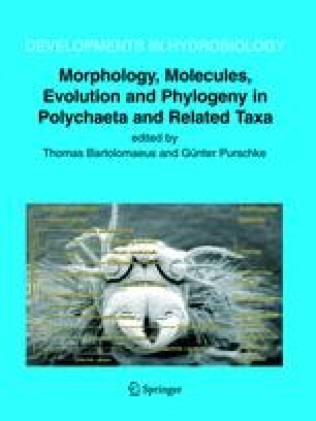
Morphology, Molecules, Evolution and Phylogeny in Polychaeta and Related Taxa; Proceedings of two ISSI Workshops, 18–22 October 1999 and 15–19 May 2000, Bern, Switzerland
Recently, evidence has been accumulated which shows that some of the groups formerly regarded as independent "phyla" such as Pogonophora (now recognized as Siboglinidae), Echiura, Myzostomida and perhaps Sipuncula, are most probably nothing else than greatly modified Annelida. The extreme morphological diversity found especially in Polychaeta displays the plasticity of a simple segmented organisation that basically is nothing else but a serial repetition of identical units. Thus, annelids are highly important to our understanding of fundamental questions about morphological and adaptive diversity, as well as clarifying evolutionary changes and phylogenetic relationships. The book aims to summarize our knowledge on Polychaetes polychaetes and their allies and gives an overview of recent advances gained by studies that employed conventional and modern methods plus, increasingly and importantly, the use of molecular markers and computer-assisted kinship analyses. It also reflects the state of art in polychaete sciences and presents new questions and controversies. As such it will significantly influence the direction of research on Polychaeta and their related taxa.

Micromammals and Macroparasites : From Evolutionary Ecology to Management
Small mammals are among the most ubiquitous and important components of terrestrial ecosystems. They have coevolved, and now coexist, with a diverse array of parasites, such that not only are all aspects of their biology influenced by parasitism but they also play key roles in the transmission and maintenance of parasitic diseases. This book provides a comprehensive survey of the diversity and biology of metazoan parasites affecting small mammals, of their impact on host individuals and populations, and of the management implications of these parasites for conservation biology and human welfare. Designed for a broad, multidisciplinary audience, it will be an essential resource for researchers, students, and practitioners alike in the fields of parasitology, evolutionary ecology, wildlife management, and conservation biology.

Handbook of Pathogens and Diseases in Cephalopods
The aim of this book is to facilitate the identification and description of the different organs as well as pathogens and diseases affecting the most representative species of cephalopods focussed on Sepia officinalis, Loligo vulgaris and Octopus vulgaris. These species are valuable ‘morphotype’ models and belong to the taxonomic groups Sepioidea, Myopsida and Octopoda, which include most of the species with a high market value and aquaculture potential. The study is based on photographs at macroscopic and histological level in order to illustrate the role of the most important pathogens and related diseases from the view of a pathological diagnosis. The reader is able to familiarize with functional anatomy, necropsy and general histology of adults and paralarvae, as well as with the identification of different pathogens and pathologies. This work is thus an invaluable guide for the diagnosis of cephalopod diseases. Besides including pathogens for non-European cephalopod species, it also provides a useful contribution encouraging marine pathologists, parasitologists, veterinarians and those involved in fishery sanitary assessments, aquarium maintenance and aquaculture practices aiming to increase their knowledge about the pathology of cephalopods.

Freshwater Animal Diversity Assessment
The Freshwater Animal Diversity Assessment gives a state of the art assessment of the diversity and distribution of Metazoa in the continental waters of the world. The project deals with all major animal groups plus the macrophytes, and encompasses the complete array of terrestrial aquatic ecosystems. It is the most comprehensive study of species- and genus-level diversity and chorology of the global freshwater fauna to date, and is the first to present comparable data on the different faunal groups concerned. The project draws from the collected expertise of numerous world-renowned taxonomic experts that have bundled efforts to produce this outstanding volume. The result is invaluable to all scientists, managers and conservationists interested in non-marine aquatic animals.
