



الصفحة 1
الصفحة 1

Modelling of Powder Die Compaction
In particular, the book presents a number of case studies that have been developed to test compaction models. Full details of the data required for input to compaction models of these case studies is given, together with a survey of the techniques used to generate the data. Details are also given of methods to produce and assess components for validation of die compaction models. The inclusion of information on case studies then provides a reference for the testing and validation of compaction models.

Microbial Processing of Metal Sulfides
The application of microbiological methods to the extraction of metals from minerals has definitely gained a prominent role and is supported by the several bioleaching and biooxidation processes operating in different sites over the world. In recent years new techniques and new results about proteomic and bioinformatics are bringing a new perspective on the microbial processes.This book focuses on the basic aspects of the process with special emphasis on recent contributions regarding the chemical and microbial aspects of the bioleaching process and the use of microorganisms in the treatment of complex ores and concentrates.

Mechanochemistry in Nanoscience and Minerals Engineering
Mechanochemistry as a branch of solid state chemistry enquires into processes which proceed in solids due to the application of mechanical energy. This provides a thorough, up to date overview of mechanochemistry of solids and minerals. Applications of mechanochemistry in nanoscience with special impact on nanogeoscience are described. Selected advanced identification methods, most frequently applied in nanoscience, are described as well as the advantage of mechanochemical approach in minerals engineering. Examples of industrial applications are given. Mechanochemical technology is being applied in many industrial fields: powder metallurgy (synthesis of nanometals, alloys and nanocompounds), building industry (activation of cements), chemical industry (solid waste treatment, catalyst synthesis, coal ashes utilization), minerals engineering (ore enrichment, enhancement of processes of extractive metallurgy), agriculture industry (solubility increase of fertilizers), and pharmaceutical industry (improvement of solubility and bioavailability of drugs).

Hot cracking phenomena in welds II
This is the second in a series of compendiums devoted to weld hot cracking phenomena, where this subject has been further scrutinized, bringing to bare the most current thoughts on this complex and diverse subject. With 22 technical papers in total, this book is divided in such a way that specific classifications of hot cracks are examined in detail, including solidification, liquation, and ductility dip cracking. The first chapter looks at solidification cracking theory, applying the most modern approaches to modelling weld solidification. Also provided here is a comprehensive review of cracking models. This is followed by two chapters characterizing solidification cracking behaviour for specific alloy systems: ferrous plus nickel-based alloys and aluminium alloys, respectively. The fourth chapter considers liquation cracking in ferrous alloys, and the fifth examines ductility-dip cracking.

Hot cracking phenomena in welds
The first chapter provides an overview of the various hot cracking phenomena. Different mechanisms of solidification cracking proposed in the past decades are summarized and new insight is particularly given into the mechanism of ductility dip cracking. The effects of different alloying elements on the hot cracking resistance of various materials are shown in the second chapter and, as a special metallurgical effect, the initiation of stress corrosion cracking at hot cracks has been highlighted. The third chapter outlines how numerical analyses and other modelling techniques can be utilized to describe hot cracking phenomena and how such results might contribute to the explanation of the mechanisms. Various hot cracking test procedures are presented in the final chapter with a special emphasis on standardization. For the engineering and natural scientists in research and development the book provides both, new insight and a comprehensive overview of hot cracking phenomena in welds. The contributions additionally give numerous individual solutions and helpful advice for international welding engineers to avoid hot cracking in practice. Furthermore, it represents a very helpful tool for upper level metallurgical and mechanical engineering students.

Handbook of Practical X-Ray Fluorescence Analysis
X-Ray Fluorescence analysis (XRF) is a reliable multi-elemental and nondestructive analytical method widely used in research and industrial applications. This practical handbook provides self-contained modules featuring XRF instrumentation, quantification methods, and most of the current applications. The book gives a survey of the theoretical fundamentals, analytical instrumentation, software for data processing, various excitation regimes including gracing incidents and microfocus measurements, quantitative analysis, applications in routine and micro analysis, mineralogy, biology, medicine, criminal investigations, archeology, metallurgy, abrasion, microelectronics, environmental air and water analysis. It gives the basic knowledge on this technique, information on analytical equipment and guides the reader to the various applications.

Handbook of Instruments in Dentistry
Instrumentation is an important aspect of surgical and dental clinical practice. The instruments have evolved over the period of time in terms of metallurgy, design and cost effectiveness. Many types of instruments are commercially available but it is a big dilemma for the clinician to decide as to which is the best. To optimise the clinical results, choice of proper instruments and its proper and effective utilization is of immense importance. This aspect is badly neglected in the curricula and no structured training is offered. The clinician develops the skill of instrumentation by self-perception or by imitation. The choice of instrument also varies from clinician to clinician as it depends upon the skill and convenience of the individual clinician.

Equilibrium Between Phases of Matter : Phenomenology and Thermodynamics
The phase behaviour of materials and their thermodynamic properties are a central subject in all fields of materials research. The first Volume of the work, meant for graduate students in chemistry, geology, physics, and metallurgy, and their engineering counterparts, is split up in three levels, such that from level to level the portion and importance of thermodynamics and mathematics are increased. In the ground level it is shown that the basic principles of phase equilibria can be understood without the use of thermodynamics – be it that the concept of chemical potential is introduced right from the beginning. The intermediate level is an introduction to thermodynamics; culminating in the Gibbs energy as the arbiter for equilibrium – demonstrated for systems where the phases in equilibrium are pure substances. In the third level the accent is on binary systems, where one or more phases are solutions of the components.

Encyclopaedia of the History of Science, Technology, and Medicine in Non-Western Cultures
The second edition of this landmark encyclopaedia will contain approximately 1000 entries dealing in depth with the history of the scientific, technological and medical accomplishments of cultures outside of the United States and Europe. The entries consist of fully updated articles together with hundreds of entirely new topics.This unique reference work includes: Intercultural articles on broad topics such as Mathematics and Astronomy Philosophical articles on concepts and ideas related to the study of non-Western Science, such as Rationality, Objectivity, and Method, Religion and Science, East and West, and Magic and Science Articles on topics such as Native American Mathematics, Polynesian Navigation, Korean Maps, and African Metallurgy Biographical articles for those cultures where individual scientists are known to us, such as China and the Islamic world.
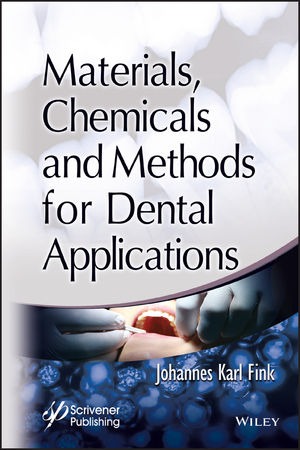
Materials, Chemicals and Methods for Dental Applications
Focuses on the materials used for dental applications looking at the fundamental issues and the developments that have taken place the past decade. While it provides a broad overview of dental materials, the chemicals that are used for the preparation and fabrication of dental materials are explained as well. Also, the desired properties of these materials are discussed and the relevance of the chemical, physical, and mechanical properties is elucidated. Methods for the characterization and classification, as well as clinical studies are reviewed here. In particular, materials for dental crowns, implants, toothpaste compositions, mouth rinses, as well as materials for toothbrushes and dental floss are discussed. For example, in toothpaste compositions, several classes of materials an chemcials are incorporated, such as abrasives, detergents, humectants, thickeners, sweeteners, coloring agents, bad breath reduction agents, flavoring agents, tartar control agents, and others. These chemicals, together with their structures, are detailed in the text.
Magnetohydrodynamics : Historical Evolution and Trends
Magnetohydrodynamics (MHD) studies the interaction between the flow of an electrically conducting fluid and magnetic fields. It involves such diverse topics as the evolution and dynamics of astrophysical objects, thermonuclear fusion, metallurgy and semiconductor crystal growth, etc. Although the first ideas in magnetohydrodynamics appeared at the beginning of the last century, the "explosion" in theoretical and experimental studies occurred in the 1950s-60s. This state-of-the-art book aims at revising the evolution of ideas in various branches of magnetohydrodynamics (astrophysics, earth and solar dynamos, plasmas, MHD turbulence and liquid metals) and reviews current trends and challenges.
Magnesium Technology : Metallurgy, Design Data, Applications
Magnesium, with a density of 1.74 g/cm², is the lightest structural metal and magnesium are increasingly chosen for weight-critical applications such as in land-based transport systems. "Magnesium Technology" substantially updates and complements existing reference sources on this key material. It assembles international contributions from seven countries covering a wide range of research programs into new alloys with the requisite property profiles, i.e., the current state of both research and technological applications of magnesium. In particular, the international team of authors covers key topics, such as: casting and wrought alloys; fabrication methods; corrosion and protection; engineering requirements and strategies, with examples from the automobile, aerospace, and consumer-goods industries, and recycling.

Chemolithoautotrophic Bacteria : Biochemistry and Environmental Biology
Covers in detail advances in the biochemistry and physiology of several chemolithoautotrophic bacteria as well as their relationship to certain environments. Included are recent findings regarding the oxidation mechanisms of ammonia, nitrite, sulfur compounds, and ferrous iron by special bacteria. The characteristics of many cytochromes are described to further advance the understanding of bacterial oxidation systems of inorganic compounds. Applications of bacteria, such as in sewage treatment and in biohydometallurgy, among others, are detailed, and bacteria considered closest to the origins of life are discussed in the final chapter.
Biomining
Biomining is the biotechnology that uses microorganisms to recover metals, in particular copper and gold, from ores and concentrates. Having developed from a very simple operational (in terms of both engineering and biology) process, biomining has developed into a multifaceted technology, to the extent that many of the largest industrial stirred tanks and heaps throughout the world are employed for bioprocessing minerals. This book has a strong applied approach and describes emerging and established industrial processes, as well as the underlying theory of the process, and the biology of the microorganisms involved. Chapters have been written by personnel from leading biomining companies, consultants and internationally recognized researchers and academics

Austenitic TRIP/TWIP steels and steel-zirconia composites : Design of tough, transformation-strengthened composites and structures
This book presents a collection of the most up-to-date research results in the field of steel development with a focus on pioneering alloy concepts that result in previously unattainable materials properties.

A Guide to Lead-free Solders : Physical Metallurgy and Reliability
While tin/lead solders have dominated the electronics industry for many years, environmental considerations and new legislation are forcing change. Backed by more than ten years of research in Pb-free solders, many electronics manufacturers are poised for conversion. A Guide to Lead-free Solders is intended as a tool to help industry as it moves into a new era in the production and use of solders. An overview of the principles of soldering technology is provided beginning with the theory underlying each concept. Focusing on the most up-to-date methods for testing and characterization, these theories are then reinforced by experimental examples and industrial applications.
14th International Congress for Applied Mineralogy (ICAM2019) ; Belgorod State Technological University named after V. G. Shukhov, 23–27 September 2019, Belgorod, Russia
This proceedings of the 14th International Council for Applied Mineralogy Congress (ICAM) in Belgorod, Russia cover a wide range of topics including applied mineralogy, advanced and construction materials, ore and industrial minerals, mineral exploration, cultural heritage, etc. It includes contributions to geometallurgy, industrial minerals, oil and gas reservoirs as well as stone artifacts and their preservation. The International Congress on Applied Mineralogy strengthens the relation between the research on applied mineralogy and the industry.
