



الصفحة 1
الصفحة 1

Forming the mind : Essays on the internal senses and the Mind/Body problem from avicenna to the medical enlightenment
The book collects essays from some of the foremost scholars in a relatively new and very promising field of research. It stresses how important and fruitful it is to see the time period between 1100 and 1700 as one continuous tradition, and brings together scholars working on the same issues in the Arabic, Jewish and Western philosophical traditions. In this respect, this collection opens up several new and interesting perspectives on the history of the philosophy of mind.

Formalizing Medieval Logical Theories : Suppositio, Consequentiae and Obligationes
This book presents novel formalizations of three of the most important medieval logical theories: supposition, consequence and obligations. In an additional fourth part, an in-depth analysis of the concept of formalization is presented – a crucial concept in the current logical panorama, which as such receives surprisingly little attention.

Consciousness : From Perception to Reflection in the History of Philosophy
Consciousness: From Perception to Reflection in the History of Philosophy shows that the concept of consciousness was explicated relatively late in the tradition, but that its central features, such as reflexivity, subjectivity and aboutness, attained avid interest very early in philosophical debates. This book reveals how these features have been related to other central topics, such as selfhood, perception, attention and embodiment. At the same time, the articles display that consciousness is not just an isolated issue of philosophy of mind, but is bound to ontological, epistemological and moral discussions. Integrating historical inquiries into the systematic ones enables understanding the complexity and richness of conscious phenomena.
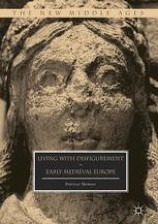
Living with Disfigurement in Early Medieval Europe
Examines social and medical responses to the disfigured face in early medieval Europe, arguing that the study of head and facial injuries can offer a new contribution to the history of early medieval medicine and culture, as well as exploring the language of violence and social interactions. Despite the prevalence of warfare and conflict in early medieval society, and a veritable industry of medieval historians studying it, there has in fact been very little attention paid to the subject of head wounds and facial damage in the course of war and/or punitive justice. The impact of acquired disfigurement —for the individual, and for her or his family and community—is barely registered, and only recently has there been any attempt to explore the question of how damaged tissue and bone might be treated medically or surgically..
