



الصفحة 1
الصفحة 1

Novel Plant Imaging and Analysis : Water, Elements and Gas, Utilizing Radiation and Radioisotopes
This book is only an introduction to show that radiation and radioisotopes (RI) are premier tools to study living plant physiology which leads to new findings. Who had ever imagined that we could see water in a plant? Who had ever imagined that we could see ions moving toward roots in solution? Who had ever imagined that we could see invisible gas (CO2) fixation and movement in a plant? These studies demonstrated for the first time that water, ions and gas can be visualized in living plants, which could be hardly seen by anyone before. This publication summarizes the results obtained by Nakanishi’s lab in The Univ. of Tokyo, based on her original concept and her original tools or systems. It is useful for professional scientists, plant physiologist, and those studying plant imaging.

NMR-MRI, µSR and Mössbauer Spectroscopies in Molecular Magnets and magnetic nanoparticles
In this book an extensive overview on the results obtained during the last decade and on recent achievements in the study of molecular magnets by means of Nuclear Magnetic Resonance, Muon Spin Rotation, Magnetic Resonance Imaging and Mossbauer techniques is presented. The aim is to introduce the reader to these techniques and to give a general background on their application to molecular spin systems.

Molecular Imaging : Computer Reconstruction and Practice
This book reports the majority of lectures given during the NATO Advanced Study Institute ASI-982440, which was held at the European Scienti?c Institute of Archamps (ESI, Archamps – France) from November 9 to November 21, 2006. The ASI course was structured in two parts, the ?rst was dedicated to individual imaging techniques while the second is the object of this volume and focused on data modelling and processing and on image archiving and distribution. Courses devoted to nuclear medicine and digital imaging techniques are collected in a c- plementary volume of NATO Science Series entitled “Physics for Medical Imaging Applications”

Molecular and Cellular Signaling
A small number of signaling pathways, no more than a dozen or so, form a control layer that is responsible for all signaling in and between cells of the human body. The signaling proteins belonging to the control layer determine what kinds of cells are made during development and how they function during adult life. Malfunctions in the proteins belonging to the control layer are responsible for a host of human diseases ranging from neurological disorders to cancers. Most drugs target components in the control layer, and difficulties in drug design are intimately related to the architecture of the control layer. Molecular and Cellular Signaling provides an introduction to molecular and cellular signaling in biological systems with an emphasis on the underlying physical principles. The text is aimed at upper-level undergraduates, graduate students and individuals in medicine and pharmacology interested in broadening their understanding of how cells regulate and coordinate their core activities and how diseases arise when these regulatory systems malfunction, as well as those in chemistry, physics and computer science interested in pursuing careers in biological and medical physics, bioinformatics and systems biology. To that end, the book includes background information and review sections, and chapters on signaling in the immune, endocrine (hormonal) and nervous systems. It has chapters on cancer, apoptosis and gene regulation, and contains chapters on bacteria and viruses. In those chapters not specifically devoted to pathogens, connections between diseases, drugs and signaling are made. Each chapter also features a problem set to facilitate further discussion and understanding.

Modelli Matematici in Biologia = Mathematical Models in Biology
This text is addressed first of all to the students of the Specialist Degrees in Biology of the Universities, but it will also be of interest to students of Natural Sciences and Medicine. The topics covered include the most classic mathematical models of biological phenomena (population dynamics, spread of infectious diseases, simple physiology models), but a relevant part of the text is dedicated to the mathematical approach to the theory of natural evolution. The only prerequisites required of the reader are those provided by the basic courses of Mathematics of the Bachelor's Degree in Biology, Natural Sciences or Medicine.

Integrated Molecular and Cellular Biophysics
Biophysics represents perhaps one of the best examples of interdisciplinary research areas, where concepts and methods from disciplines such as physics, biology, b- chemistry, colloid chemistry, and physiology are integrated. It is by no means a new ?eld of study and has actually been around, initially as quantitative physiology and partly as colloid science, for over a hundred years. For a long time, biophysics has been taught and practiced as a research discipline mostly in medical schools and life sciences departments, and excellent biophysics textbooks have been published that are targeted at a biologically literate audience. With a few exceptions, it is only relatively recently that biophysics has started to be recognized as a physical science and integrated into physics departments’ curr- ula, sometimes under the new name of biological physics.

Image-Guided IMRT
Intensity-modulated radiation therapy (IMRT), one of the most important developments in radiation oncology in the past 25 years, involves technology to deliver radiation to tumors in the right location, quantity and time. Unavoidable irradiation of surrounding normal tissues is distributed so as to preserve their function. The achievements and future directions in the field are grouped in the three sections of the book, each suitable for supporting a teaching course.

Handbook of molecular force spectroscopy
Modern materials science and biophysics are increasingly focused on studying and controlling intermolecular interactions on the single-molecule level. Molecular force spectroscopy was developed in the past decade as the result of several unprecedented advances in the capabilities of modern scientific instrumentation, and defines a number of techniques that use mechanical force measurements to study interactions between single molecules and molecular assemblies in chemical and biological systems. Examples of these techniques, which typically target a specific range of experimental systems and geometries, include atomic force microscopy, optical tweezers, surface forces apparatus, and magnetic tweezers.

Fondamenti di ingegneria clinica ; Vol.2 : Ecotomografia = Fundamentals of clinical engineering ; Vol.2 : Ultrasound
With the second volume of Clinical Engineering, the Author intends to provide an updated scientific-didactic overview of the physical principles of ultrasound, of the technology and of the implementation aspects of the ecotomograph.

Evolution from Cellular to Social Scales
Evolution is a critical challenge for many areas of science, technology and development of society. The book reviews general evolutionary facts such as origin of life and evolution of the genome and clues to evolution through simple systems. Emerging areas of science such as "systems biology" and "bio-complexity" are founded on the idea that phenomena need to be understood in the context of highly interactive processes operating at different levels and on different scales. This is where physics meets complexity in nature, and where we must begin to learn about complexity if we are to understand it. Similarly, there is an increasingly urgent need to understand and predict the evolutionary behavior of highly interacting man-made systems, in areas such as communications and transport, which permeate the modern world. The same applies to the evolution of human networks such as social, political and financial systems, where technology has tended to vastly increase both the complexity and speed of interaction, which is sometimes effectively instantaneous.

Emerging Topics in Heat and Mass Transfer in Porous Media : From Bioengineering and Microelectronics to Nanotechnology
This book provides a unique collection of articles reviewing the state-of-the-art in the field of heat and mass transfer in porous media with particular emphasis to emerging technologies, from bioengineering and bio-tissues and microelectronics to nanotechnology.
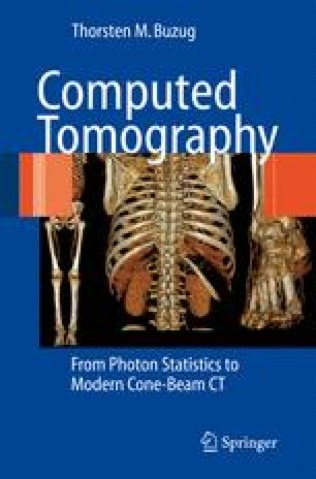
Computed Tomography : From Photon Statistics to Modern Cone-Beam CT
Tis book provides an overview of X-ray technology, the historic developmental milestones of modern CT systems, and gives a comprehensive insight into the main reconstruction methods used in computed tomography.

Collagen: Structure and Mechanics
Collagen: Structure and Mechanics provides a cohesive introduction to collagen-rich tissues, such as tendon, bone, cornea or arterials walls. Written in a clear and didactic manner, this volume reviews current knowledge on hierarchical structure, mechanical properties, deformation and strengthening mechanisms, and discusses many applications in biomaterials and tissue engineering.

Low-Dose Radiation Effects on Animals and Ecosystems : Long-Term Study on the Fukushima Nuclear Accident
Brings together the works of radiation biologists and ecologists to provide reliable radioecology data and gives insight into future radioprotection. The book examines the environmental pollution and radiation exposure, and contains valuable data from abandoned livestock in the ex-evacuation zone and from wild animals including invertebrates and vertebrates, aqueous and terrestrial animals, and plants that are subjected to long-term exposure in the area still affected by radiation. It also analyzes dose evaluation, and offers new perspectives gained from the accident, as well as an overview for future studies to promote radioprotection of humans and the ecosystem.

Laser-Tissue Interactions : Fundamentals and Applications
This essential work provides a thorough description of the fundamentals and applications in the field of laser-tissue interactions. Concepts such as the optical and thermal properties of tissue, and optical breakdown and its related effects, are treated in detail.

Complex and Adaptive Dynamical Systems : A Primer
We are living in an ever more complex world, an epoch where human actions can accordingly acquire far-reaching potentialities. Complex and adaptive dynamical systems are ubiquitous in the world surrounding us and require us to adapt to new realities and the way of dealing with them. This primer has been developed with the aim of conveying a wide range of "commons-sense" knowledge in the field of quantitative complex system science at an introductory level, providing an entry point to this both fascinating and vitally important subject.

Chitosan-based nanocomposite materials : fabrication, characterization and biomedical applications
Discovery in the use of chitosan-based nanocomposites in biomedical applications, including the scope to which these novel materials have been incorporated by the community. It provides an exceptional insight into the strategies for the synthesis and chemical modifications of chitosan, characterization techniques, their use as anticancer agents, antimicrobial, antiviral, and antifungal agents, their role in the biomedical field, and applications in drug delivery, gene therapy, dentistry, orthopedics, etc. This book will also emphasize the challenges with previous signs of progress and way for further research, details relating to the current pioneering technology, and future perspectives with a multidisciplinary approach. Furthermore, it presents up-to-date information on the economics, toxicity, and regulations related to these novel materials.

Cell Motility
Cell motility is a fascinating example of cell behavior which is fundamentally important to a number of biological and pathological processes. It is based on a complex self-organized mechano-chemical machine consisting of cytoskeletal filaments and molecular motors. In general, the cytoskeleton is responsible for the movement of the entire cell and for movements within the cell. The main challenge in the field of cell motility is to develop a complete physical description on how and why cells move. For this purpose new ways of modeling the properties of biological cells have to be found. This long term goal can only be achieved if new experimental techniques are developed to extract physical information from these living systems and if theoretical models are found which bridge the gap between molecular and mesoscopic length scales. Cell Motility gives an authoritative overview of the fundamental biological facts, theoretical models, and current experimental developments in this fascinating area.
Career development in bioengineering and biotechnology : Roads well laid and paths less traveled
Career Development in Bioengineering and Biotechnology is an indispensable guide to some of the most exciting career and professional growth opportunities in science, engineering, and beyond, and a "must read" for anyone interested in a career related to this burgeoning field.

Brain dynamics : An introduction to models and simualtions
Brain Dynamics serves to introduce graduate students and nonspecialists from various backgrounds to the field of mathematical and computational neurosciences. Some of the advanced chapters will also be of interest to the specialists. The book approaches the subject through pulse-coupled neural networks, with at their core the lighthouse and integrate-and-fire models, which allow for the highly flexible modelling of realistic synaptic activity, synchronization and spatio-temporal pattern formation. Topics also include pulse-averaged equations and their application to movement coordination. The book closes with a short analysis of models versus the real neurophysiological system.
