



الصفحة 1
الصفحة 1

New Technologies in Radiation Oncology
This book provides an overview of recent advances in radiation oncology, many of which have originated from physics and engineering sciences. After an introductory section on basic aspects of 3D medical imaging, the role of 3D imaging in the context of radiotherapy is explored in a series of chapters on the various modern imaging techniques. A further major section addresses 3D treatment planning for conformal radiotherapy, with consideration of both external radiotherapy and brachytherapy. Subsequently the modern techniques of 3D conformal radiotherapy are described, including stereotactic radiotherapy, intensity-modulated radiation therapy, image-guided and adaptive radiotherapy, and radiotherapy with charged particles. More clinically oriented chapters explore the use of brachytherapy in patients with prostate cancer, cardiovascular disorders and breast cancer. The book concludes with a section on quality assurance.

Nanoparticles in Biomedical Imaging : Emerging Technologies and Applications
Fundamental Biomedical Technologies features titles in multidisciplinary, technology-driven areas, providing the foundations for breakthrough advances in medicine and biology. The term technology refers, in a vigorously unrestrictive sense, to a broad array of engineering disciplines, the sciences of computation and informatics, mathematical models exploiting and advancing methods of mathematical physics, and the development of novel, experimental discovery devices. Titles in this series are designed and selected to provide high-level visionary input for specialists, while presenting overviews of emerging fields for those in related areas. Volumes in this series aim to provide technologists with the material to gain competent entry into biomedical research and biomedical researchers to understand and embrace novel technological foundations and tools.

Nanomedicine : Innovations, applications, and breakthroughs in the quest for health and medicine's future
Revolutionizing healthcare, by providing innovative solutions to some of the most challenging issues in medicine. This book provides an in-depth overview of nanoscale materials and devices that are advancing diagnostics, therapeutics, and personalized care in medical field. It focuses on nanomedicine’s impact on vaccine efficacy as well as innovative diagnosis and therapy for various type of cancer while addressing concerns about safety and toxicity. It examines how nanotechnology is enhancing drug delivery by precisely targeting medicines to specific cells or tissues, thereby increasing treatment efficacy with reduced side effects. Explores how nanoparticles are advancing medical imaging for earlier and more accurate disease detection, and how nanosensors allow real-time biomarker monitoring for faster and more reliable diagnoses. Additionally, it explores nanomedicine's role in managing cardiovascular diseases, improving bone health through nano-extracellular vesicles, and regenerative medicine, including ongoing clinical trials and ethical considerations.

Molecular Imaging : Computer Reconstruction and Practice
This book reports the majority of lectures given during the NATO Advanced Study Institute ASI-982440, which was held at the European Scienti?c Institute of Archamps (ESI, Archamps – France) from November 9 to November 21, 2006. The ASI course was structured in two parts, the ?rst was dedicated to individual imaging techniques while the second is the object of this volume and focused on data modelling and processing and on image archiving and distribution. Courses devoted to nuclear medicine and digital imaging techniques are collected in a c- plementary volume of NATO Science Series entitled “Physics for Medical Imaging Applications”

Modern Computational Intelligence Methods for the Interpretation of Medical Images
A detailed description of up-to-date methods used for computer processing and interpretation of medical images is given. The scope of the book include images acquisition, storing with compression, processing, analysis, recognition and also its automatic understanding In introduction general overview of the computer vision methods designed for medical images is presented. Next sources of medical images are presented with their general characteristics. Both traditional (like X-ray) and very modern (like PET) sources of medical images are presented. The main emphasis is placed on such properties of medical images given by particular medical imaging methods which are important form the point of view of its computer processing, analysis and recognition.

Medical imaging systems : An introductory guide
Gives a complete and comprehensive introduction to the fields of medical imaging systems, as designed for a broad range of applications. The authors of the book first explain the foundations of system theory and image processing, before highlighting several modalities in a dedicated chapter. The initial focus is on modalities that are closely related to traditional camera systems such as endoscopy and microscopy. This is followed by more complex image formation processes: magnetic resonance imaging, X-ray projection imaging, computed tomography, X-ray phase-contrast imaging, nuclear imaging, ultrasound, and optical coherence tomography.

Medical Imaging and Informatics ; 2nd International Conference, MIMI 2007, Beijing, China, August 14-16, 2007 Revised Selected Papers
This book constitutes the thoroughly refeered post-conference proceedings of the Second Interational Conference on Medical Imaging and Informatics, MIMI 2007, held in Beijing, China, in August 2007.The 40 revised full papers presented together with 4 keynote talks were carefully reviewed and selected from 110 submissions. The papers are organized in topical sections on medical image segmentation and registration, medical informatics, PET, fMRI, ultrasound and thermal imaging, 3D reconstruction and visualization. The volume is rounded off by 4 papers from 2 workshops on legal, ethical and social issues in medical imaging and informatics, as well as on computer-aided diagnosis (CAD).

Medical Imaging and Augmented Reality ; 4th International Workshop Tokyo, Japan, August 1-2, 2008 Proceedings
Constitutes the refereed proceedings of the 4th International Workshop on Medical Imaging and Augmented Reality, MIAR 2008, held in Tokyo, Japan, in August 2008.The 44 revised full papers presented together with 3 invited papers were carefully reviewed and selected from 90 submissions. The papers are organized in topical sections on surgical planning and simulation, medical image computing, image analysis, shape modeling and morphometry, image-guided robotics, image-guided intervention, interventional imaging, image registration, augmented reality, and image segmentation.

Medical Imaging and Augmented Reality ; 3rd International Workshop, Shanghai, China, August 17-18, 2006, Proceedings
The Third International Workshop on Medical Imaging and Augmented Reality, MIAR 2006, was held in Shanghai, China at the Regal International East Asia Hotel during August 17-18, 2006. The goal of MIAR 2006 was to bring together researchers in medical image computing and intervention to present the state-of-the-art devel- ments in this ever-growing research area.
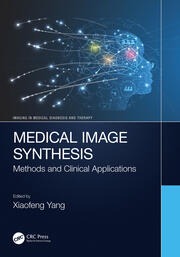
Medical image synthesis : Methods and clinical applications
Image synthesis across and within medical imaging modalities is an active area of research with broad applications in radiology and radiation oncology. This book covers the principles and methods of medical image synthesis, along with state-of-the-art research. First, various traditional non-learning-based, traditional machine-learning-based, and recent deep-learning-based medical image synthesis methods are reviewed. Second, specific applications of different inter- and intra-modality image synthesis tasks and of synthetic image-aided segmentation and registration are introduced and summarized, listing and highlighting the proposed methods, study designs, and reported performances with the related clinical applications of representative studies. Third, the clinical usages of medical image synthesis, such as treatment planning and image-guided adaptive radiotherapy, are discussed. Last, the limitations and current challenges of various medical synthesis applications are explored, along with future trends and potential solutions to solve these difficulties.

Medical Image Computing and Computer-Assisted Intervention – MICCAI 2007; 10th International Conference, Brisbane, Australia, October 29 - November 2, 2007, Proceedings, Part II
The 10th International Conference on Medical Imaging and Computer Assisted Intervention, MICCAI2007, washeldattheBrisbaneConventionandExhibition Centre, South Bank, Brisbane, Australia from 29th October to 2nd November 2007. MICCAI has become a premier international conference in this domain, with in-depth papers on the multidisciplinary ?elds of biomedical image computing, computer assisted intervention and medical robotics.

Medical Image Computing and Computer-Assisted Intervention – MICCAI 2006 ; Vol. 4191; 9th International Conference, Copenhagen, Denmark, October 1-6, 2006, Proceedings, Part II
T MICCAI papers are of high standard and have a long lifetime. In this v- ume as well as in the latest journal issues of Medical Image Analysis and IEEE Transactions on Medical Imaging papers cite previous MICCAIs including the ?rst MICCAI conference in Cambridge, Massachusetts, 1998. It is obvious that the community requires the MICCAI papers as archive material. Therefore the proceedingsofMICCAIarefrom2005andhenceforthbeing indexedbyMedline. Acarefulreviewandselectionprocesswasexecutedinordertosecurethebest possible program for the MICCAI 2006 conference. We received 578 scienti?c papers from which 39 papers were selected for the oral program and 193 papers for the poster program.

Medical Image Computing and Computer-Assisted Intervention – MICCAI 2006 ; Vol. 4190 ; 9th International Conference, Copenhagen, Denmark, October 1-6, 2006, Proceedings, Part I
MICCAI papers are of high standard and have a long lifetime. In this v- ume as well as in the latest journal issues of Medical Image Analysis and IEEE Transactions on Medical Imaging papers cite previous MICCAIs including the ?rst MICCAI conference in Cambridge, Massachusetts, 1998. It is obvious that the community requires the MICCAI papers as archive material. Therefore the proceedingsofMICCAIarefrom2005andhenceforthbeing indexedbyMedline. Acarefulreviewandselectionprocesswasexecutedinordertosecurethebest possible program for the MICCAI 2006 conference. We received 578 scienti?c papers from which 39 papers were selected for the oral program and 193 papers for the poster program.
Medical Image Computing and Computer-Assisted Intervention -- MICCAI 2005 ; 8th International Conference, Palm Springs, CA, USA, October 26-29, 2005, Proceedings, Part II
Robotics, Image-Guided Surgery and Interventions -- Image Registration II -- Medical Image Computing -- Atlases -- Shape I -- Structural and Functional Brain Analysis -- Model-Based Image Analysis -- Image-Guided Intervention: Simulation, Modeling and Display -- Simulation and Modeling II -- Medical Image Computing -- Shape II -- Image Segmentation and Analysis II -- Image Registration III --
Medical Image Computing and Computer-Assisted Intervention – MICCAI 2005 ; 8th International Conference, Palm Springs, CA, USA, October 26-29, 2005, Proceedings, Part I
This paper presents a method for classification of medical images, using machine learning and deformation-based morphometry. A morphological representation of the anatomy of interest is first obtained using highdimensional template warping, from which regions that display strong correlations between morphological measurements and the classification (clinical) variable are extracted using a watershed segmentation, taking into account the regional smoothness of the correlation map which is estimated by a crossvalidation strategy in order to achieve robustness to outliers. A Support Vector Machine-Recursive Feature Elimination (SVM-RFE) technique is then used to rank computed features from the extracted regions, according to their effect on the leave-one-out error bound. Finally, SVM classification is applied using the best set of features, and it is tested using leave-one-out. The results from a group of 61 brain images of female normal controls and schizophrenia patients demonstrate not only high classification accuracy (91.8%) and steep ROC curves, but also exceptional stability with respect to the number of selected features and the SVM kernel size

MDCT : A Practical Approach
Computed tomography (CT) is the most rapidly evolving medical imaging technology. This book describes current examination techniques and advanced clinical applications of state-of-the-art multidetector computed tomography (MDCT) scanners in chapters contributed by several distinguished radiologists and clinicians. Each chapter is written from a practical perspective so that radiologists, residents, medical physicists, and radiology technologists can obtain relevant information about MDCT applications in neuroradiology, cardiac imaging, chest, abdominal, and musculoskeletal radiology subspecialties. Each coauthor provides pertinent illustrations and tables for better understanding of current and advanced applications of MDCT scanners. Readers will benefit from the experience these authors describe in chapters on MDCT technology, contrast administration techniques, contrast adverse effects and their management, and advanced applications of MDCT.

Maxillofacial Imaging
Maxillofacial imaging has evolved dramatically over the past two decades with development of new cross-sectional imaging techniques. Traditional maxillofacial imaging was based on plain films and dental imaging. However, today’s advanced imaging techniques with CT and MRI have only been partially implemented for maxillofacial questions. This book bridges the gap between traditional maxillofacial imaging and advanced medical imaging. We have applied CT and MRI to a variety of maxillofacial cases and these are illustrated with high-quality images and multiple planes. A comprehensive chapter on imaging anatomy is also included. This book is useful for oral and maxillofacial radiologists, oral and maxillofacial surgeons, dentists, radiologists, plastic surgeons, head and neck surgeons, and others that work with severe maxillofacial disorders.

Maxillofacial Imaging
Demonstrates how advanced medical imaging techniques can be successfully applied to dental and maxillofacial conditions. There is a focus on CT and MRI, but the use of all contemporary imaging techniques are illustrated including PET, PET/CT, ultrasonography, and cone beam CT. The presentation is in atlas style, with succinct, bulleted text and a wealth of high-quality images in multiple planes. All images for each patient are grouped to enable the reader very quickly to gain an imaging overview of the condition under consideration. After a comprehensive introductory chapter on normal imaging anatomy, the role of advanced imaging techniques is described in pathologic conditions of the mandible and maxilla, temporomandibular joint, regions closely related to the jaw, paranasal sinuses, oral cavity, salivary glands, and structures adjacent to the maxillofacial region. A concluding chapter examines the use of interventional procedures for diagnosis and treatment of maxillofacial conditions. Compared with the first edition, numerous additional cases have been incorporated and a completely new chapter focuses on cone beam CT.

Mathematical Morphology : 40 Years On ; Proceedings of the 7th International Symposium on Mathematical Morphology, April 18-20, 2005
Mathematical Morphology is a speciality in Image Processing and Analysis, which considers images as geometrical objects, to be analyzed through their interactions with other geometrical objects. It relies on several branches of mathematics, such as discrete geometry, topology, lattice theory, partial differential equations, integral geometry and geometrical probability. It has produced fast and efficient algorithms for computer analysis of images, and has found applications in bio-medical imaging, materials science, geoscience, remote sensing, quality control, document processing and data analysis. This book contains the 43 papers presented at the 7th International Symposium on Mathematical Morphology, held in Paris on April 18-20, 2005. It gives a lively state of the art of current research topics in this field. It also marks a milestone, the 40 years of uninterrupted development of this ever-expanding domain.

Inorganic Scintillators for Detector Systems : Physical Principles and Crystal Engineering
The development of new scintillators as components of modern detector systems is increasingly defined by the end user's needs. This book provides an introduction to this emerging topic at the interface of physics and materials sciences, with emphasis on bulk inorganic scintillators. After surveying the end user's needs in a vast range of applications, ranging from astrophysics to industrial R & D, the authors move on to review scintillating mechanisms and the properties of the most important materials used. A chapter on crystal engineering and examples of recent developments in the field of high-energy physics and medical imaging introduce the reader to the practical aspects. This book will benefit researchers and scientists working in academic and industrial R & D related to the development of scintillators.
