



الصفحة 1
الصفحة 1

Numerical Methods for Nonsmooth Dynamical Systems : Applications in Mechanics and Electronics
This book concerns the numerical simulation of dynamical systems whose trajectories may not be differentiable everywhere. They are named nonsmooth dynamical systems. They make an important class of systems, firstly because of the many applications in which nonsmooth models are useful, secondly because they give rise to new problems in various fields of science. Usually nonsmooth dynamical systems are represented as differential inclusions, complementarity systems, evolution variational inequalities, each of these classes being itself split into several subclasses.

Nonlinear Partial Differential Equations with Applications
This book primarily concerns quasilinear and semilinear elliptic and parabolic partial differential equations, inequalities, and systems. It balances the abstract functional-analysis approach based on nonlinear monotone, pseudomonotone, weakly continuous, or accretive mappings with concrete partial differential equations in their weak (or more general) formulation. Methods of Galerkin or of Rothe are exposed in a large generality. Other methods include various direct methods, regularization, or fixed points. The exposition leads general theory as fast as possible towards the analysis of concrete equations, which have specific applications in continuum (thermo-) mechanics of solids and fluids, electrically (semi-) conductive media, modelling of biological systems, or in mechanical engineering. Selected parts are rather an introduction into the subject while some others form an advanced textbook. The intended audience is graduate and PhD students and researchers in the theory of partial differential equations or in mathematical modelling of distributed parameter systems.
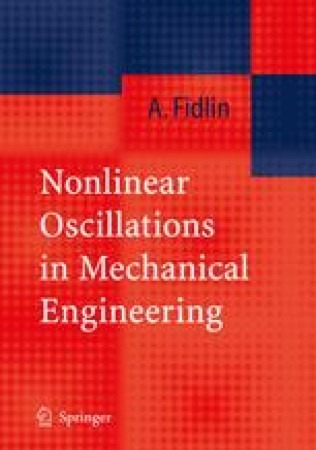
Nonlinear Oscillations in Mechanical Engineering
Nonlinear Oscillations in Mechanical Engineering explores the effects of nonlinearities encountered in applications in that field. Since the nonlinearities are caused, first of all, by contacts between different mechanical parts, the main part of this book is devoted to oscillations in mechanical systems with discontinuities caused by dry friction and collisions.

Noise and Vibration Mitigation for Rail Transportation Systems ; Proceedings of the 9th International Workshop on Railway Noise, Munich, Germany, 4 - 8 September 2007
This volume contains the contributions to the 9th International Workshop on Railway Noise, held Sept 04-08, 2007, in Munich, Germany. The workshop featured lectures by international leaders in the field of railway noise and vibration. All subjects relating to railway noise as noise sources (rolling noise, aerodynamic noise, bridge noise, sonic boom), prediction tools and theoretical models, new noise reduction, technology as well as ground-borne vibration are tackled.

New Results in Numerical and Experimental Fluid Mechanics VI ; Contributions to the 15th STAB/DGLR Symposium Darmstadt, Germany, 2006
The volume gives a broad overview over the ongoing work in this field in Germany, with the topics being high-aspect ratio wings, low aspect-ratio wings, bluff bodies, laminar flow control and transition, active flow control, hypersonic flows, aeroelasticity, aeroacoustics, mathematical fundamentals/ numerical simulation, physical fundamentals, and facilities.

Multiscale Methods in Science and Engineering
Multiscale problems naturally pose severe challenges for computational science and engineering. The smaller scales must be well resolved over the range of the larger scales. Challenging multiscale problems are very common This volume is an overview of current mathematical and computational methods for problems with multiple scales with applications in chemistry, physics and engineering.

Multibody Dynamics : Computational Methods and Applications
Multibody Dynamics is an area of Computational Mechanics which blends together various disciplines such as structural dynamics, multi-physics - chanics, computational mathematics, control theory and computer science, in order to deliver methods and tools for the virtual prototyping of complex mechanical systems. Multibody dynamics plays today a central role in the modeling, analysis, simulation and optimization of mechanical systems in a variety of ?elds and for a wide range of industrial applications.

Modelling, Monitoring and Diagnostic Techniques for Fluid Power Systems
Modelling, Monitoring and Diagnostic Techniques for Fluid Power Systems covers the background theory of fluid power and indicates the range of concepts necessary for a modern approach to condition monitoring and fault diagnosis in a readable and understandable fashion. The theory is constantly leavened by 15 years' worth of practical measurements by the author, working in association with major fluid power companies, and real industrial case studies – hot-strip-mill monitoring in conjunction with Corus p.l.c. being just one example. Comprising four parts, it provides: • an introduction to component behaviour. • a guide to the modelling methods employed for circuit analysis. • methods for doing condition monitoring. • common faults and breakdowns.

Modelling in Mechanical Engineering and Mechatronics : Towards Autonomous Intelligent Software Models
Modelling in Mechanical Engineering and Mechatronics presents a model-centred approach focusing on distributed development and use of autonomous intelligent software models, particularly the efficiency of the models, and their interaction and integration into distributed autonomous intelligent systems. In order to systematise the available knowledge, a domain ontology is presented; a subset of which is used to create a modelling theory based on knowledge and experience in the areas of software engineering, mechanical engineering and mechatronics. This holistic view of modelling explains the purpose and the essence of modelling, as well as the benefits that are to be expected. It discusses the relations to other branches of engineering and science and as a result, it demonstrates strategies, methods and tools for unleashing the full power of modelling.

Modeling, Simulation and Optimization of Complex Processes HPSC 2018 ; Proceedings of the 7th International Conference on High Performance Scientific Computing, Hanoi, Vietnam, March 19-23, 2018
The contributions cover a broad, interdisciplinary spectrum of scientific computing and showcase recent advances in theory, methods, and practical applications. Subjects covered include numerical simulation, methods for optimization and control, machine learning, parallel computing and software development, as well as the applications of scientific computing in mechanical engineering, airspace engineering, environmental physics, decision making, hydrogeology, material science and electric circuits.

Micromechanics of Heterogeneous Materials
The micromechanics of random structure heterogeneous materials is a burgeoning multidisciplinary research area which overlaps the scientific branches of materials science, mechanical engineering, applied mathematics, technical physics, geophysics, and biology. Micromechanics of Heterogeneous Materials features rigorous theoretical methods of applied mathematics and statistical physics in materials science of microheterogeneous media. The prediction of the behavior of heterogeneous materials by the use of properties of constituents and their microstructures is a central issue of micromechanics. This book is the first in micromechanics to provide a useful and effective demonstration of the systematic and fundamental research of the microstructure of the wide class of heterogeneous materials of natural and synthetic nature.

Micro and Nanomanufacturing
Engineers seeking more knowledge of how nano and micro devices are designed and fabricated will learn: Manufacturing and fabrication at the micro and nanoscales Using bulk and surface micromachining techniques, LiGA and deep x-ray lithography to manufacture semiconductors Producing master molds with micromachining The deposition of thin films, pulsed water drop machining, and nanomachining Mark J. Jackson is an Associate Professor in the Department of Mechanical Engineering Technology at Purdue University. His current research focuses on understanding the properties of materials in the field of micro scale metal cutting, micro and nano abrasive machining, and laser micro machining.

Mesoscale Analysis of Hydraulics
Presents a series of complicated hydraulic phenomena and related mechanism of high-speed flows in head-head dam. According to the basic hydraulic theory, detailed experiments and numerical simulations, microscopic scale analysis on cavitation bubbles, air bubbles, turbulent eddy vortices and sand grains are examined systemically. These investigations on microscopic fluid mechanics, including cavitation erosion, aeration protection, air–water flow, energy dissipation and river-bed scouring, allow a deep understanding of hydraulics in high-head dams. This book provides reference for designers and researchers in hydraulic engineering, environment engineering and fluid mechanics.

Mechanics of Structural Elements : Theory and Applications
The book systematically presents variational principles and methods of analysis for applied elasticity and structural mechanics. The variational approach is used consistently for both, constructing numerical procedures and deriving basic governing equations of applied mechanics of solids; it is the derivation of equations where this approach is most powerful and best grounded by mathematics. The book is oriented towards experts in civil engineering, researchers, developers of software for mechanical strength, stability, and oscillation analysis; it can be used by practical engineers who employ software tools to do their job and who want to know more about the theoretical background of the strength analysis. The book will be useful to senior and postgraduate students of engineering, to professors of structural analysis at civil or mechanical engineering departments of technical universities.

Mechanics of Microelectronics
Written by the leading experts with both profound knowledge and rich practical experience in advanced mechanics and microelectronics industry, this book aims to provide the cutting edge knowledge and solutions for various mechanical related problems, in a systematic way. It contains essential and detailed information about the state-of-the-art theories, methodologies, the way of working and real case studies.

Mechanics of Elastic Structures with Inclined Members : Analysis of vibration, buckling and Bending of X-Braced Frames and Conical Shells
This monograph presents the mechanics of vibration, buckling and bending of elastic structures with inclined members such as x-braced high rise frames and conical shells. More than giving detailed derivations of basic equations.
Mechanics and Physics of Fracture : Multiscale Modeling of the Failure Behavior of Solids
Provides a comprehensive understanding of the macroscopic failure behavior of solids from the description of the microscopic failure processes and their coupling with the microstructure. Several fundamental questions were addressed: the relation between the microstructural features of materials and their fracture properties and crack trajectories; the role of damage mechanisms and non-linear deformations near the crack tip on the failure behavior of solids; and finally the role of dynamic inertial effects during fast fracture was more briefly evoked.
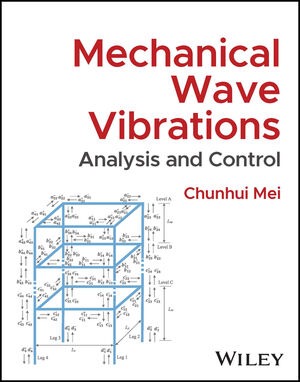
Mechanical Wave Vibrations: Analysis and Control
Delivers an expert discussion of the wave analysis approach (as opposed to the modal-based approach) to mechanical vibrations in structures. The book begins with deriving the equations of motion using the Newtonian approach based on various sign conventions before comprehensively covering the wave vibration analysis approach. It concludes by exploring passive and active feedback control of mechanical vibration waves in structures.

Mechanical System Dynamics
This textbook gives a clear and thorough presentation of the fundamental principles of mechanical systems and their dynamics. It provides both the theory and applications of mechanical systems in an intermediate theoretical level, ranging from the basic concepts of mechanics, constraint and multibody systems over dynamics of hydraulic systems and power transmission systems to machine dynamics and robotics.
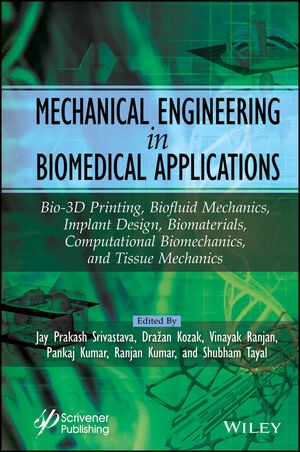
Mechanical engineering in biomedical application: bio-3D printing, biofluid mechanics, implant design, biomaterials, computational biomechanics, tissue mechanics
Explores the latest research and developments related to the interdisciplinary field of biomedical and mechanical engineering offering insights and perspectives on the research, key technologies, and mechanical engineering techniques used in biomedical applications.
