



الصفحة 1
الصفحة 1

Natural product experiments in drug discovery
Explores a wide range of evidence-based complementary medicine and various bio-analytical techniques used to define botanical products. Collecting recent work and current developments in the field of contemporary phytomedicine as well as their future possibilities in human health care, the book includes unique contributions in the form of chapters on phytomedicine and screening biological activities explained with diverse hyphenated techniques, as well as issues related to herbal medications, such as efficacy, adulteration, safety, toxicity, regulations, and drug delivery. Written for the Springer Protocols Handbooks series, chapters feature advice from experts on how to best conduct future experiments. Extensive and practical, Natural Product Experiments in Drug Discovery serves as an ideal reference for students, professors, and researchers in universities, R&D institutes, pharmaceutical and herbal enterprises, and health organizations.

High performance computing for drug discovery and biomedicine
Explores the application of high-performance computing (HPC) technologies to computational drug discovery (CDD) and biomedicine. Collects CDD approaches that, together with HPC, can revolutionize and automate drug discovery process, such as knowledge graphs, natural language processing (NLP), Bayesian optimization, automated virtual screening platforms, alchemical free energy workflows, fragment-molecular orbitals (FMO), HPC-adapted molecular dynamic simulation (MD-HPC), and the potential of cloud computing for drug discovery. And delves into computational algorithms and workflows for biomedicine, featuring an HPC framework to assess drug-induced arrhythmic risk, digital patient applications relevant to the clinic, virtual human simulations, cellular and whole-body blood flow modeling for stroke treatments, prediction of the femoral bone strength from CT data, and many more subjects.

Drug target selection and validation
Focuses on the computational aspects of early drug discovery, drug target identification, and validation. It revises current classical paradigms in target and phenotypic-based drug design with still ingrained approximations and concepts and discusses the research in the new network approach concept that include kinetic selectivity and metabolic analysis. Many often-overlooked approximations and concepts in drug discovery are fully covered. Drug Target Selection and Validation includes both introductory sections and research-based sections to be of use to both students and research scientists in drug discovery, design, kinetics and metabolic analysis. Pharmaceutical scientists, pharmaceutics, drug developers, pharmacologists, biomedical researchers in computer science, medicinal chemists, and precision medicine developers benefit from the information provided. The book concludes with a chapter on chemical and structural databases.

Drug discovery with privileged building Blocks : Tactics in medicinal chemistry
Drug Discovery with Privileged Building Blocks traces back PharmaBlock’s founding philosophy of designing privileged building blocks. High-quality building blocks are crucial not only to biological activities of different molecules but also to ADMET properties, which eventually will impact the success rate of drug discovery projects. A thorough study of how building blocks perform in drug molecules and a regular analysis of new building block structures in the latest researches have proven to be a fruitful strategy to generate novel building blocks. Using this strategy, PharmaBlock has supplied the drug industry with a great number of building blocks, which are increasingly being adopted by drug hunters, and these are identified in this book.

Data science, AI, and machine learning in drug development
The confluence of big data, AI, and machine learning has led to a paradigm shift in how innovative medicines are developed and healthcare delivered. To fully capitalize on these technological advances, it is essential to systematically harness data from diverse sources and leverage digital technologies and advanced analytics to enable data-driven decisions. Data science stands at a unique moment of opportunity to lead such a transformative change. Intended to be a single source of information, Data Science, AI, and Machine Learning in Drug Research and Development covers a wide range of topics on the changing landscape of drug R&D, emerging applications of big data, AI and machine learning in drug development, and the build of robust data science organizations to drive biopharmaceutical digital transformations
CADD and informatics in drug discovery
Updates knowledge on recent advances in computational and bioinformatics tools/techniques and their practical applications in modern drug design and discovery programme. Also it encompasses fundamental principles, advanced methodologies and applications of various CADD approaches including several cutting-edge areas / presenting recent developments covering ongoing trends in the field of computer-aided drug discovery. Having contributions by a global team of experts, the book is expected to be an ideal resource for drug discovery scientists, medicinal chemists, pharmacologists, toxicologists, phytochemists, biochemists, biologists, RandD personnel, researchers, students, teachers and those working in the field of drug discovery. It will fill the knowledge gaps that exist in the current CADD approaches and methodologies/ protocols being widely used in both academic and research practices. Further, a special focus on current status of various computational drug design approaches (SBDD, LBDD, De-novo drug design, Pharmacophore-based search), bioinformatics tools and databases, computational screening and modeling of phytochemicals/natural products, artificial intelligence and machine learning, and network pharmacology and system biology would certainly guide researchers, students or readers to conduct their research in the emerging area(s) of interest. It is also expected to be highly beneficial to different stakeholders working in the pharmaceutical and biotechnology industries (RandD), the academic as well as research sectors. .
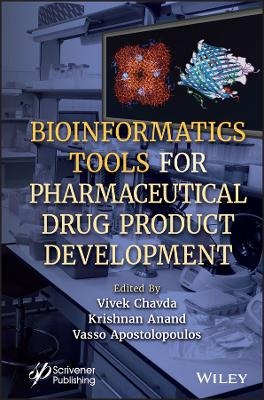
Bioinformatics tools for pharmaceutical drug product development
Presents the latest information on bioinformatics tools, artificial intelligence, machine learning, computational methods, protein interactions, peptide-based drug design, and omics technologies. And include bioinformatics tools for the pharmaceutical sector and the healthcare sector. Bioinformatics brings a new era in research to accelerate drug target and vaccine design development, improving validation approaches as well as facilitating and identifying side effects and predicting drug resistance. As such, this will aid in more successful drug candidates from discovery to clinical trials to the market, and most importantly make it a more cost-effective process overall.
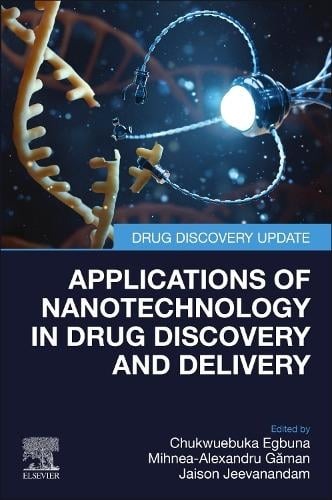
Applications of nanotechnology in drug discovery and delivery
Presents complete coverage of the application of nanotechnology in the discovery of new drugs and efficient target delivery of drugs. The book highlights recent advances of nanotechnology applications in the biomedical sciences, starting with chapters that provide the basics of nanotechnology, nanoparticles and nanocarriers. Part II deals with the application of nanotechnology in drug discovery, with an emphasis on enhanced delivery of pharmaceutical products, with Part III discussing toxicological and safety issues arising from the use of nanomaterials
