



الصفحة 1
الصفحة 1

Natural product experiments in drug discovery
Explores a wide range of evidence-based complementary medicine and various bio-analytical techniques used to define botanical products. Collecting recent work and current developments in the field of contemporary phytomedicine as well as their future possibilities in human health care, the book includes unique contributions in the form of chapters on phytomedicine and screening biological activities explained with diverse hyphenated techniques, as well as issues related to herbal medications, such as efficacy, adulteration, safety, toxicity, regulations, and drug delivery. Written for the Springer Protocols Handbooks series, chapters feature advice from experts on how to best conduct future experiments. Extensive and practical, Natural Product Experiments in Drug Discovery serves as an ideal reference for students, professors, and researchers in universities, R&D institutes, pharmaceutical and herbal enterprises, and health organizations.
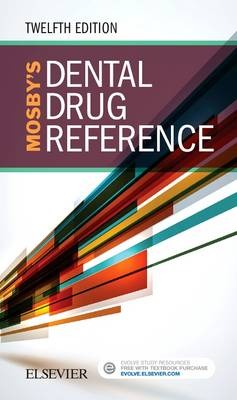
Mosby’s dental drug reference
Profiles the most commonly used drugs in dentistry, with emphasis on dental-specific considerations. More than 800 drug monographs make it easy to find information such as dosages, indications, contraindications, interactions, precautions, side effects, and serious reactions.

Molecular recognition in pharmacology
Traces the behavior of the drug substance, starting from the initial pre-contact stage, and ending with the formation of the complex. Molecular recognition lies in the foundation of every life form and includes many mysteries. Currently, studies on this topic in pharmacology are limited to determining the properties of complexes of medicinal substances (drugs) with specific (complementary) biomolecules: receptors, enzymes, ion channels etc. The results present the mechanisms preventing drugs from such non-specific binding. This direction is very fruitful, although the phenomenon of molecular recognition is far wider.

Medical Pharmacology and Therapeutics
Provides all the information medical and healthcare students need throughout their degree programme and beyond, including for professional qualifications such as the PSA. This all-round textbook covers basic pharmacology through to drug prescribing in clinical contexts, covering the pathogenic mechanisms of disease; drug actions, side effects, and the therapeutic principles of drug use. It takes a helpful systems-based approach that orders information according to body systems and disease areas, rather than by drug class. Now in its sixth edition, the book has been fully updated to include latest scientific understanding of drug action and administration and current best practice in prescribing medications, informed by the latest national guidelines.

High performance computing for drug discovery and biomedicine
Explores the application of high-performance computing (HPC) technologies to computational drug discovery (CDD) and biomedicine. Collects CDD approaches that, together with HPC, can revolutionize and automate drug discovery process, such as knowledge graphs, natural language processing (NLP), Bayesian optimization, automated virtual screening platforms, alchemical free energy workflows, fragment-molecular orbitals (FMO), HPC-adapted molecular dynamic simulation (MD-HPC), and the potential of cloud computing for drug discovery. And delves into computational algorithms and workflows for biomedicine, featuring an HPC framework to assess drug-induced arrhythmic risk, digital patient applications relevant to the clinic, virtual human simulations, cellular and whole-body blood flow modeling for stroke treatments, prediction of the femoral bone strength from CT data, and many more subjects.

Handbook of research on nano-drug delivery and tissue engineering : Guide to strengthening healthcare systems
Provides an important and valuable collection of research accomplishments in nanomedicine, drug delivery, tissue engineering, processing, formulations, and their applications. Addresses topical issues in nano-drug delivery and nanotechnological approaches to tissue engineering. The first section offers research on a variety of diverse nano-based drug delivery systems, along with discussions of their efficacy, safety, toxicology, and applications for different purposes. Focusing on nanotechnology approaches to tissue engineering, part two of the volume considers the use of hydrogel systems, nanoceria and micro- and nano-structured biomaterials for bone tissue engineering, mesenchymal stem cells, and more. This volume is a systematic scientific reference of the novel research developments specifically in this area. The editors give special emphasis on the new trends and developments in the field of nanomedicine that will be very helpful for pharmaceutical and medical researchers, scientists, faculty, and students.

Handbook of pharmaceutical manufacturing formulations ; Vol.6 : Sterile products
An authoritative and practical guide to the art and science of formulating drugs for commercial manufacturing. With thoroughly revised and expanded content, this six-volume set compiles data from FDA new drug applications, patent applications, and other sources of generic and proprietary formulations to cover the broad spectrum of GMP formulations and issues in using these formulations in a commercial setting. A must-have collection for pharmaceutical manufacturers, educational institutions, and regulatory authorities, this is an excellent platform for drug companies to benchmark their products and for generic companies to formulate drugs coming off patent

Handbook of pharmaceutical manufacturing formulations ; Vol.5 : Over-the-counter products
An authoritative and practical guide to the art and science of formulating drugs for commercial manufacturing. With thoroughly revised and expanded content, this six-volume set compiles data from FDA new drug applications, patent applications, and other sources of generic and proprietary formulations to cover the broad spectrum of GMP formulations and issues in using these formulations in a commercial setting. A must-have collection for pharmaceutical manufacturers, educational institutions, and regulatory authorities, this is an excellent platform for drug companies to benchmark their products and for generic companies to formulate drugs coming off patent

Handbook of pharmaceutical manufacturing formulations ; Vol.4 : Semisolid products
An authoritative and practical guide to the art and science of formulating drugs for commercial manufacturing. With thoroughly revised and expanded content, this six-volume set compiles data from FDA new drug applications, patent applications, and other sources of generic and proprietary formulations to cover the broad spectrum of GMP formulations and issues in using these formulations in a commercial setting. A must-have collection for pharmaceutical manufacturers, educational institutions, and regulatory authorities, this is an excellent platform for drug companies to benchmark their products and for generic companies to formulate drugs coming off patent

Handbook of pharmaceutical manufacturing formulations ; Vol.3 : Liquid products
An authoritative and practical guide to the art and science of formulating drugs for commercial manufacturing. With thoroughly revised and expanded content, this six-volume set compiles data from FDA new drug applications, patent applications, and other sources of generic and proprietary formulations to cover the broad spectrum of GMP formulations and issues in using these formulations in a commercial setting. A must-have collection for pharmaceutical manufacturers, educational institutions, and regulatory authorities, this is an excellent platform for drug companies to benchmark their products and for generic companies to formulate drugs coming off patent

Handbook of pharmaceutical manufacturing formulations ; Vol.2 : Uncompressed solid products
Covers uncompressed solids, which include formulations of powders, capsules, powders ready for reconstitution, and other similar products.Highlights from Uncompressed Solid Products, Volume Two include:the fundamental issues of good manufacturing practicesformulations for more than 400 pharmaceutical products, including currently approved products and innovative products such as small proteins, instantly liquifiable powders, and nanoparticlesaccess to US FDA guidelines, as well as all major guid

Handbook of pharmaceutical manufacturing formulations ; Vo.1 : Compressed solid products
An authoritative and practical guide to the art and science of formulating drugs for commercial manufacturing. With thoroughly revised and expanded content, this first volume of a six-volume set, compiles data from FDA new drug applications, patent applications, and other sources of generic and proprietary formulations to cover the broad spectrum of GMP formulations and issues in using these formulations in a commercial setting. A must-have collection for pharmaceutical manufacturers, educational institutions, and regulatory authorities, this is an excellent platform for drug companies to benchmark their products and for generic companies to formulate drugs coming off patent

Goodman & Gilman's the pharmacological basis of therapeutics ; 13th ed.
Correlates pharmacology with related medical sciences, to reinterpret the actions and uses of drugs in light of advances in medicine and the basic biomedical sciences, to emphasize the applications of pharmacodynamics to therapeutics, and to create a book that would be useful to students of pharmacology and to physicians.

FASTtrack : Pharmaceutics - dosage form and design
Discusses an array of major dosage forms that are commonly encountered by pharmacists in professional practice. Essential information concerning the formulation of these dosage forms is delivered in a format that will aid your understanding and remove the complexities of the various topics.

Exosomes based drug delivery strategies for brain disorders
Provides a comprehensive overview of the role of exosomes in brain diseases, including stroke, multiple sclerosis, Parkinson's disease, Alzheimer's disease, epilepsy, and depression. It covers the basics of exosome biogenesis, composition, and synthesis, as well as the therapeutic potential of exosomes in brain disorders. The correlation between exosomes and neuroinflammation, the challenges of using exosomes as a novel carrier, and engineered exosomes to deliver therapeutic protein are covered well in this book. Use of radiolabelled exosomes as a diagnostic tool and the toxicity studies of exosomes with potential overcome approaches. It is an essential resource for researchers, clinicians, and healthcare professionals working in the field of exosome research, especially on its applications in brain disorders.

Drugs in palliative care
While palliative care has adopted a holistic approach to treatment / medication-driven symptom management ostensibly forms the critical aspect of care. Prescribing in palliative care can be extremely complex because the patient may often have comorbidity / or occasionally multimorbidity. The associated polypharmacy further complicates the pharmacological management of symptoms being caused by the palliative condition. This can be daunting for healthcare professionals and can negatively impact upon the effectiveness of care provided. Fully revised and updated / the third edition of Drugs in Palliative Care provides a detailed / yet concise overview of topics that are encountered in palliative care clinical practice. The book will appeal to a variety of healthcare professionals involved in the provision of palliative care and medicines information.

Drugs and nutrients : The interactive effects
Devoted to the effects of food and of nutrient intake on the disposition of foreign compounds, and discusses effects of drugs on nutrition. It is intended for nutritionists and clinical investigators concerned with interpretation of aberrant effects of therapeutic drugs.

Drug target selection and validation
Focuses on the computational aspects of early drug discovery, drug target identification, and validation. It revises current classical paradigms in target and phenotypic-based drug design with still ingrained approximations and concepts and discusses the research in the new network approach concept that include kinetic selectivity and metabolic analysis. Many often-overlooked approximations and concepts in drug discovery are fully covered. Drug Target Selection and Validation includes both introductory sections and research-based sections to be of use to both students and research scientists in drug discovery, design, kinetics and metabolic analysis. Pharmaceutical scientists, pharmaceutics, drug developers, pharmacologists, biomedical researchers in computer science, medicinal chemists, and precision medicine developers benefit from the information provided. The book concludes with a chapter on chemical and structural databases.

Drug disposition and pharmacokinetics : Principles and applications for medicine, toxicology and biotechnology
Delivers an authoritative and comprehensive discussion of the fate of drug molecules in the body, as well as its implications for pharmacological and clinical effects. The text offers a unique and balanced approach that combines discussion of the specific physical and biological factors affecting the absorption, distribution, metabolism, and excretion of drugs, with mathematical assessments of plasma and body fluid concentrations. The book assumes little prior knowledge and is an ideal reference for practicing professionals in industry as well as researchers and academics.

Drug discovery with privileged building Blocks : Tactics in medicinal chemistry
Drug Discovery with Privileged Building Blocks traces back PharmaBlock’s founding philosophy of designing privileged building blocks. High-quality building blocks are crucial not only to biological activities of different molecules but also to ADMET properties, which eventually will impact the success rate of drug discovery projects. A thorough study of how building blocks perform in drug molecules and a regular analysis of new building block structures in the latest researches have proven to be a fruitful strategy to generate novel building blocks. Using this strategy, PharmaBlock has supplied the drug industry with a great number of building blocks, which are increasingly being adopted by drug hunters, and these are identified in this book.
