



الصفحة 1
الصفحة 1

Nonlinear Elliptic and Parabolic Problems : A Special Tribute to the Work of Herbert Amann
The present volume is dedicated to celebrate the work of the renowned mathematician Herbert Amann, who had a significant and decisive influence in shaping Nonlinear Analysis. Most articles published in this book, which consists of 32 articles in total, written by highly distinguished researchers, are in one way or another related to the scientific works of Herbert Amann. The contributions cover a wide range of nonlinear elliptic and parabolic equations with applications to natural sciences and engineering. Special topics are fluid dynamics, reaction-diffusion systems, bifurcation theory, maximal regularity, evolution equations, and the theory of function spaces.

Noetherian Semigroup Algebras
This work presents a comprehensive treatment of the main results and methods of the theory of Noetherian semigroup algebras. These general results are then applied and illustrated in the context of important classes of algebras that arise in a variety of areas and have been recently intensively studied. Several concrete constructions are described in full detail, in particular intriguing classes of quadratic algebras and algebras related to group rings of polycyclic-by-finite groups. These give new classes of Noetherian algebras of small Gelfand-Kirillov dimension. The focus is on the interplay between their combinatorics and the algebraic structure.

New Approaches to Circle Packing in a Square : With Program Codes
This book summarizes results achieved in solving the circle packing problem over the past few years, providing the reader with a comprehensive view of both theoretical and computational achievements. Typically illustrations of problem solutions are shown, elegantly displaying the results obtained.Beyond the theoretically challenging character of the problem, the solution methods developed in the book also have many practical applications. Direct applications include cutting out congruent two-dimensional objects from an expensive material, or locating points within a square in such a way that the shortest distance between them is maximal.

MSC Maximal Stress Cooperation
In 1996 my book ‘The Nature of Cultures’ appeared in Vi- na and New York. It describes cultures as systems which are controlled by MSC and decorum. While MSC is a neologism meaning ‘maximal stress cooperation’ decorum is a very old term. It is as old as Western culture itself, and is furthermore, the translation of the even older Greek word ‘prepon’. Decorum and prepon mean ‘to be suitable, to be fitting’. It is all about the fitting of cultural medial contents to elementary cultural behavioural types and behavioural phases. These behavioural units are subject to a type of ranking system in which that which is essential is sorted from that which less essential. - corum then means – the representations of the media must ‘fit’ the ranking of the cultural behaviour. It is MSC which assumes the top position in this ranking. In 1996 and the two previous years when I was working on my book ‘The Nature of Cultures’ less than 5 years had passed since the Iron Curtain had been lifted. Many believed at that time that with ending of the Cold War, which was more or less de facto peace anyway, that a new and better age of peace was dawning.

Modules and Comodules
The 23 articles in this volume encompass the proceedings of the International Conference on Modules and Comodules held in Porto (Portugal) in 2006 and dedicated to Robert Wisbauer on the occasion of his 65th birthday. These articles reflect Professor Wisbauer's wide interests and give an overview of different fields related to module theory, some of which have a long tradition whereas others have emerged in recent years. They include topics in the formal theory of modules bordering on category theory, in ring theory, in Hopf algebras and quantum groups, and in corings and comodules.

Instrumaster
Experiments with different neural network structures and algorithms in order to achieve musical note recognition as well as musical instrument recognition, all bundled in a mobile application. It also aims to create the most effective music-learning application that works completely offline, which is hard to find in modern music applications. The paper also explores why the instrument identifying AI is solely based on Multi-Layer Perceptron (MLP) and why the note-identifying AI system was chosen to be a ML system over CNN or other deep-learning trained AI. The paper presents feature extraction methods for audio signals and files and dives deep into the process, such as FFT, MFCCs, Wavelengths, sampling rates, etc. It also touches on Logistic Regression Algorithms, their limitations, and their performance with the different use cases in the application. All these techniques are then compared side by side for maximally added value, making this research paper a good reference for any future developers looking to find optimal neural networks techniques when it comes to audio processing and analysis.

Information theory and machine learning
The recent successes of machine learning, especially regarding systems based on deep neural networks, have encouraged further research activities and raised a new set of challenges in understanding and designing complex machine learning algorithms. New applications require learning algorithms to be distributed, have transferable learning results, use computation resources efficiently, convergence quickly on online settings, have performance guarantees, satisfy fairness or privacy constraints, incorporate domain knowledge on model structures, etc. A new wave of developments in statistical learning theory and information theory has set out to address these challenges.

Hyperbolic Problems : Theory, Numerics, Applications ; Proceedings of the Eleventh International Conference on Hyperbolic Problems held in Ecole Normale Supérieure, Lyon, July 17-21, 2006
This volume contains papers that were presented at HYP2006, the eleventh international Conference on Hyperbolic Problems: Theory, Numerics and Applications held at the Ecole Normale Supérieure de Lyon, France, July 17-21, 2006. This biennial series of conferences has become one of the most important international events in Applied Mathematics. As computers became more and more powerful, the interplay between theory, modelling, and numerical algorithms gained considerable impact, and the scope of HYP conferences expanded accordingly. The field is currently in interaction with a variety of scientific domains, including fluid dynamics, physics, electromagnetism, chemistry, biology, road and network traffic, and engineering. Many of these papers present new effective numerical methods and their application in various contexts.

Guida alla teoria degli insiemi = Guide to set theory
Teachers are in difficulty with regard to the space and emphasis to be given to set theory topics, in their preparation and in their work, because they have not been provided with adequate knowledge at the university. It is safe to say, on the basis of much experience, that the average mathematician, even the researcher, does not know what set theory is. Two prejudices stand in the way of a good knowledge of the theory: one, of a minimalist type, is its identification with an unspecified "set theory", an austere language that is too demanding if one wants to impose it prematurely; the other is of a maximalist type and consists in the supposed and effective link with the more subtle questions of the foundations of mathematics. But the theory has an important mathematical content, and with many implications of didactic interest.

Gradient Flows : in Metric Spaces and in the Space of Probability Measures ; 2nd ed.
Devoted to a theory of gradient flows in spaces which are not necessarily endowed with a natural linear or differentiable structure, this book focuses on gradient flows in metric spaces. It covers gradient flows in the space of probability measures on a separable Hilbert space, endowed with the Kantorovich-Rubinstein-Wasserstein distance.
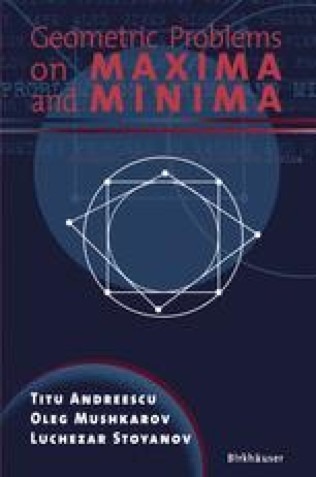
Geometric Problems on Maxima and Minima
Questions of maxima and minima have great practical significance, with applications to physics, engineering, and economics; they have also given rise to theoretical advances, notably in calculus and optimization. Indeed, while most texts view the study of extrema within the context of calculus, this carefully constructed problem book takes a uniquely intuitive approach to the subject: it presents hundreds of extreme-value problems, examples, and solutions primarily through Euclidean geometry.
Geometric Aspects of Functional Analysis : Israel Seminar 2004-2005
Most of the papers deal with different aspects of the Asymptotic Geometric Analysis, ranging from classical topics in the geometry of convex bodies, to inequalities involving volumes of such bodies or, more generally, log-concave measures, to the study of sections or projections of convex bodies. In many of the papers Probability Theory plays an important role; in some limit laws for measures associated with convex bodies, resembling Central Limit Theorems, are derive and in others probabilistic tools are used extensively. There are also papers on related subjects, including a survey on the behavior of the largest eigenvalue of random matrices and some topics in Number Theory.

From Gestalt Theory to Image Analysis : A Probabilistic Approach
This book introduces the reader to a recent theory in Computer Vision yielding elementary techniques to analyse digital images. These techniques are inspired from and are a mathematical formalization of the Gestalt theory. Gestalt theory, which had never been formalized is a rigorous realm of vision psychology developped between 1923 and 1975. From the mathematical viewpoint the closest field to it is stochastic geometry, involving basic probability and statistics, in the context of image analysis.

Forecasting and Assessing Risk of Individual Electricity Peaks
The overarching aim of this open access book is to present self-contained theory and algorithms for investigation and prediction of electric demand peaks. A cross-section of popular demand forecasting algorithms from statistics, machine learning and mathematics is presented, followed by extreme value theory techniques with examples.

Finite Zeros in discrete time control systems
The book starts with definition of invariant zeros and goes as far as a general characterization of output-zeroing inputs and the corresponding solutions, explicit formulas for maximal output-nulling invariant subspaces and for the zero dynamics. The objective of this book is to render the reader familiar with a certain method of analysis of multivariable zeros (which goes beyond the classical approach) and related problems. The minimal mathematical background that is required from the reader is a working knowledge of linear algebra and difference equations.

Exercises in Modules and Rings
This Problem Book offers a compendium of 639 exercises of varying degrees of difficulty in the subject of modules and rings at the graduate level. The material covered includes projective, injective, and flat modules, homological and uniform dimensions, noncommutative localizations and Goldie’s theorems, maximal rings of quotients, Frobenius and quasi-Frobenius rings, as well as Morita’s classical theory of category dualities and equivalences. Each of the nineteen sections begins with an introduction giving the general background and the theoretical basis for the problems that follow. All exercises are solved in full detail; many are accompanied by pertinent historical and bibliographical information, or a commentary on possible improvements, generalizations, and latent connections to other problems.

Dose Finding in Drug Development
When you go to the pharmacy and fill a prescription, have you ever wondered if the dose of the medication is right for you? Can the dose be too low so that the drug will not work? This book answers some of these questions, and introduces the drug development process, the design and analysis of clinical trials.

Dimension and Recurrence in Hyperbolic Dynamics
The main objective of this book is to give a broad unified introduction to the study of dimension and recurrence in hyperbolic dynamics. It includes the discussion of the foundations, main results, and main techniques in the rich interplay of four main areas of research: hyperbolic dynamics, dimension theory, multifractal analysis, and quantitative recurrence. It also gives a panorama of several selected topics of current research interest. More than half of the material appears here for the first time in book form, describing many recent developments in the area such as topics on irregular sets, variational principles, applications to number theory, measures of maximal dimension, multifractal nonrigidity, and quantitative recurrence. All the results are included with detailed proofs, many of them simplified or rewritten on purpose for the book.

Dentofacial Esthetics : From Macro to Micro
Dives deep into dentofacial esthetics and teaches you how to evaluate each patient who walks through your door from the macro to the micro, focusing first on the big picture and then working your way to the minute details in order to treatment plan for the best possible outcome. The author's mantra is that "If you don't see it, you won't treat it," so his goal is to educate dentists and orthodontists about what they should be seeing in order to yield maximally esthetic outcomes, taking into consideration concepts like esthetic balance and smile projection.

Data structures and algorithm : Analysis in C++
An advanced algorithms book that bridges the gap between traditional CS2 and Algorithms Analysis courses. As the speed and power of computers increases, so does the need for effective programming and algorithm analysis. By approaching these skills in tandem, Mark Allen Weiss teaches readers to develop well-constructed, maximally efficient programs using the C++ programming language
