



الصفحة 1
الصفحة 1

Monte Carlo and Quasi-Monte Carlo Methods 2006
This book represents the refereed proceedings of the Seventh International Conference on Monte Carlo and Quasi-Monte Carlo Methods in Scientific Computing, held in Ulm (Germany) in August 2006. The proceedings include carefully selected papers on many aspects of Monte Carlo and quasi-Monte Carlo methods and their applications, as well as providing information on current research in these very active areas. Besides covering theory, the book is an excellent resource work for practitioners as well.

Monte Carlo and Quasi-Monte Carlo Methods 2004
The proceedings include many aspects of Monte Carlo methods, quasi-Monte Carlo methods, and the numerical solution of partial differential equations.

Mathematical Models of Financial Derivatives
Mathematical Models of Financial Derivatives is a textbook on the theory behind modeling derivatives using the financial engineering approach, focussing on the martingale pricing principles that are common to most derivative securities. A wide range of financial derivatives commonly traded in the equity and fixed income markets are analyzed, emphasizing on the aspects of pricing, hedging and their risk management. Starting from the renowned Black-Scholes-Merton formulation of option pricing model, readers are guided through the text on the new advances on the state-of-the-art derivative pricing models and interest rate models. Both analytic techniques and numerical methods for solving various types of derivative pricing models are emphasized.

Introductory Lectures on Fluctuations of Lévy Processes with Applications
Lévy processes are the natural continuous-time analogue of random walks and form a rich class of stochastic processes around which a robust mathematical theory exists. Their mathematical significance is justified by their application in many areas of classical and modern stochastic models including storage models, renewal processes, insurance risk models, optimal stopping problems, mathematical finance and continuous-state branching processes.The book aims to be mathematically rigorous while still providing an intuitive feel for underlying principles. The results and applications often focus on the case of Lévy processes with jumps in only one direction.

In Memoriam Paul-André Meyer - Séminaire de Probabilités XXXIX
The 39th volume of Séminaire de Probabilités is a tribute to the memory of Paul André Meyer. His life and achievements are recalled in this book, and tributes are paid by his friends and colleagues. This volume also contains mathematical contributions to classical and quantum stochastic calculus, the theory of processes, martingales and their applications to mathematical finance and Brownian motion. These contributions provide an overview on the current trends of stochastic calculus.

How to Build a Modern Tontine : Algorithms, Scripts and Tips
This book introduces the modern tontine and its applications in retirement and decumulation. Personal financial management in the later stages of life presents unique challenges, and renowned retirement planning expert Dr. Milevsky proposes the modern tontine as a solution. With the goal of guiding professionals and retirees in more efficient decumulation, the book demonstrates how to build a modern tontine. It is technically oriented, employing a cookbook format, featuring R code, and examining retirement planning through a statistical lens.

From Stochastic Calculus to Mathematical Finance : The Shiryaev Festschrift
The Festschrift is a collection of papers, including several surveys, written by his former students, co-authors and colleagues. These reflect the wide range of scientific interests of the teacher and his Moscow school. The topics range from the disorder problems to stochastic calculus and their applications to mathematical economics and finance. A full biobibliography of Shiryaev's works is included. The book represents the modern state of art of many aspects of a quickly maturing theory and will be an essential source and reading for researchers in this area.
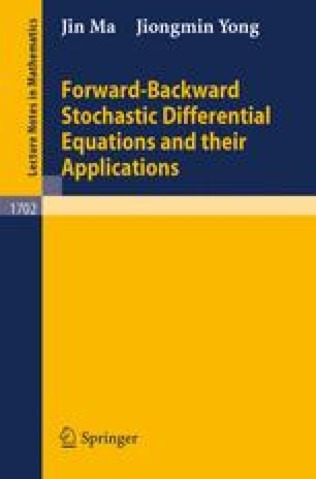
Forward-backward stochastic differential equations and their applications
This volume is a survey/monograph on the recently developed theory of forward-backward stochastic differential equations (FBSDEs). Basic techniques such as the method of optimal control, the "Four Step Scheme", and the method of continuation are presented in full. Related topics such as backward stochastic PDEs and many applications of FBSDEs are also discussed in detail. The volume is suitable for readers with basic knowledge of stochastic differential equations, and some exposure to the stochastic control theory and PDEs. It can be used for researchers and/or senior graduate students in the areas of probability, control theory, mathematical finance, and other related fields.
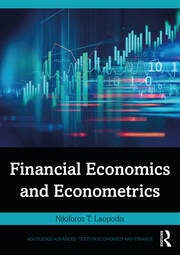
Financial economics and econometrics
Covers financial data and univariate models; asset returns; interest rates, yields and spreads; volatility and correlation; and corporate finance and policy. Each chapter begins with a theory in financial economics, followed by econometric methodologies which have been used to explore the theory. Next, the chapter presents empirical evidence and discusses seminal papers on the topic. Boxes offer insights on how an idea can be applied to other disciplines such as management, marketing and medicine, showing the relevance of the material beyond finance. Readers are supported with plenty of worked examples and intuitive explanations throughout the book, while key takeaways, ‘test your knowledge’ and ‘test your intuition’ features at the end of each chapter also aid student learning.

Essentials of Excel VBA, Python, and R Vol. I : Financial statistics and portfolio analysis
Teaches statistical analyses and research methods utilizing business case studies and financial data, with the applications of Excel VBA, Python and R. Each chapter engages the reader with sample data drawn from individual stocks, stock indices, options, and futures. Now in its second edition, it has been expanded into two volumes, each of which is devoted to specific parts of the business analytics curriculum. To reflect the current age of data science and machine learning, the used applications have been updated from Minitab and SAS to Python and R.

Esercizi di finanza matematica = Mathematical finance exercises
This is a collection of exercises that illustrates some fundamental aspects of Mathematical Finance, in particular the valuation of derivatives. It is aimed at students of master's degree courses, but can also be successfully used in first level degree courses, by students who have adequate mathematical training (degree courses in mathematics, engineering). The resolution of the exercises is addressed with the use of methods of both Probability Theory (stochastic processes) and Mathematical Analysis (Partial Derivative Equations).

Control Theory Tutorial : Basic Concepts Illustrated by Software Examples
Introduces the basic principles of control theory in a concise self-study guide. It complements the classic texts by emphasizing the simple conceptual unity of the subject. A novice can quickly see how and why the different parts fit together. The concepts build slowly and naturally one after another, until the reader soon has a view of the whole. Each concept is illustrated by detailed examples and graphics. The full software code for each example is available, providing the basis for experimenting with various assumptions, learning how to write programs for control analysis, and setting the stage for future research projects. The topics focus on robustness, design trade-offs, and optimality. Most of the book develops classical linear theory. The last part of the book considers robustness with respect to nonlinearity and explicitly nonlinear extensions, as well as advanced topics such as adaptive control and model predictive control.

Continuous time processes for finance : Switching, self-exciting, fractional and other recent dynamics
This book explores recent topics in quantitative finance with an emphasis on applications and calibration to time-series. This last aspect is often neglected in the existing mathematical finance literature while it is crucial for risk management. The first part of this book focuses on switching regime processes that allow to model economic cycles in financial markets. After a presentation of their mathematical features and applications to stocks and interest rates, the estimation with the Hamilton filter and Markov Chain Monte-Carlo algorithm (MCMC) is detailed. A second part focuses on self-excited processes for modeling the clustering of shocks in financial markets.
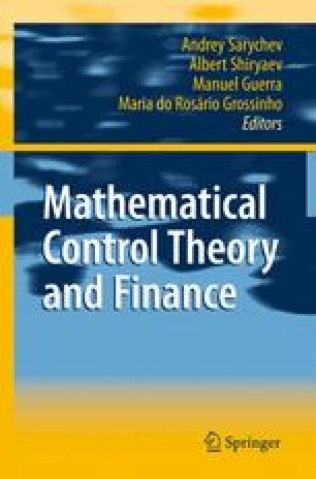
Mathematical Control Theory and Finance
This book highlights recent developments in mathematical control theory and its applications to finance. It presents a collection of original contributions by distinguished scholars, addressing a large spectrum of problems and techniques. Control theory provides a large set of theoretical and computational tools with applications in a wide range of fields, ranging from "pure" areas of mathematics up to applied sciences like finance. Stochastic optimal control is a well established and important tool of mathematical finance. Other branches of control theory have found comparatively less applications to financial problems, but the exchange of ideas and methods has intensified in recent years. This volume should contribute to establish bridges between these separate fields. The diversity of topics covered as well as the large array of techniques and ideas brought in to obtain the results make this volume a valuable resource for advanced students and researchers.
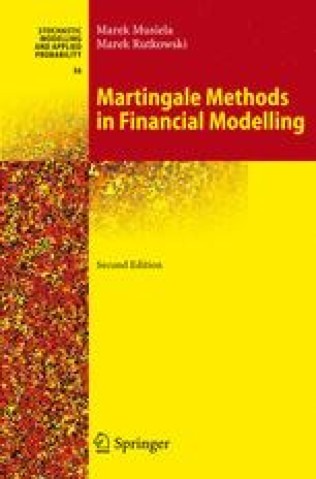
Martingale Methods in Financial Modelling
This book provides a comprehensive, self-contained and up-to-date treatment of the main topics in the theory of option pricing. The first part of the text starts with discrete-time models of financial markets, including the Cox-Ross-Rubinstein binomial model. The passage from discrete- to continuous-time models, done in the Black-Scholes model setting, assumes familiarity with basic ideas and results from stochastic calculus. However, an Appendix containing all the necessary results is included. This model setting is later generalized to cover standard and exotic options involving several assets and/or currencies. An outline of the general theory of arbitrage pricing is presented. The second part of the text is devoted to the term structure modelling and the pricing of interest-rate derivatives. The main emphasis is on models that can be made consistent with market pricing practice.
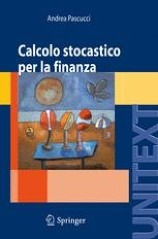
Calcolo stocastico per la finanza = Stochastic Calculation for Finance
Offers an introduction to the mathematical, probabilistic and numerical methods that are the basis of the models for the valuation of derivative instruments, such as options and futures, dealt with in modern financial markets. The book is aimed at readers with scientific training, wishing to develop skills in the field of stochastic calculus applied to finance.
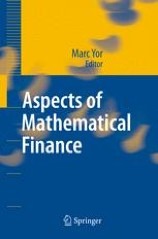
Aspects of Mathematical Finance
Considering the stupendous gain in importance, in the banking and insurance industries since the early 1990’s, of mathematical methodology, especially probabilistic methodology, it was a very natural idea for the French "Académie des Sciences" to propose a series of public lectures, accessible to an educated audience, to promote a wider understanding for some of the fundamental ideas, techniques and new tools of the financial industries. These lectures were given at the "Académie des Sciences" in Paris by internationally renowned experts in mathematical finance, and later written up for this volume which develops, in simple yet rigorous terms, some challenging topics such as risk measures, the notion of arbitrage, dynamic models involving fundamental stochastic processes like Brownian motion and Lévy processes.
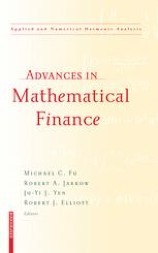
Advances in Mathematical Finance
This volume brings together a collection of chapters by some of the most distinguished researchers and practitioners in the fields of mathematical finance and financial engineering. Presenting state-of-the-art developments in theory and practice.
