



الصفحة 1
الصفحة 1
Open Quantum Systems II : The Markovian Approach
These books present in a self-contained way the mathematical theories involved in the modeling of such phenomena. They describe physically relevant models, develop their mathematical analysis and derive their physical implications. Volume II is dedicated to the Markovian formalism of classical and quantum open systems. A complete exposition of noise theory, Markov processes and stochastic differential equations, both in the classical and the quantum context, is provided. These mathematical tools are put into perspective with physical motivations and applications.
Open Quantum Systems I : The Hamiltonian Approach
These books present in a self-contained way the mathematical theories involved in the modeling of such phenomena. They describe physically relevant models, develop their mathematical analysis and derive their physical implications. This Volume, I the Hamiltonian description of quantum open systems is discussed. This includes an introduction to quantum statistical mechanics and its operator algebraic formulation, modular theory, spectral analysis and their applications to quantum dynamical systems.

Infinite Dimensional Analysis : A Hitchhiker's Guide
This new edition of The Hitchhiker’s Guide has bene?tted from the comments of many individuals, which have resulted in the addition of some new material, and the reorganization of some of the rest. The most obvious change is the creation of a separate Chapter 7 on convex analysis. Parts of this chapter appeared in elsewhere in the second edition, but much of it is new to the third edition. In particular, there is an expanded discussion of support points of convex sets, and a new section on subgradients of convex functions.

Hemodynamical Flows : Modeling, Analysis and Simulation
This book surveys research results on the physical and mathematical modeling, as well as the numerical simulation of complex fluid and structural mechanical processes occurring in the human blood circulation system. Topics treated include continuum mechanical description; choice of suitable liquid and wall models; mathematical analysis of coupled models; numerical methods for flow simulation; parameter identification and model calibration; fluid-solid interaction; mathematical analysis of piping systems; particle transport in channels and pipes; artificial boundary conditions, and many more.

Handbook of Materials Modeling
The first reference of its kind in the rapidly emerging field of computational approachs to materials research, this is a compendium of perspective-providing and topical articles written to inform students and non-specialists of the current status and capabilities of modelling and simulation. From the standpoint of methodology, the development follows a multiscale approach with emphasis on electronic-structure, atomistic, and mesoscale methods, as well as mathematical analysis and rate processes. Basic models are treated across traditional disciplines, not only in the discussion of methods but also in chapters on crystal defects, microstructure, fluids, polymers and soft matter. Written by authors who are actively participating in the current development, this collection of 150 articles has the breadth and depth to be a major contributor toward defining the field of computational materials. In addition, there are 40 commentaries by highly respected researchers, presenting various views that should interest the future generations of the community.

Handbook of Fractional Calculus for Engineering and Science
Provides reliable methods for solving fractional-order models in science and engineering. Contains efficient numerical methods and algorithms for engineering-related equations. Contains comparison of various methods for accuracy and validity. Demonstrates the applicability of fractional calculus in science and engineering. Examines qualitative as well as quantitative properties of solutions of various types of science- and engineering-related equations.

Geometric Qp Functions
This book documents the rich structure of the holomorphic Q functions which are geometric in the sense that they transform naturally under conformal mappings. Particular emphasis is placed on recent developments based on the interaction between geometric function/measure theory and other branches of mathematical analysis, including potential theory, complex variables, harmonic analysis, functional analysis, and operator theory." "Largely self-contained, this book will be an instructional and reference work for advanced courses and research in conformal analysis, geometry, or function spaces.

Functional Analysis and Evolution Equations : The Günter Lumer Volume
Günter Lumer was an outstanding mathematician whose work has great influence on the research community in mathematical analysis and evolution equations. He was at the origin of the breath-taking development the theory of semigroups saw after the pioneering book of Hille and Phillips of 1957. This volume contains invited contributions presenting the state of the art of these topics and reflecting the broad interests of Günter Lumer.

Fractional calculus—theory and applications
Fractional calculus has led to tremendous progress in various areas of science and mathematics. New definitions of fractional derivatives and integrals have been uncovered, extending their classical definitions in various ways. Moreover, rigorous analysis of the functional properties of these new definitions has been an active area of research in mathematical analysis. Systems considering differential equations with fractional-order operators have been investigated thoroughly from analytical and numerical points of view, and potential applications have been proposed for use in sciences and in technology. The purpose of this Special Issue is to serve as a specialized forum for the dissemination of recent progress in the theory of fractional calculus and its potential applications.

Extremum Problems for Eigenvalues of Elliptic Operators
Problems linking the shape of a domain or the coefficients of an elliptic operator to the sequence of its eigenvalues are among the most fascinating of mathematical analysis. In this book, we focus on extremal problems. For instance, we look for a domain which minimizes or maximizes a given eigenvalue of the Laplace operator with various boundary conditions and various geometric constraints. We also consider the case of functions of eigenvalues. We investigate similar questions for other elliptic operators, such as the Schrödinger operator, non homogeneous membranes, or the bi-Laplacian, and we look at optimal composites and optimal insulation problems in terms of eigenvalues.

Existence and Regularity Properties of the Integrated Density of States of Random Schrödinger Operators
The theory of random Schrödinger operators is devoted to the mathematical analysis of quantum mechanical Hamiltonians modeling disordered solids. Apart from its importance in physics, it is a multifaceted subject in its own right, drawing on ideas and methods from various mathematical disciplines like functional analysis, selfadjoint operators, PDE, stochastic processes and multiscale methods. The present text describes in detail a quantity encoding spectral features of random operators: the integrated density of states or spectral distribution function. Various approaches to the construction of the integrated density of states and the proof of its regularity properties are presented.

Esercizi di finanza matematica = Mathematical finance exercises
This is a collection of exercises that illustrates some fundamental aspects of Mathematical Finance, in particular the valuation of derivatives. It is aimed at students of master's degree courses, but can also be successfully used in first level degree courses, by students who have adequate mathematical training (degree courses in mathematics, engineering). The resolution of the exercises is addressed with the use of methods of both Probability Theory (stochastic processes) and Mathematical Analysis (Partial Derivative Equations).

Design of adaptive finite Element software : The finite element toolbox ALBERTA
During the last years, scientific computing has become an important research branch located between applied mathematics and applied sciences and engineering. Highly efficient numerical methods are based on adaptive methods, higher order discretizations, fast linear and non-linear iterative solvers, multi-level algorithms, etc. Such methods are integrated in the adaptive finite element software ALBERTA. It is a toolbox for the fast and flexible implementation of efficient software for real life applications, based on modern algorithms. ALBERTA also serves as an environment for improving existent, or developing new numerical methods in an interplay with mathematical analysis and it allows the direct integration of such new or improved methods in existing simulation software.
Cognitive engineering : A distributed approach to machine intelligence
Cognitive Engineering: A Distributed Approach to Machine Intelligence explores the design issues of intelligent engineering systems. Beginning with the foundations of psychological modeling of the human mind, the main emphasis is given to parallel and distributed realization of intelligent models for application in reasoning, learning, planning and multi-agent co-ordination problems. The last two chapters provide case studies on human-mood detection and control, and behavioral co-operation of mobile robots. This is the first comprehensive text of its kind, bridging the gap between Cognitive Science and Cognitive Systems Engineering. Each chapter includes plenty of numerical examples and exercises with sufficient hints, so that the reader can solve the exercises on their own. Computer simulations are also included in most chapters to give a clear idea about the application of the algorithms undertaken in the book. In addition, mathematical analysis on convergence and stability of the neuro-fuzzy models will enable the reader to pursue their research career in cognitive engineering.
Mathematical Methods in Time Series Analysis and Digital Image Processing
The aim of this volume is to bring together research directions in theoretical signal and imaging processing developed rather independently in electrical engineering, theoretical physics, mathematics and the computer sciences. In particular, mathematically justified algorithms and methods, the mathematical analysis of these algorithms, and methods as well as the investigation of connections between methods from time series analysis and image processing are reviewed. An interdisciplinary comparison of these methods, drawing upon common sets of test problems from medicine and geophysical/enviromental sciences, is also addressed.
Mathematical Analysis I
The purpose of the volume is to provide a support for a first course in Mathematical Analysis, along the lines of the recent Programme Specifications for mathematical teaching in European universities. The contents are organised to appeal especially to Engineering, Physics and Computer Science students, all areas in which mathematical tools play a crucial role. Basic notions and methods of differential and integral calculus for functions of one real variable are presented in a manner that elicits critical reading and prompts a hands-on approach to concrete applications. The layout has a specifically-designed modular nature, allowing the instructor to make flexible didactical choices when planning an introductory lecture course. The book may in fact be employed at three levels of depth. At the elementary level the student is supposed to grasp the very essential ideas and familiarise with the corresponding key techniques.
Mathematical Analysis : Linear and Metric Structures and Continuity
The book is divided into three parts. The first part introduces the basic ideas of linear and metric spaces, including the Jordan canonical form of matrices and the spectral theorem for self-adjoint and normal operators. The second part examines the role of general topology in the context of metric spaces and includes the notions of homotopy and degree. The third and final part is a discussion on Banach spaces of continuous functions, Hilbert spaces and the spectral theory of compact operators.
Lenses and Waves : Christiaan Huygens and the Mathematical Science of Optics in the Seventeenth Century
this book offers the first account of the development of Huygens’ mathematical analysis of lenses and telescopes and its significance for the origin of the wave theory of light. As Huygens applied his mathematical proficiency to practical issues pertaining to telescopes – including trying to design a perfect telescope by means of mathematical theory – his dioptrics is significant for our understanding of seventeenth-century relations between theory and practice. With this full account of Huygens’ optics, this book sheds new light on the history of seventeenth-century optics and the rise of the new mathematical sciences, as well as Huygens’ oeuvre as a whole. Students of the history of optics, of early mathematical physics, and the Scientific Revolution, will find this book enlightening.
Analysis and Simulation of Contact Problems
Contact mechanics was and is an important branch in mechanics which covers a broad field of theoretical, numerical and experimental investigations. In this carefully edited book the reader will obtain a state-of-the-art overview on formulation, mathematical analysis and numerical solution procedures of contact problems. The contributions collected in this volume summarize the lectures presented during the 4th Contact Mechanics International Symposium (CMIS) held in Hannover, Germany, 2005, by leading scientists in the area of contact mechanics.
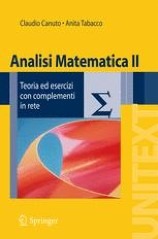
Analisi matematica II : Teoria ed esercizi con complementi in rete = Mathematical analysis 2 : Theory and exercises with online complements
Intends to support a second teaching of Mathematical Analysis according to the principles of the new Didactic Regulations. It is especially designed for those study courses (such as Engineering, Computer Science, Physics) in which the mathematical tool is a significant part of the training. The fundamental concepts and methods of the differential and integral calculus of several variables, the series of functions and the ordinary differential equations are presented with the primary objective of training the student in their operational but critical use. The didactic setting of the text follows the one used for ANALYSIS I. The method of presentation of the arguments allows a flexible and modular use of the text, in order to respond to the various possible didactic choices in the organization of a Mathematical Analysis course.
