



الصفحة 1
الصفحة 1

Modern Ferrite Technology
odern Ferrite Technology ; 2nd ed. offers the readers an expert overview of the latest ferrite advances as well as their applications in electronic components. This volume develops the interplay among material properties, component specification and device requirements using ferrites. Throughout, emphasis is placed on practical technological concerns as opposed to mathematical and physical aspects of the subject. The book traces the origin of the magnetic effect in ferrites from the level of the simplest particle and then increases the scope to include larger hierarchies. From the desired magnetic properties, the author deduces the physical and chemical material parameters, taking into consideration major chemistry, impurity levels, ceramic microstructures and grain boundary effects. He then discusses the processing conditions and associated conditions required for implementation. In addition to conventional ceramic techniques, he describes non-conventional methods such as co-precipitation, co-spray roasting and single crystal growth.

Models for Polymeric and Anisotropic Liquids
Models should be as simple as possible, but no simpler. For the physics of polymeric liquids, whose relevant lengths and time scales are out of reach for first principles calculations, this means that we have to choose a minimum set of sufficiently detailed descriptors such as architecture (linear, ring, branched), connectivity, semiflexibility, stretchability, excluded volume, and hydrodynamic interaction. These 'universal' fluids allow the prediction of material properties under external flow- or electrodynamic fields, the results being expressed in terms of reference units, specific for any particular chosen material. This book provides an introduction to the kinetic theory and computer simulation methods needed to handle these models and to interpret the results. Also included are a number of sample applications and computer codes.

Mineral Trioxide Aggregate in Dentistry : From Preparation to Application
Concisely presents information on diverse aspects of MTA and its use with a view to making it more widely available to clinicians and researchers. The topics covered include the development of MTA and its introduction into clinical dentistry, its chemical composition and setting characteristics, manipulation and placement, material properties, reactivity and the influence of environmental factors.

Hydrogen bonded polymers
Control of polymeric structure is among the most important endeavours of modern macromolecular science. In particular, tailoring the positioning and strength of intermolecular forces within macromolecules by synthetic me- odsandthusgaining structuralcontrolover the'nalpolymeric materials has become feasible, resulting in the ?eld of supramolecular polymer science. - sides other intermolecular forces, hydrogen bonds are unique intermolecular forces enabling the tuning of material properties via self-assembly processes, The important contribution of hydrogen bondstotheareaofsupramole- lar polymer chemistry is de'nitely outstanding, most of all since the potency of hydrogen-bonding systems has been found to be unique in relation to other supramolecular interactions.

High Temperature Mechanical Behavior of Ceramic-Matrix Composites
High Temperature Mechanical Behavior of Ceramic-Matrix Composites examines the behavior of CMCs at elevated temperature—outlining the latest developments in the field and presenting the results of recent research on different CMC characteristics, material properties, damage states, and temperatures. This up-to-date resource investigates the high-temperature behavior of CMCs in relation to first matrix cracking, matrix multiple cracking, tensile damage and fracture, fatigue hysteresis loops, stress-rupture, vibration damping, and more.

Gallium Nitride Electronics
Gallium Nitride Electronics covers developments in III-N semiconductor-based electronics with a focus on high-power and high-speed RF applications. Material properties of III-N semiconductors and substrates; the state-of-the-art of devices and circuits, epitaxial growth, device technology, modelling and characterization; and circuit examples are discussed. The book concludes with device reliability aspects and an overview of integration and packaging. This comprehensive monograph and tutorial is based on more than a decade of research on materials, devices, and circuits.

Fiber Concrete : In Construction
Helps the user to correctly use fiber-reinforced concrete as a building material in accordance with its properties in order to create a long-lasting building for the client at low cost. Fiber-reinforced concrete as an extension of concrete offers considerable advantages for building practice, which, based on the material properties, enable a very long service life.Fiber-reinforced concrete is particularly suitable for an aggressive environment such as salt exposure, since corrosion can be completely avoided. Particular attention is also paid to the shrinkage cracks that occur in the concrete and how they can be and how these can be avoided when using fibers.

Ferroelectric Thin Films : Basic Properties and Device Physics for Memory Applications
Ferroelectric thin films continue to attract much attention due to their developing, diverse applications in memory devices, FeRAM, infrared sensors, piezoelectric sensors and actuators. This book, aimed at students, researchers and developers, gives detailed information about the basic properties of these materials and the associated device physics. All authors are acknowledged experts in the field.

Design of structural elements : Concrete, steelwork, masonry and timber designs to Eurocodes
Topics include the philosophy of design, sustainable development, basic structural concepts, and material properties. After an overview of structural design, the book contains self-contained chapters with numerous diagrams and worked examples on design in reinforced concrete, structural steelwork and steel/concrete composites, masonry and timber based on EN 1990-1997. Elements considered cover reinforced concrete and composite floors, isolated foundation, cantilever retaining wall, load-bearing and panel walls, stud wall and connections.

Dental Composite Materials for Direct Restorations
Covers both basic scientific and clinically relevant aspects of dental composite materials with a view to meeting the needs of researchers and practitioners. Following an introduction on their development, the composition of contemporary composites is analyzed. A chapter on polymerization explains the setting reactions and light sources available for light-cured composites. The quality of monomer-to-polymer conversion is a key factor for material properties. Polymerization shrinkage along with the associated stress remains among the most challenging issues regarding composite restorations. A new classification of dental composites is proposed to offer more clinically relevant ways of differentiating between commercially available materials.

Material Properties under Intensive Dynamic Loading
Understanding the physical and thermomechanical response of materials subjected to intensive dynamic loading is a challenge of great significance in engineering today. This volume assumes the task of gathering both experimental and diagnostic methods in one place, since not much information has been previously disseminated in the scientific literature. This book will thus be an invaluable companion for both the seasoned practioner as well as for the novice entering the field of experimental shock physics.

Local-Moment Ferromagnets : Unique Properties for Modern Applications
Some ferromagnetic materials with localized magnetic moments have become a hot topic in modern solid-state physics because of their potential applications, e.g. in spintronic devices. The magnetic systems of interest comprise diluted magnetic semiconductors and half-metallic ferromagnets. Like conventional concentrated local-moment systems, they are characterized by an exchange interaction between localized magnetic moments and quasi-free charge carriers. The current research on local-moment ferromagnetism is reviewed in a tutorial style by leading experts in this field. Experimentalists present the latest approaches to characterize the unique material properties, and theoreticians propose definitive ideas to explain the observed phenomena. Students and researches alike will benefit from this status report.

Learning from nature how to design new implantable biomaterialsis : From biomineralization fundamentals to biomimetic materials and processing routes ; Proceedings of the NATO Advanced Study Institute, held in Alvor, Algarve, Portugal, 13-24 October 2003
The demands upon the material properties largely depend on the site of application and the function it has to restore. Ideally, a replacement material should mimic the living tissue from a mechanical, chemical, biological and functional point of view.
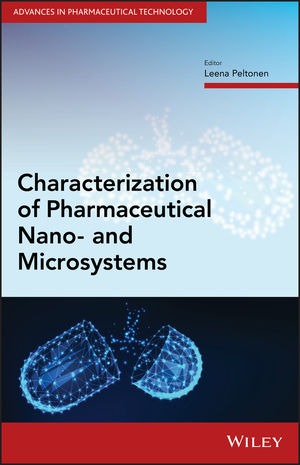
Characterization of Pharmaceutical Nano- and Microsystems
Offers readers a full understanding of the basic physicochemical characteristics, material properties and differences between micro- and nanosystems. It explains how and why greater experience and more reliable measurement techniques are required as particle size shrinks, and the measured phenomena grow weaker.

Bio-based Building Skin
This book provides a compendium of material properties, demonstrates several successful examples of bio-based materials’ application in building facades, and offers ideas for new designs and novel solutions. It features a state-of-the-art review, addresses the latest trends in material selection, assembling systems, and innovative functions of facades in detail. Selected case studies on buildings from diverse locations are subsequently presented to demonstrate the successful implementation of various biomaterial solutions, which defines unique architectural styles and building functions. The structures, morphologies and aesthetic impressions related to bio-based building facades are discussed from the perspective of art and innovation; essential factors influencing the performance of materials with respect to functionality and safety are also presented. Special emphasis is placed on assessing the performance of a given facade throughout the service life of a building, and after its end.
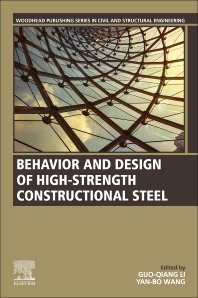
Behavior and design of high-strength constructional steel
Presents readers with extensive information on the behavior of high-strength constructional steels, providing them with the confidence they need to use them in a safe and economic manner to design and construct steel structures. The book includes detailed discussions on the mechanical properties of HHS while explaining the latest progress in research and design guidelines, including material properties at ambient and elevated temperatures. In addition, the book explains the behavior of elementary members subject to different types of loads and load combinations, and those that are integral to the design of bolted and welded connections.
