



الصفحة 1
الصفحة 1
Nonlinear Dynamics of Structures Under Extreme Transient Loads
Covers model building for different engineering structures and provides detailed presentations of extreme loading conditions. A number of illustrations are given quantifying; a plane crash or explosion induced impact loading, the effects of strong earthquake motion, and the impact and long-duration effects of strong stormy winds—along with a relevant framework for using modern computational tools. The book considers the levels of reserve in existing structures, and ways of reducing the negative impact of high-risk situations by employing sounder design procedures.

Nexus Network Journal 9,2 : Architecture and Mathematics
This volume is dedicated to "Mechanics in Architecture", that is, the science of structural mechanics, including the behaviour of structures, internal forces, and deformation, as well as the development of new structural systems to resist thrusts as a result of new architectural forms. It is a field of enquiry that examines a particular aspect of the relationships between architecture and the mathematical sciences. Some of the papers in this issue were presented at the Nexus 2006 conference during a special session dedicated to mechanics. Other research papers focus on an eighteenth-century Belgian pyramid, aspects of "fractal" architecture, and properties of a family of irrational values. The issue also includes a description and evaluation of a university-level course in architecture and mathematics, Rachel Fletcher's Geometer's Angle column, and book reviews.

Mix-Design and Application of Hydraulic Grouts for Masonry Strengthening
Provides guidance for the rational design and application of hydraulic grouts, based on a series of specific data (type of masonry, voids' width, targeted strength and durability level, available materials, etc.). To this end, the basic characteristics of a grout, i.e. its injectability (penetrability, fluidity and stability), its strength and durability, are taken into account by means of rational models and quantified expressions of all grout-design parameters. Thus, a holistic, rational mix design methodology for optimization of grout composition is given, permitting the preliminary design of grouts, without having to resort to multiple tests in advance.

Historic construction and conservation : Materials, Systems and Damage
Takes a modern approach to the meaning of a heritage structure and its conservation. The historical evolution of conservation is briefly addressed, considering prominent individuals and cases; along with the history of construction, focusing on materials and related structural elements, with insight on the sizing rules adopted by masons. This explains structural decisions made during the construction process and allows comparison of scientific theories from the 18th century to modern understanding of limit analysis. Damage and collapse mechanisms for masonry construction, as the most widespread structural form for historical buildings, is described. Excess permanent loading and settlement is differentiated from environmental and anthropogenic actions such as earthquake or incorrect intervention.

Fundamentals of building construction : Materials and methods
Reference for thousands of professionals and students of architecture, engineering, and construction technology for over thirty years. The materials and methods described in this new seventh edition have been thoroughly updated to reflect the latest advancements in the industry. Carefully selected and logically arranged topics-ranging from basic building methods to the principles of structure and enclosure-help readers gain a working knowledge of the field in an enjoyable, easy-to-understand manner. All major construction systems, including light wood frame, mass timber, masonry, steel frame, light gauge steel, and reinforced concrete construction, are addressed. Now in its seventh edition, Fundamentals of building construction contains substantial revisions and updates.

Fracture and Failure of Natural Building Stones : Applications in the Restoration of Ancient Monuments
The book consists of invited papers written by leading experts in the field. It contains original contributions concerning the latest developments in the fracture and failure of the natural building stones and their application in the restoration of ancient monuments. It covers a wide range of subjects - cluding purely mechanical aspects, physico-chemical approaches, appli- tions and case studies. The papers are arranged in two parts with a total of nine chapters. Part I is devoted to purely mechanical and structural aspects and applications, while Part II is devoted to the physico-chemical and environmental aspects including thermal effects.

Design of structural elements : Concrete, steelwork, masonry and timber designs to Eurocodes
Topics include the philosophy of design, sustainable development, basic structural concepts, and material properties. After an overview of structural design, the book contains self-contained chapters with numerous diagrams and worked examples on design in reinforced concrete, structural steelwork and steel/concrete composites, masonry and timber based on EN 1990-1997. Elements considered cover reinforced concrete and composite floors, isolated foundation, cantilever retaining wall, load-bearing and panel walls, stud wall and connections.

Construction materials, methods, and techniques : Building for a sustainable future
Covers both traditional and contemporary materials, current industry standards and new and emerging technologies. The only text organized according to the Construction Specifications Institute (CSI) MasterFormat (R) standards, construction materials, methods and techniques: building for a sustainable future, fifth edition, features a reader-friendly style and logical structure, which follows the construction process step-by-step from project inception to completion. The new edition provides up-to-date coverage of dramatic changes underway in the construction industry, including advances in pre-fabricated construction; increased use of drones, robotics and artificial intelligence; net-zero buildings and lean construction. You'll learn about key current industry developments and standards, as well as latest relevant building codes, all presented within a dynamic, richly illustrated new design.

Construction materials : Their nature and behaviour
Provides an understanding of materials’ behaviour through knowledge of their chemical and physical structure. It covers the main classes of construction materials: metals, concrete, other ceramics (including bricks and masonry), polymers, fibre composites, bituminous materials, timber, and glass.

Computational Modelling of Concrete and Concrete Structures
Serves as an important reference for both academics and professionals, stimulating new research directions in the field of computational modelling of concrete and its application to the analysis of concrete structures.
Masonry Constructions : Mechanical Models and Numerical Applications
This monograph firstly provides a detailed description of the constitutive equation of masonry-like materials, clearly setting out its most important features. It then goes on to provide a numerical procedure to solve the equilibrium problem of masonry solids.
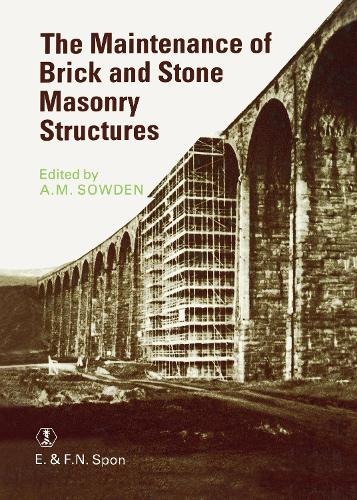
Maintenance of brick and stone masonry structures
Deals with all the tasks related to brick and stone masonry structures, from the initial identification of defects and their diagnosis to their treatment and monitoring of its cost-effectiveness.
IUTAM Symposium on Multiscale Modelling of Damage and Fracture Processes in Composite Materials ; Proceedings of the IUTAM Symposium held in Kazimierz Dolny, Poland, 23-27 May 2005
This volume constitutes the Proceedings of the IUTAM Symposium. The main aim of the Symposium was to discuss the basic principles of damage growth and fracture processes in different types of composites: ceramic, polymer and metal matrix composites, cement and bituminous composites and wood. Nowadays, it is widely recognized that important macroscopic properties like the macroscopic stiffness and strength, are governed by processes that occur at one to several scales below the level of observation starting from nanoscale.

IUTAM Symposium on Computational Methods in Contact Mechanics ; Proceedings of the IUTAM Symposium held in Hannover, Germany, November 5-8, 2006
This book contains the proceedings of the IUTAM Symposium held in Hanover, Germany, in November 2006. Coverage includes new mathematical techniques like multi-level approaches, new discretization techniques like the mortar-method, advanced applications of unilateral contact to masonry structures, decohesion analysis and tractive rolling of tires. It provides a good overview of modern techniques and state-of-the-art discretizations schemes applied in contact mechanics. Coverage will stimulate future collaboration in science related to computational contact mechanics and in the organization of minisymposia and workshops in the area contact mechanics.
Basics Masonry Construction - Basics
Masonry construction is usually the top priority in the constructive exercises during the course. The basic principles of dimensions, construction and component joining are developed using simple masonry structures. Topics: Material and dimensions Building physics and load-bearing properties Typical associations Components Execution of masonry
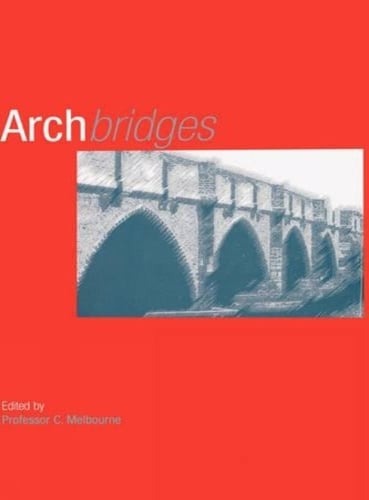
Arch bridges : Proceedings of the first international conference on arch bridges held at Bolton, UK on 3–6 September 1995
In the twentieth century bridge engineers have seen many changes. Advances in technology, materials and engineers understanding of structural behaviour and methods of analysis has presented opportunities for innovation and have led to increasingly sophisticated solutions to the basic problem of providing a bridge over an obstacle. However, despite these innovative technological changes, the masonry arch bridge has shown itself to be a durable, cost-effective structure, tolerant of its modern environment and out-performing many of its competitors.

Appraisal and repair of of building structures
This book is a practical guide to the detection and remedy of faults in claddings and fixings on buildings. It sets out the problems involved in common cladding systems for buildings, and relates these problems to all the materials used: stone, masonry, concrete and glass-reinforced composites.
Acoustic Emission Testing : Basics for Research - Applications in Civil Engineering
Covers all levels from the description of AE basics for AE beginners (level of a student) to sophisticated AE algorithms and applications to real large-scale structures as well as the observation of the cracking process in laboratory specimen to study fracture processes.
A Rosicrucian Utopia in Eighteenth-Century Russia : The Masonic Circle of N.I. Novikov
The author undertakes an investigation into the history of Russian Freemasonry that has not been attempted previously. Her premise is that the Russian Enlightenment shows peculiar features, which prevent the application of the interpretative framework commonly used for the history of western thought. The author deals with the development of early Russian masonry, the formation of the Novikov circle in Moscow, the ‘programme’ of Rosicrucianism and the character of its Russian variant and, finally, the clash between the Rosicrucians and the State. The author concludes that the defenders of the Ancien Régime were not wrong. In fact the democratic behaviour, the critical attitude, the practice of participation, the freedom of thought, the tolerance for the diversity, the search for a direct communication with the divinity.
