



الصفحة 1
الصفحة 1
NASH and Nutritional Therapy
This collection of research and clinical findings on nonalcoholic steatchepatitis (NASH) and nutritional therapy contains significant new findings in several fields . As NASH frequently causes liver cirrhosis, the nutritional aspects of its treatment are discussed . Other areas covered include nonalcoholic fatty liver, the role of leptin in the pathogenesis of NASH, restricted diets and exercise therapy, mammalian targets of the peptide rapamycin, and genetic factors influencing the development of NASH.

Molecular Mechanisms of Parasite Invasion
All of the parasitic organisms highlighted in this new book represent medically important human pathogens that contribute significantly to the global burden of disease. As such there is intense interest in understanding the molecular basis of infection by these pathogens—not only with regard to their clinical relevance but also the fascinating biology they reveal. For most of the parasites discussed here the ability to penetrate biological barriers and/or to establish intracellular residence is critical to survival of the pathogen in the mammalian hosts. For other parasites, a tissue invasive phenotype is a key virulence determinant. In the ensuing 18 chapters, select members of this diverse set of protozoan parasites, as well as some examples of the extremely reduced fungal parasites classified as Microsporidia, are discussed within the context of the fascinating molecular strategies employed by these organisms to migrate across biological barriers and to establish residence within target host cells.

Iron metabolism : Methods and protocols
Explores classical and cutting-edge methods optimized and validated to analyze various aspects of iron metabolism, from in vitro to multi-organ level. Opening with a section on basic iron metabolism methods, the book continues with methods applicable to a variety of systems, ranging from bacteria to cultured mammalian cells and tissues, with a focus on cellular heme and iron-sulfur cluster species, as well as mitochondrial iron and its derivatives. Written for the highly successful Methods in Molecular Biology series, chapters include introductions to their respective topics, lists of the necessary materials and reagents, step-by-step and readily reproducible laboratory protocols, and tips on troubleshooting and avoiding known pitfalls.

Innervation of the Mammalian Esophagus
The esophagus is a relatively simple though vital organ. Beyond its role of propelling food from the pharynx to the stomach by a propulsive contraction wave representing the esophageal phase of deglutition, it is more recognized as a sensory organ from which a variety of respiratory and cardiovascular reflexes can be triggered.

Innate Immunity of Plants, Animals, and Humans
This book wants to give an overview of our current knowledge about the innate immune system of plants, animals and humans. It not only covers the innate immune mechanisms and responses of so diverse organisms such as plants, Cnidaria, Drosophila, urochordates and zebrafish, but also the major receptor systems in mammalians and humans as well as the central defense mechanisms, antimicrobial peptides and the complement system.

Heterologous protein production in CHO cells : Methods and protocols
Explores the use of Chinese hamster ovary (CHO) cells in the production of therapeutic protein products. Beyond updates on earlier methodologies, the book also delves into the genetic manipulation of CHO cells for recombinant protein production, analysis of CHO cells using proteomic and metabolomic approaches, as well as methods for the characterization of recombinant protein products, such as glycosylation and host cell protein analysis.

Genetic Engineering
Genetic Engineering: Principles and Methods presents state-of-the-art discussions in modern genetics and genetic engineering. Recent volumes have covered gene therapy research, genetic mapping, plant science and technology, transport protein biochemistry, and viral vectors in gene therapy, among many other topics.

Factors Influencing Mammalian Kidney Development : Implications for Health in Adult Life
In this monograph the authors have emphasized a number of important concepts in mammalian kidney development. Emphasis has been put on methodology so that the reader can understand how certain results or conclusions were reached and what the optimal methods for reliable results to be obtained are.

Endocrinology : Basic and Clinical Principles
For this new edition of Conn & Melmed's Endocrinology: Basic and Clinical Principles, a panel of distinguished scientists and clinicians has completely rewritten every chapter to reflect the latest advances in our understanding of the endocrine system. Maintaining the original goal of the first edition to integrate the basic science of endocrinology with its physiological and clinical principles, the authors have succinctly summarized in 450 pages the latest findings on hormone secretion and hormone action, as well as all of the most recent insights into the physiology and pathophysiology of hormonal disorders. Coverage extends across the entire spectrum of endocrinology-from mammalian cells, plants, and insects to animal models and human diseases-with much increased coverage of diabetes and metabolism. Highlights include cutting-edge discussions of appetite disorders, obesity, reproductive failure, control of thyroid function, hormone action in humans and the lower species, and the mechanisms subserving hormone secretion.

DNA Methylation : Basic Mechanisms
The structural and functional importance of the correct patterns of DNA methylation in all parts of a mammalian genome is not well understood. The stability, inheritability, and developmental flexibility of these patterns point to a major role that these patterns appear to play in determining structure and function of the genome.

Dendritic Neurotransmitter Release
This book presents recent developments in the neurophysiology of dendritic release of several chemical classes of transmitters in a number of different areas of the mammalian central nervous system. Once released from a neuron, these substances can act as neurotransmitters and/or neuromodulators, to autoregulate the original neuron, its synaptic inputs, and adjacent cells or, by volume transmission, to affect distant cells.
Mammalian Subventricular Zones : Their Roles in Brain Development, Cell Replacement, and Disease
This text provides a comprehensive summary of research and findings that have lead to the current understanding of the subventricular zones. It provides an overview of the roles of subventricular zones in normal development and in disease and a foundation from which current and future studies can be evaluated.
Mammalian Evolutionary Morphology : A Tribute to Frederick S. Szalay
This volume acknowledges and celebrates the contributions of Dr. Frederick S. Szalay to the field of Mammalian Evolutionary Morphology. Professor Szalay has published about 200 articles, four monographs, and six books on this subject. Throughout his career Professor Szalay has been a strong advocate for biologically and evolutionarily meaningful character analysis. In his view, this can be accomplished only through an integrated strategy of functional, adaptational, and historical analysis. Dr. Szalay worked on several different mammalian groups during his career, and the contributions to this volume reflect his broad perspective. Chapters focus on Primates, a group to which Professor Szalay dedicated much of his career. However, other mammalian groups on which he conducted a significant amount of research, such as marsupials and xenarthrans, are also covered in the volume.
Mammalian and Avian Transgenesis : New Approaches
Mammalian and Avian Transgenesis presents a collection of novel methods for the production of a wide range of transgenic animals. The manual focuses largely on mice, but also contains protocols for successful transgenesis in rats, cows, pigs and birds. The manual provides detailed, step-by-step protocols covering all aspects of the production of transgenic animals, including the use of lentiviral vectors in gene transfer, intracytoplasmic sperm injection, nuclear transfer, large insert transgenesis, conditional gene expression systems, the use of reporter genes in transgenesis and transgenesis in large animals and birds. The text is supplemented by superb color photos. While the focus is on newly established techniques, the fundamental methods of transgenesis are also covered for those new to the field. Thus this manual is perfectly suited for those wishing to adopt new technologies in transgenesis.
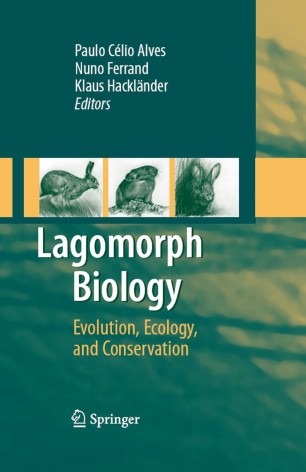
Lagomorph Biology : Evolution, Ecology, and Conservation
Lagomorphs are a mammalian order which includes rabbits, hares and pikas. They are distributed throughout the world and are of both scientific and public interest as they are classified between endangered and pest species. In addition, some have a high economic value as important game species. In the last few decades, a huge amount of information was made available to the scientific community and resulted in remarkable advances on all aspects of Lagomorph biology. However, this information is dispersed in multiple scientific and non-scientific journals. This book provides an updated synthesis of the current knowledge on Lagomorph biology.

Kidney complications & transplantation
Kidney diseases are worldwide public health problems with a high cost and increasing incidence. By revealing the genetic and cellular mechanism behind mammalian kidney development, better diagnostic methods and novel therapies can be expected to be developed. The mammalian kidney is a typical organ that develops on the basis of sequential and reciprocal cell and tissue interactions. Pyelonephritis, Glomerulonephritis, Kidney stones, Nephrotic syndrome, and Acute or chronic kidney failure are the most complications in the kidney kingdom, so that living kidney transplantation has become the preferred treatment for those patients who can’t have the powerful capacity of the kidney function, and here it has a very rejection risk in the first month and we can controlled in this situation with long term immunosuppressant therapy involved in the post-transplantation protocol.
Comparative Placentation : Structures, Functions and Evolution
Science produces fascinating puzzles: why is there such a range of placental structures when other mammalian organs are so structurally uniform ? Why and how did the different placental structures evolve ? Comparative placental studies can facilitate the identification of the common factors in placental growth, differentiation and function and their relevance to possible evolutionary pathways. Comparative Placentation is the only book presenting up-to-date data illustrating the great variety of structure but uniform function of vertebrate placentas from fish to man. This information is essential for selection of suitable models to investigate particular practical problems of impaired or anomalous growth in human and animal placentation. The unique collection of the best light and electron micrographs from the last thirtyfive years which precisely illustrate the structural range in each taxon, make the book the most authoritative publication in this field and a vital source of information for anyone interested on reproductive physiology, anatomy and medicine.
Cell-Cell Channels
The biological sciences are dominated by the idea that cells are the functionally autonomous, physically separated, discrete units of life. This concept was propounded in the 19th century by discoveries of the cellular structuring of both plants and animals. Moreover, the ap parent autonomy of unicellular eukaryotes, as well as the cellular basis of the mammalian brain (an organ whose anatomy for a long while defied attempts to validate the idea of the cellular nature of its neurons), seemed to provide the final conclusive evidence for the completeness of *cell theory', a theory which has persisted in an almost dogmatic form up to the present day. However, it is very obvious that there are numerous observations which indicate that it is not the cells which serve as the basic units of biological life but that this property falls to some other, subcellular assemblage. To deal with this intricate problem concerning the fundamental unit of living matter, we proposed the so-called Cell Body concept which, in fact, devel ops an exceedingly original idea proposed by Julius Sachs at the end of the 19th century. In the case of eukaryotic cells, DNA-enriched nuclei are intimately associated with a microtubular cytoskeleton. In this configuration—as a Cell Body—these two items comprise the fundamental functional and struc tural unit of eukaryotic living matter. The Cell Body seems to be inherent to all cells in all organisms.
Cell Culture Engineering
Many patients suffering with life-threatening diseases or chronic dysfunctions, which were medically untreatable not long ago, can attest to the wonder these drugs have achieved. Although the first generation of p- tein therapeutics was produced in recombinant Escherichia coli, most recent products use mammalian cells as production hosts. Not long after the first p- duction of recombinant proteins in E. coli, it was realized that the complex tasks of most post-translational modifications on proteins could only be efficiently carried out in mammalian cells.
Bioactive components of milk
Of all food products dairy foods have the most potential concerning functional foods. Therefore, there is a tremendous amount of interest in value-added milk products and the identification of components in food which have health benefits. Bioactive Components of Milk provides an overview of these derived components and their diverse activities including: the stimulation of beneficial microflora, alerting the immune system to the presence of potential pathogens and allergens, binding and eliminating toxins, etc. The book is divided into four parts. The first part focuses on bioactive milk lipid components, which very widely among mammalian species. The second part describes different aspects of biological active colostrums and milk proteins and their derivatives, with special concern on species specific effects. The third part reviews the production of recombinant human proteins in the milk of livestock animals - including ethical issues - and the aims of altering milk composition for the benefit of both the animals themselves and the consumers. The final part focuses on the influence of ruminants nutrition on the biological activity of milk.
