



الصفحة 1
الصفحة 1

Nutraceuticals and bone health
Here is an informative volume on the importance of nutraceuticals and herbal remedies for bone health. It explains the probable mechanisms of nutraceuticals for the prevention, treatment, and management of bone-related diseases as well as their curable effects on bone injuries. The volume covers the progression and development of bones, which is a multifaceted process that requires an endless and ample supply of nutrients, such as calcium, phosphorus, potassium, protein, vitamin D, magnesium, and fluoride. The book delves into the beneficial effects of nutraceuticals on overall bone health and for the treatment of bone disorders such as osteoporosis, bone fractures, scoliosis and related complications, rheumatoid arthritis, Paget’s disease, bursitis, gout, and carpal tunnel syndrome. It also addresses the use of nutraceuticals for inflammatory deformities and rickets.

New Perspectives in Magnesium Research : Nutrition and Health
New Perspectives in Magnesium Research is essential reading for researchers in magnesium and calcium field, nutrition, and specialists in many areas (cardiologists, neurologists, orthopeadic specialists etc.)

New Carbon Based Materials for Electrochemical Energy Storage Systems : Batteries, Supercapacitors and Fuel Cells
This NATO-ARW volume contains a diverse collection of papers addressing the role of carbon in some key electrochemical systems, both conventional and emerging. These papers discuss the latest issues associated with development, synthesis, characterization and use of new advanced carbonaceous materials for electrochemical energy storage. Such systems include: metal-air primary and rechargeable batteries, fuel cells, supercapacitors, cathodes and anodes of lithium-ion and lithium polymer rechargeable batteries, as well as nanocarbon materials of the future.

Nanoscale Devices - Fundamentals and Applications
This book contains a collection of papers giving insight into the fundamentals and applications of nanoscale devices. The main focus is on the synthesis and characterization of nanoscale magnetic materials, the fundamental physics and materials aspects of solid-state nanostructures, the development of novel device concepts and design principles for nanoscale devices, as well as on applications in electronics with special emphasis on defence against the threat of terrorism.

Frontiers in Superconducting Materials
Frontiers in Superconducting Materials gives a state-of-the-art report of the most important topics of the current research in superconductive materials and related phenomena. It comprises 30 chapters written by renowned international experts in the field. It is of central interest to researchers and specialists in Physics and Materials Science, both in academic and industrial research, as well as advanced students. It also addresses electronic and electrical engineers. Even non-specialists interested in superconductivity might find some useful answers.
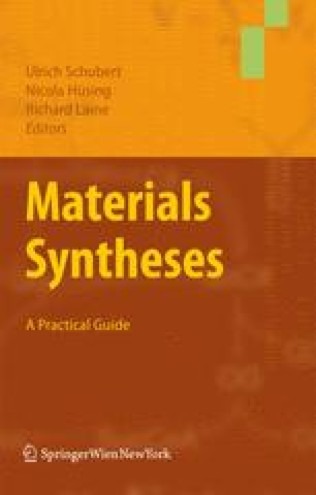
Materials Syntheses : A Practical Guide
Materials syntheses are generally more complex than syntheses of inorganic or organic compounds, and specific characterization methods play a more important role. Materials synthesis protocols often suffer from unclarities, irreproducibility, lack in detail and lack in standards. The need to change this situation is the main motivation for this book. A number of detailed protocols has been collected, ranging from organic polymers to carbonaceous and ceramic materials, from gels to porous and layered materials and from powders and nanoparticles to films. Preparation methods include intercalation and flux methods, sol-gel processing, templating methods for porous materials, sonochemistry or spray pyrolysis.
Magnesium Technology : Metallurgy, Design Data, Applications
Magnesium, with a density of 1.74 g/cm², is the lightest structural metal and magnesium are increasingly chosen for weight-critical applications such as in land-based transport systems. "Magnesium Technology" substantially updates and complements existing reference sources on this key material. It assembles international contributions from seven countries covering a wide range of research programs into new alloys with the requisite property profiles, i.e., the current state of both research and technological applications of magnesium. In particular, the international team of authors covers key topics, such as: casting and wrought alloys; fabrication methods; corrosion and protection; engineering requirements and strategies, with examples from the automobile, aerospace, and consumer-goods industries, and recycling.
Magnesium Injection Molding
Injection molding of metallic alloys is a modern and environment-friendly technology with universal features, capable of implementing many conventional and novel processing methods based on semisolid and liquid routes. After its application to magnesium and recent commercialization, it is used to manufacture millions of light-weight, fully-recyclable components for various markets, including consumer electronics housings, automotive parts, sporting goods, household devices and office equipment.

Magnesium
Until recently the physiological role of magnesium was essentially ignored. However, with the development of new technologies to measure the intracellular free concentration of magnesium ([Mg2+]i), the biologically important fraction, there has been an explosion of interest in the molecular, biochemical, physiological and pharmacological functions of magnesium. In addition improved methods for assessing magnesium status in the clinic have contributed to the further understanding of magnesium regulation in health and disease...
Comprehensive utilization of magnesium slag by pidgeon process
This book introduces the harmless handling/recycling of magnesium slag , the process of magnesium silicothermic reduction (Pidgeon process)which the slag was produced, and . the magnesium resources, layout of the industry of the world. Examples and experimental data in this book are from the author group’s research programs, as well as the rencent researches in China. The book could provide precious reference to scientists and engineers in the field of recycling and environment friendly use of the industrial solid wastes. It could also be used for researchers and students who are interested in relevant field.
