



الصفحة 1
الصفحة 1

Modelling community structure in freshwater ecosystems
"The book presents approaches and methodologies for predicting the structure and diversity of key aquatic communities (namely diatoms, benthic macroinvertebrates and fish), under natural conditions and under man-made disturbance. Such an approach will make it possible to: 1) set up procedures for robust and sensitive ecosystem evaluation, based on the prediction of the excepted community structure; 2) model community structure in disturbed ecosystems, taking into account all the relevant ecological variables; 3) test ecosystem sensitivity to natural and anthropic disturbance; and 4) explore specific actions to be taken for the restoration of ecosystem integrity."--Jacket.

Everglades Experiments: Lessons for Ecosystem Restoration
This work covers both the structural and functional responses of the Everglades ecosystem via experimental and gradient studies on microbial activity, algal responses, macroinvertebrate populations, macrophyte populations, and productivity in response to alterations to nutrients in soil and water, hydrologic changes, and fire. Importantly, this volume reclassifies the Everglades, provides a comparison of historic and current ecological processes, and presents a new working hydrologic paradigm, which collectively provides essential lessons for the restoration of this vast peatland complex
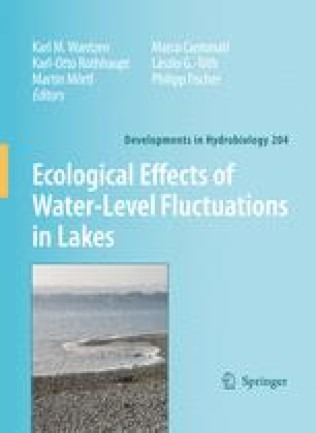
Ecological Effects of Water-Level Fluctuations in Lakes
It presents selected papers on the ecological effects of WLF in lakes, resulting from a workshop at the University of Konstanz in winter 2005. Issues addressed here include the extent of WLF, and analyses of their effects on different groups of biota from microorganisms to vertebrates. Applied issues include recommendations for the hydrological management of regulated lakes to reduce negative impacts, and a conceptual framework is delivered by an extension of the floodpulse concept for lakes. Current impacts on water use, including increasing demands on drinking and irrigation water, hydropower etc., and climate change effects on WLF make this book an essential resource for aquatic ecologists, engineers, and decision-makers dealing with the management of lake ecosystems and their catchments.
Marine Biodiversity : Patterns and Processes, Assessment, Threats, Management and Conservation
Understanding the functioning of Marine Ecosystems is the first step to measure and predict the influence of Man, and to find solutions for the enormous array of problems we face today. This volume is organised according to the four subthemes of the symposium and to issues commonly perceived as relevant by scientists concerned with the study, protection and management of Marine Biodiversity: patterns and processes, assessment, threats and management and conservation.
Living Rivers : Trends and Challenges in Science and Management
All over the world, sustainable river basin management is a leading principle of policy plans and legal instruments for water management (e.g. the European Water Framework Directive). The evidence, however, to underpin the full scope of sustainability is rather scanty. In this book an integrative perspective on trends and challenges in river science and management is demonstrated. The three pillars underneath sustainable water management, ecology, economy and sociology, are elaborated by experts in their fields. A number of papers integrate the current knowledge on the structure, functioning and management of ‘living rivers’. The book includes data and experiences concerning the rivers Allier, Meuse, Rhine, Sava and Tagliamento in Europe and the river Illinois in the USA. Sustainable river basin management asks for un-orthodox rehabilitation programmes and ecosystem based and transboundary management approaches.

Limnology and Aquatic Birds ; Proceedings of the Fourth Conference Working Group on Aquatic Birds of Societas Internationalis Limnologiae (SIL), Sackville, New Brunswick, Canada, August 3-7, 2003
The importance of habitat conservation for the protection of birds has become widely acknowledged and accepted by natural resource managers and the general public. Papers presented in this volume further our understanding of the important role that limnology has in determining habitat suitability for waterbirds. Long-term population monitoring of waterbirds is an important tool in our quest to understand the role waterbirds play in their environment. Continued population declines of many species of aquatic birds indicate the need for additional understanding of how human activities negatively impact water quality and bird populations and what mitigative actions can be taken. The main objective of the Working Group on Aquatic Birds of the International Limnological Society (SIL) is to integrate waterbirds into hydrobiology and treat waterbird studies in a limnological context. To achieve this goal, the Working Group organizes conferences to facilitate communications among limnologists interested in aquatic birds and ornithologists interested in the aquatic habitat. The efforts of the SIL Working Group on aquatic birds has resulted in a new emphasis on the links between aquatic birds and their environment
Advances in Algal Biology : A Commemoration of the Work of Rex Lowe
Advances in Algal Biology: A Commemoration of the Work of Rex Lowe was written by students and colleagues of Rex Lowe to acknowledge his esteemed career that included exceptional contributions to research and teaching. Papers in the book cover a variety of topics in algal ecology, focusing on benthic algal ecology in freshwater ecosystems. The studies provide an unusual combination of small-scale experiments and large-scale regional surveys that bridge both basic and applied ecology. Ecologists, limnologists, phycologists, and environmental scientists will find valuable contributions to the development and application of algal research.
